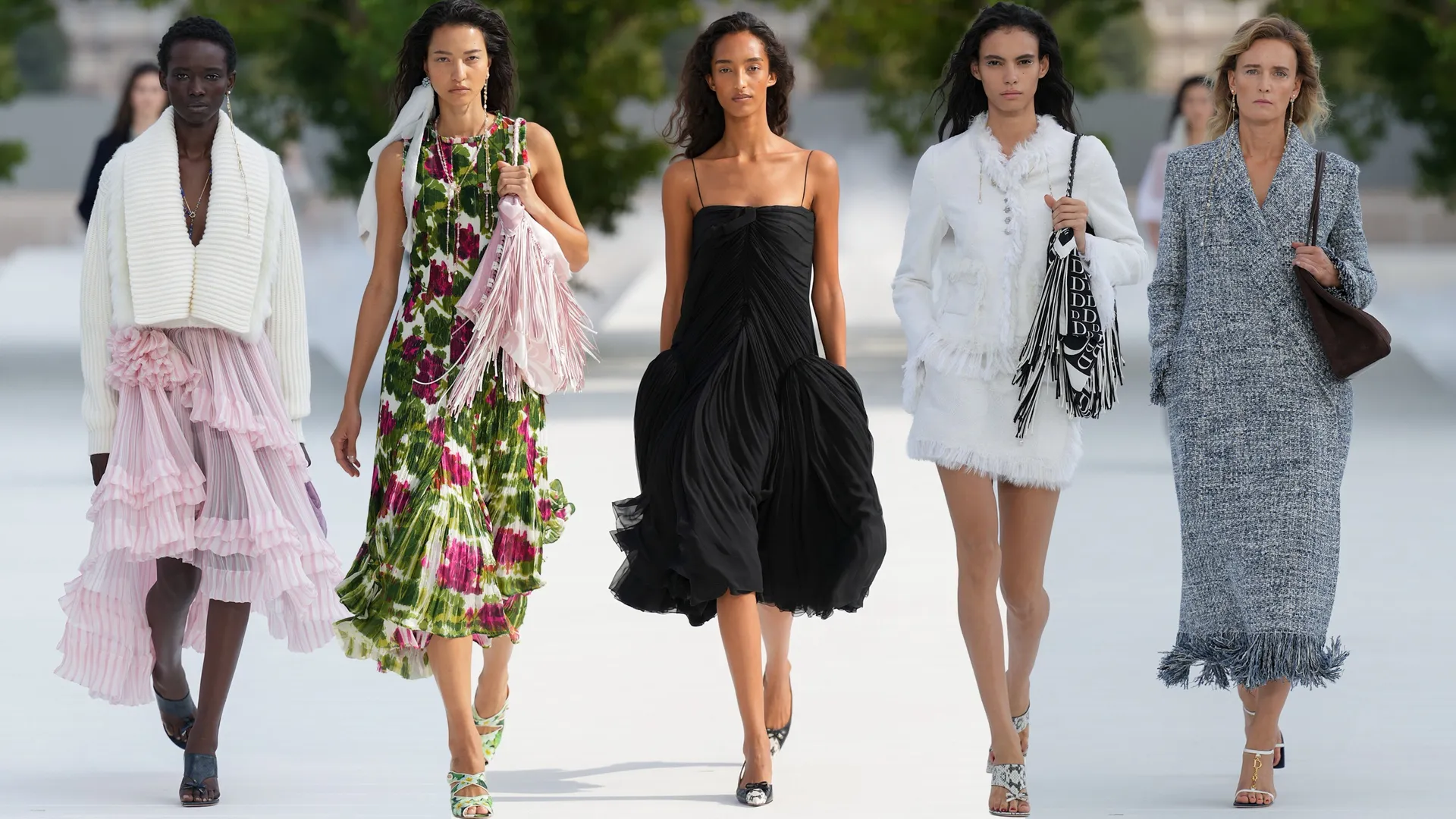
Jonathan Anderson’s Dior is beginning to develop a personality of its own. For his Spring Summer 2027 collection, presented on the second day of Paris Fashion Week, the designer moved away from the heavier historical references of his earlier work and explored something much lighter: nature, imperfection and movement. Staged at the Tuileries Gardens, the show was surrounded by trees, ponds and a layer of mist that drifted across the runway, creating an atmosphere that felt almost suspended in time. It was an appropriate setting for clothes that seemed designed to move with the air rather than resist it.
Dior Spring Summer 2027 Collection
The collection’s concept was introduced before the show even began. Inside Dior-branded invitation boxes, guests found two wénwán walnuts, traditionally collected in China and rolled between the palms as a form of hand massage. With repeated handling, the walnuts gradually become smoother and more polished, while their naturally irregular shapes remain unique. The choice was more than an unusual invitation gimmick. It neatly captured Anderson’s approach to Dior SS27: something imperfect in its natural state can become more beautiful through human interaction and craftsmanship. That idea appeared throughout the collection, where precision was present but rarely looked overly controlled.
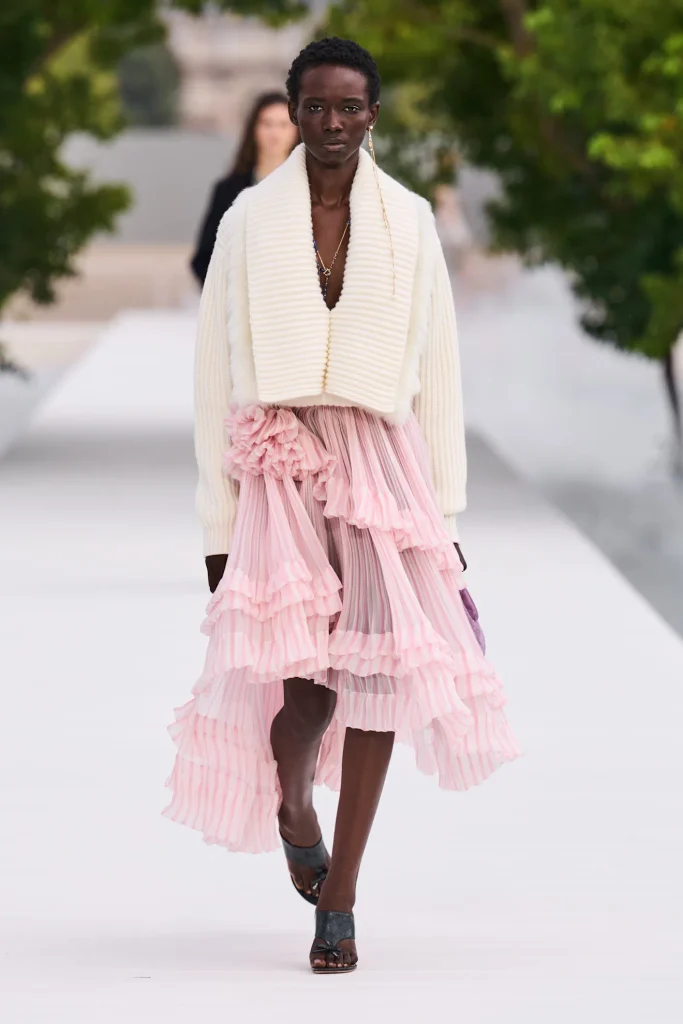
Dior Spring Summer 2027 Collection
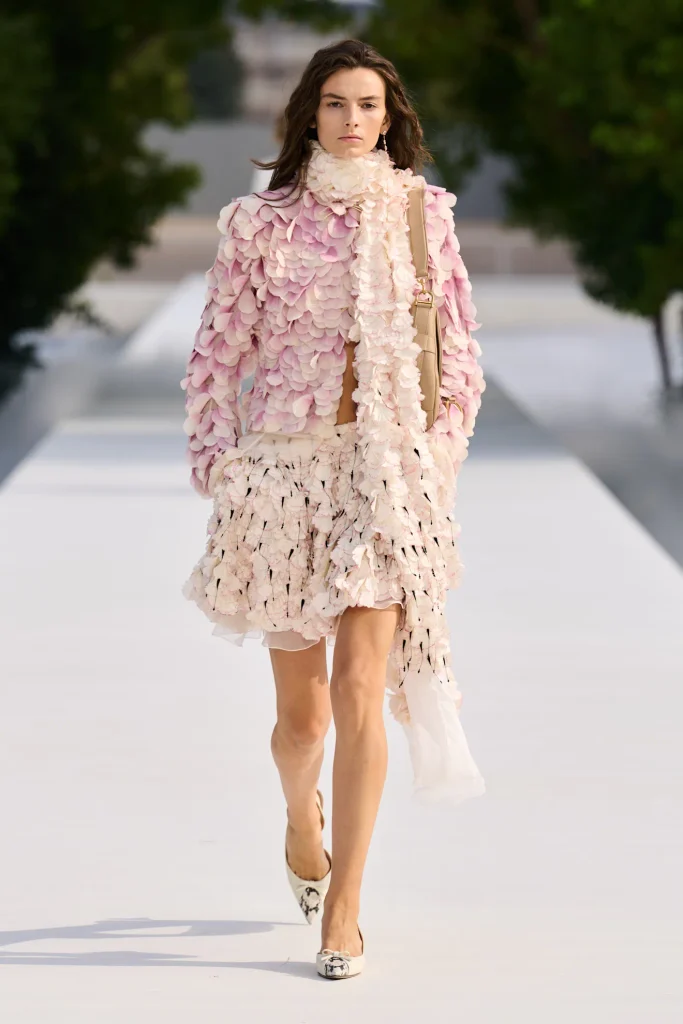
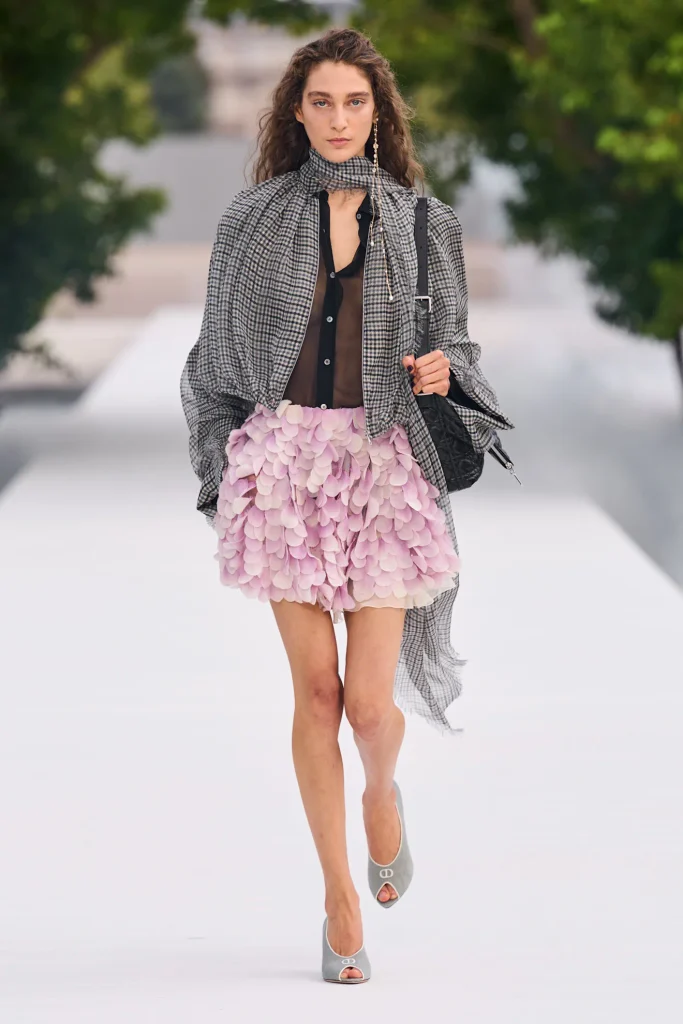
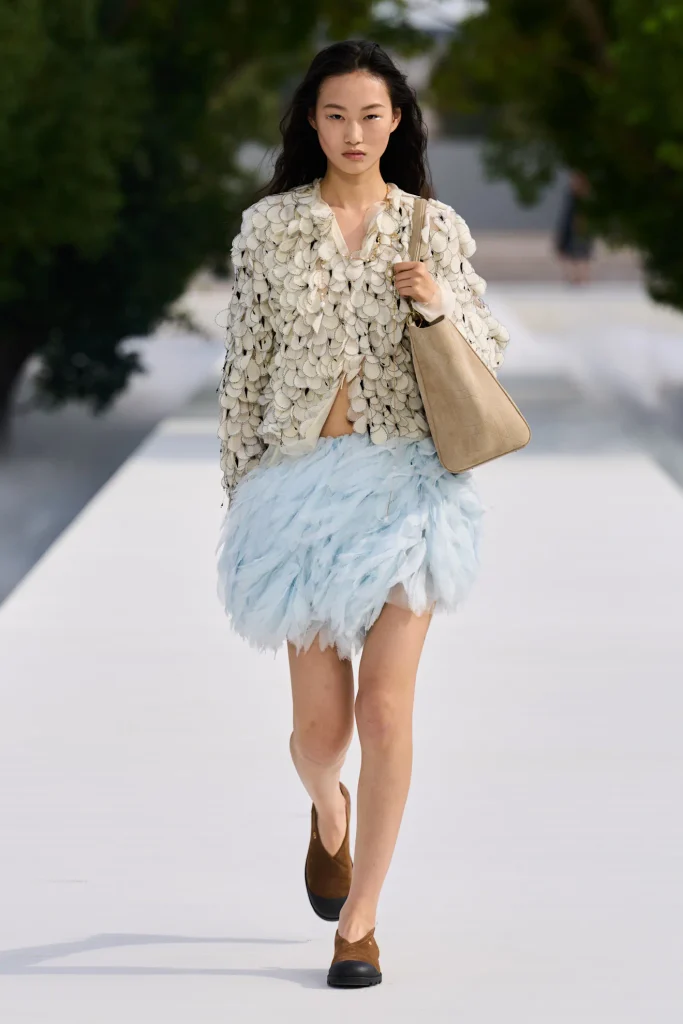
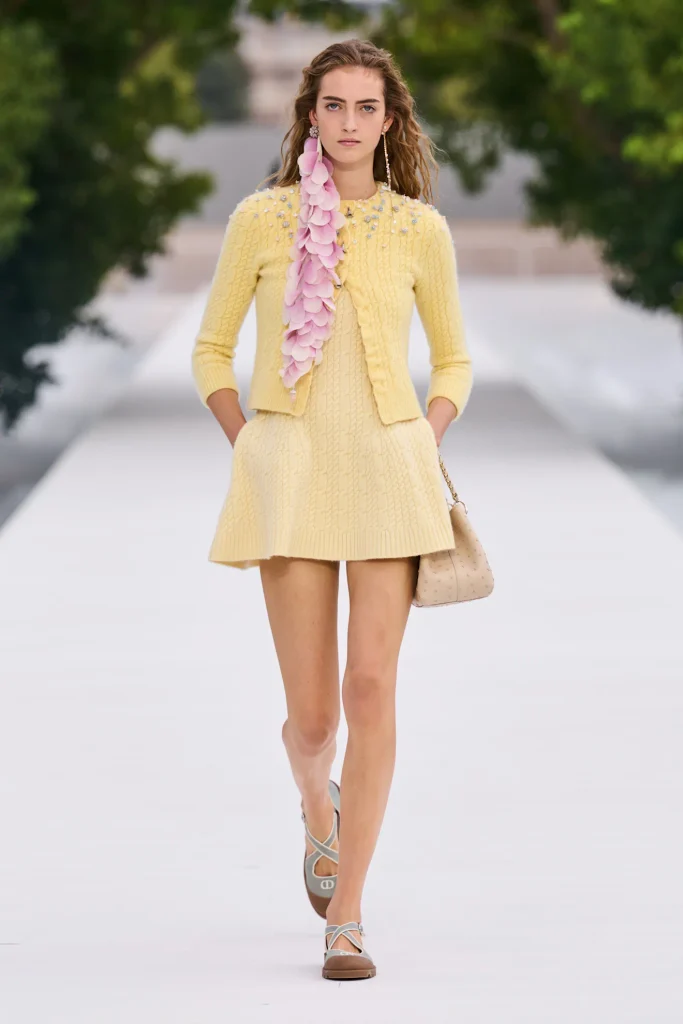
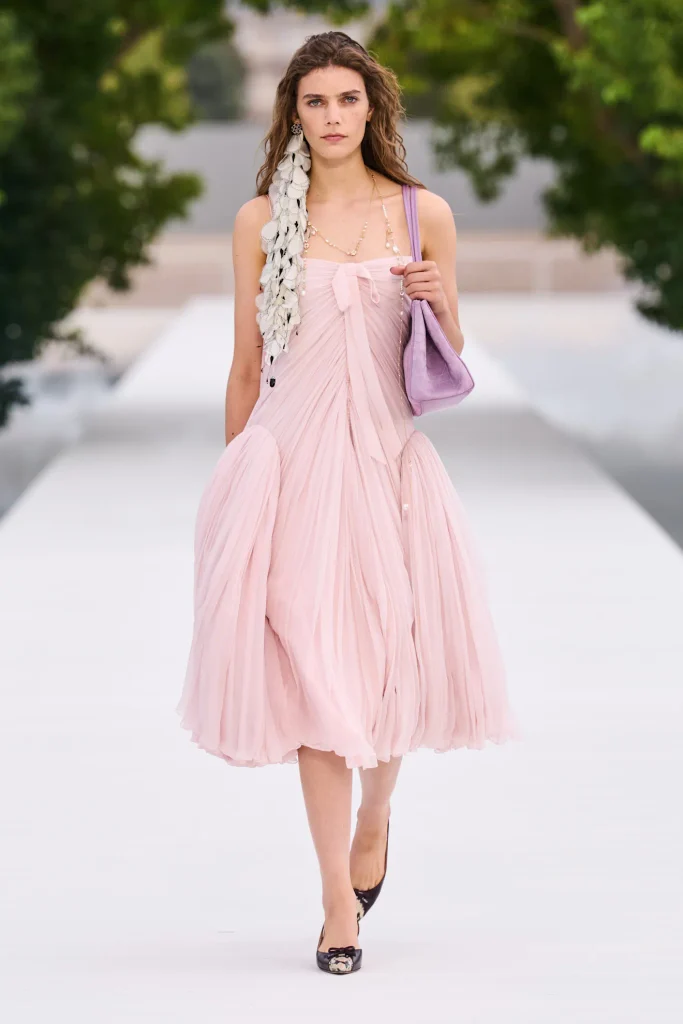
Flowers were perhaps the most immediate expression of this idea. Rather than relying solely on conventional floral prints, Anderson transformed silk mousseline and organza into hundreds of small petal-like pieces, building them into jackets, miniskirts, handbags and earrings. On the runway, these fragments shifted with every movement, making the clothes appear almost alive. There were also photographic flower prints across dresses and square-toe heels, while shades of pale pink, buttery yellow and soft green gave the collection the delicate colours of a summer garden. Floral fashion is hardly new, but Anderson avoided making the idea feel overly romantic by treating flowers as a material and a structure rather than simply a decorative motif.
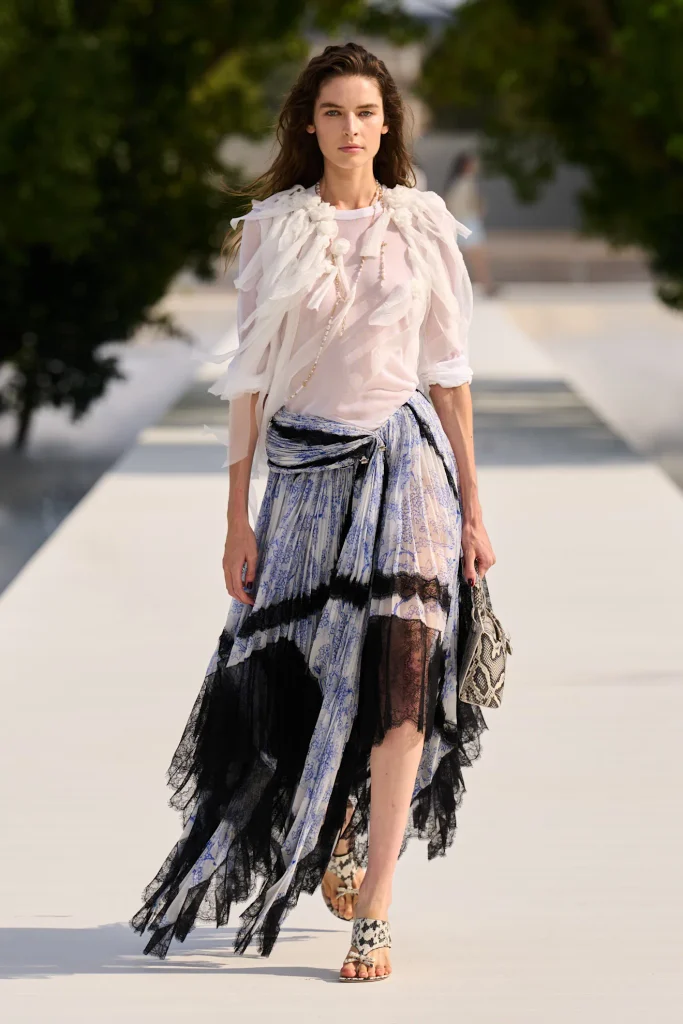
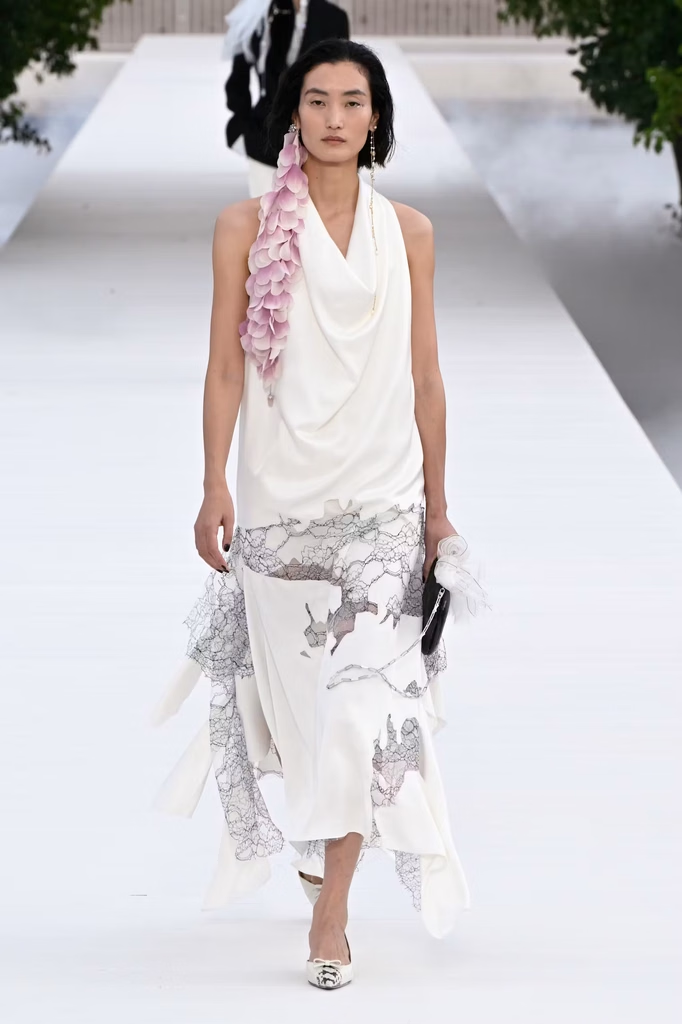
Dior Spring Summer 2027 Collection
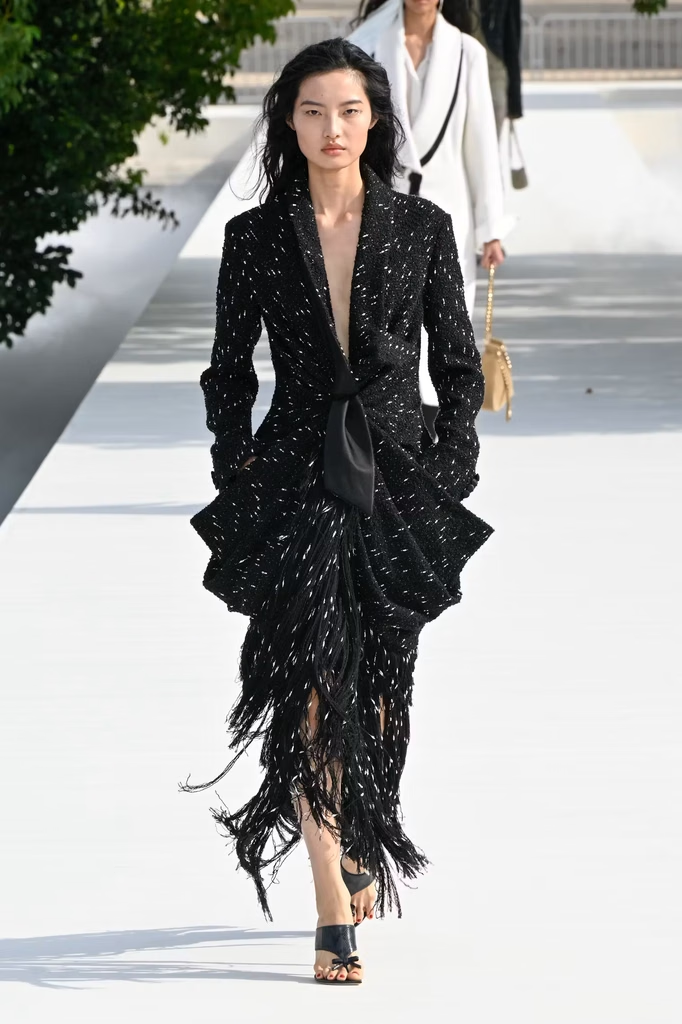
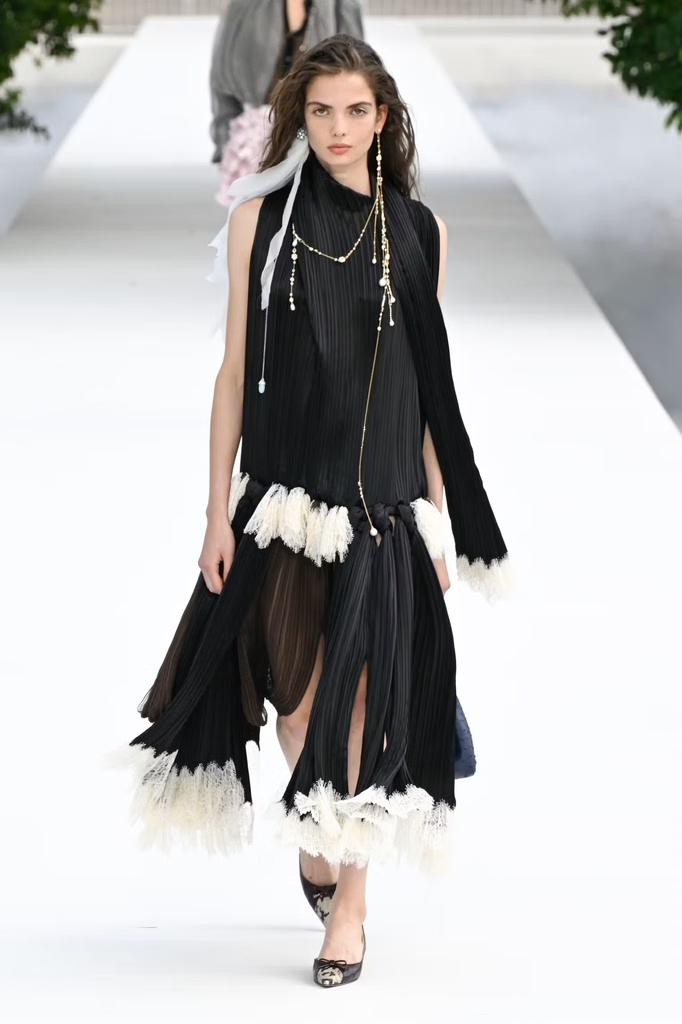
That same approach extended to the collection’s silhouettes. Asymmetry became one of Anderson’s most effective tools, appearing through uneven hems, mismatched earrings, scarves falling longer on one side, raw-edged coats and necklaces worn at different lengths. The imbalance was intentional, reflecting the irregularity found in nature while also giving the clothes a sense of spontaneity. A perfectly symmetrical dress can be striking when it is standing still, but an uneven hem or trailing scarf becomes much more interesting once the wearer starts moving. Anderson seemed particularly aware of this relationship between construction and movement, allowing the garments to change visually as the models walked.
The softness of the collection was especially noticeable in the tailoring. After the structured bar jackets and pronounced peplums that dominated Anderson’s Dior debut, SS27 loosened those familiar shapes considerably. Jackets had softer shoulders and relaxed proportions, sometimes approaching the ease of sleepwear, while sheer fabrics and delicate layers removed much of the weight traditionally associated with tailoring. Striped shirts were reshaped through subtle pleating, knitwear became more architectural, and metallic trousers introduced a harder element among the lighter fabrics. The contrast prevented the collection from becoming too delicate; black looks, silver and copper surfaces and oversized cuffs gave the softness some tension.
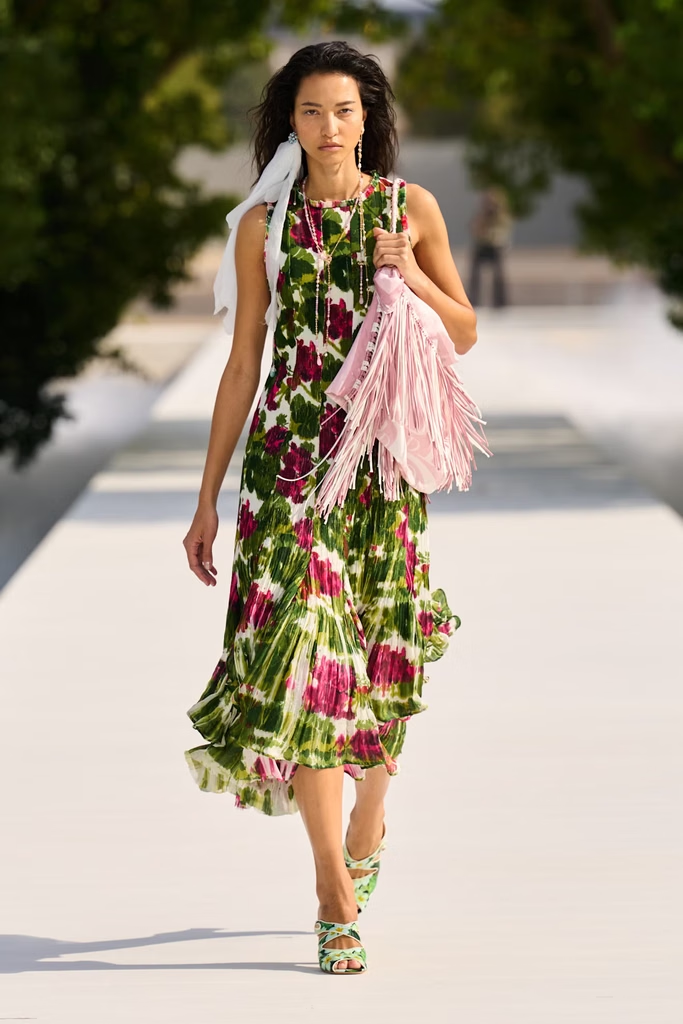
Dior Spring Summer 2027 Collection
Anderson’s relationship with Dior’s archive was still very much present, but this time the references felt less like historical quotations and more like raw material. The Cigale Dress, originally part of Dior’s Autumn/Winter 1952 haute couture collection, was reinterpreted through fitted bodices, generous skirts and delicate straps. Its sculptural proportions remained recognisable, but Anderson relaxed the silhouette through softer construction and playful details. It is a strategy that has become increasingly apparent in his work at Dior: rather than reproducing an archive piece exactly, he takes its defining characteristics and asks how they might exist in a different context.
The accessories followed the same philosophy. Familiar Dior codes appeared alongside completely new ideas, including updated versions of the Lady Dior, Toujours and Milly-La-Forêt bags. The Lady Dior in particular looked less rigid and more lived-in, fitting naturally into a collection concerned with imperfection. A new biker-inspired bag introduced zipped pockets, Cannage stitching and metal D-I-O-R hardware, while oversized suede bags offered a more understated everyday option. Then came the collection’s most playful accessory: a silver minaudière shaped like the wénwán walnut from the invitation. It could easily have become a novelty, but within the context of the collection, it made sense. The object that introduced the show’s concept had been transformed into a piece of luxury craftsmanship.
Dior Spring Summer 2027 Collection
Shoes continued the botanical theme without feeling like an afterthought. Flower photographs appeared on square-toe block heels, while the Dior Bow Sandal arrived in metallic gold and glossy sage green. The new Dior Cigale Shoe was perhaps more subtle, with a petal-shaped sole referencing the floral forms elsewhere in the collection. These details demonstrated one of the strengths of Anderson’s approach: the concept was not confined to the clothes. It travelled through the accessories, materials, silhouettes and even the environment of the show.
What makes Dior Spring Summer 2027 particularly interesting, however, is that Anderson does not seem interested in making Dior feel completely new. Instead, he is gradually changing the way its existing codes behave. The Bar jacket becomes softer. The couture silhouette becomes looser. The Lady Dior looks slightly less perfect. Flowers move from prints into three-dimensional structures. Even the idea of luxury becomes less about immaculate rigidity and more about craftsmanship that allows room for irregularity.
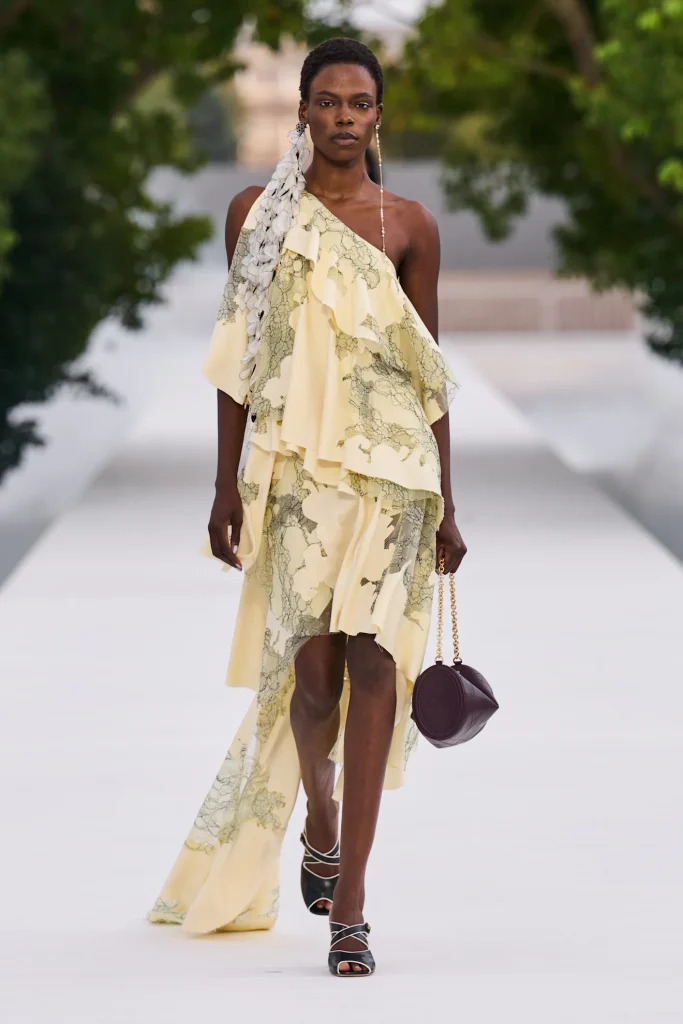
Dior Spring Summer 2027 Collection
After a year of ambitious historical references, Jonathan Anderson’s Dior SS27 feels like a turning point. There is still plenty of Dior in it, but the house’s familiar codes are becoming less formal and more instinctive. The collection understands that luxury does not necessarily need to look stiff, polished or untouchable. Sometimes, the most sophisticated thing a designer can do is allow a garment to breathe, move and remain slightly imperfect. In that sense, the wénwán walnut was more than the perfect invitation to the show — it was almost a summary of Anderson’s new Dior: shaped by history, refined by craftsmanship, but never completely polished away.
Leave a Reply