If there’s one thing about the Met Gala 2026, it’s that the theme is usually more of a suggestion than a rule. But this year? Surprisingly cohesive. Almost suspiciously so.
“Fashion Is Art” could have gone very wrong—too literal, too costume-y, too Pinterest board. Instead, it turned into one of the strongest carpets in years, where people didn’t just reference art… they became it.
The showstopper: Eileen Gu quite literally floating through science
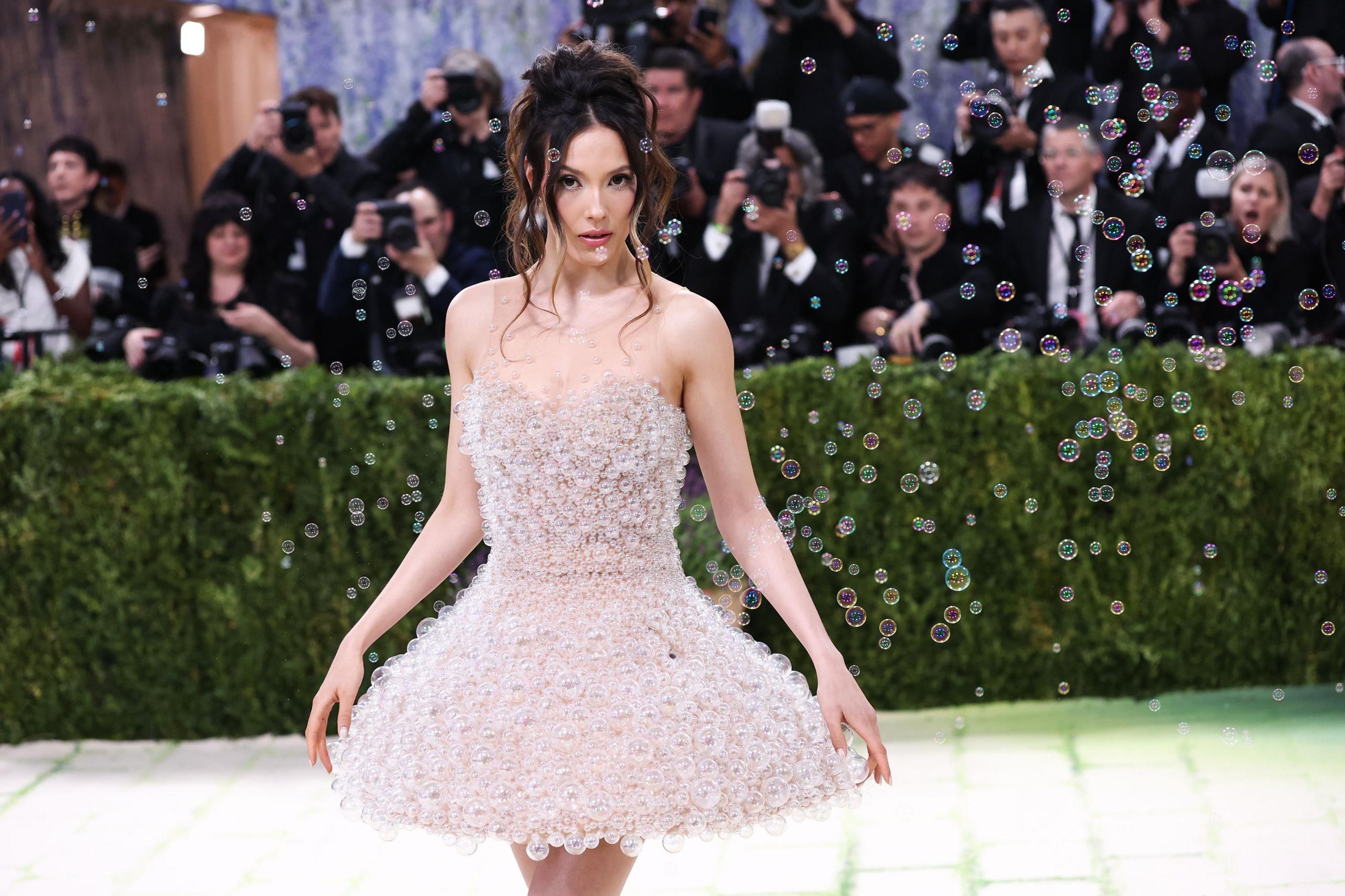
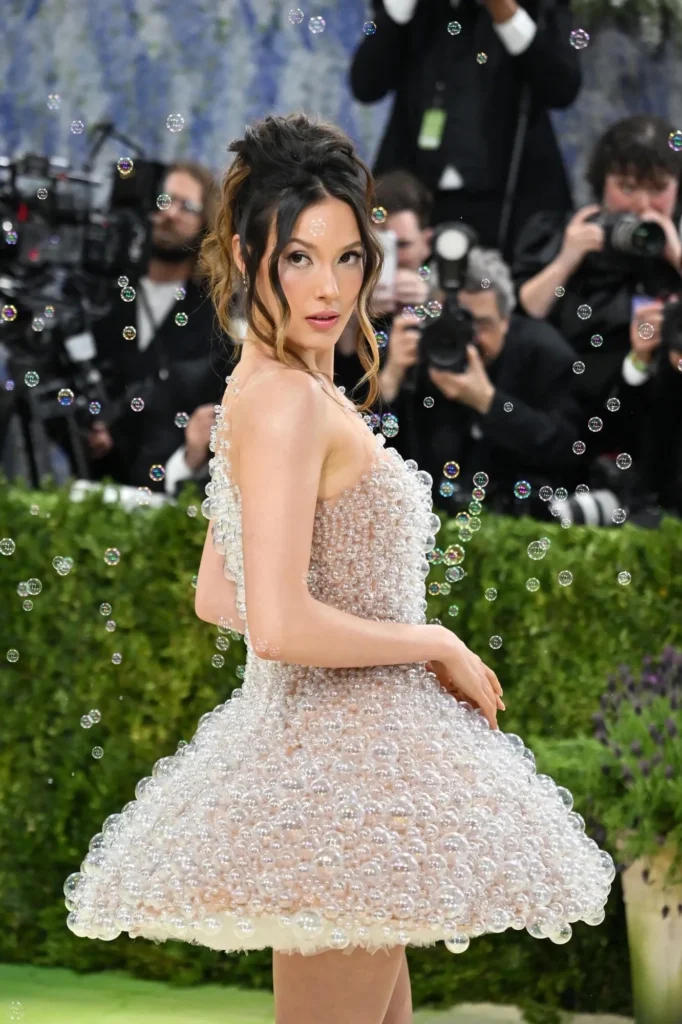
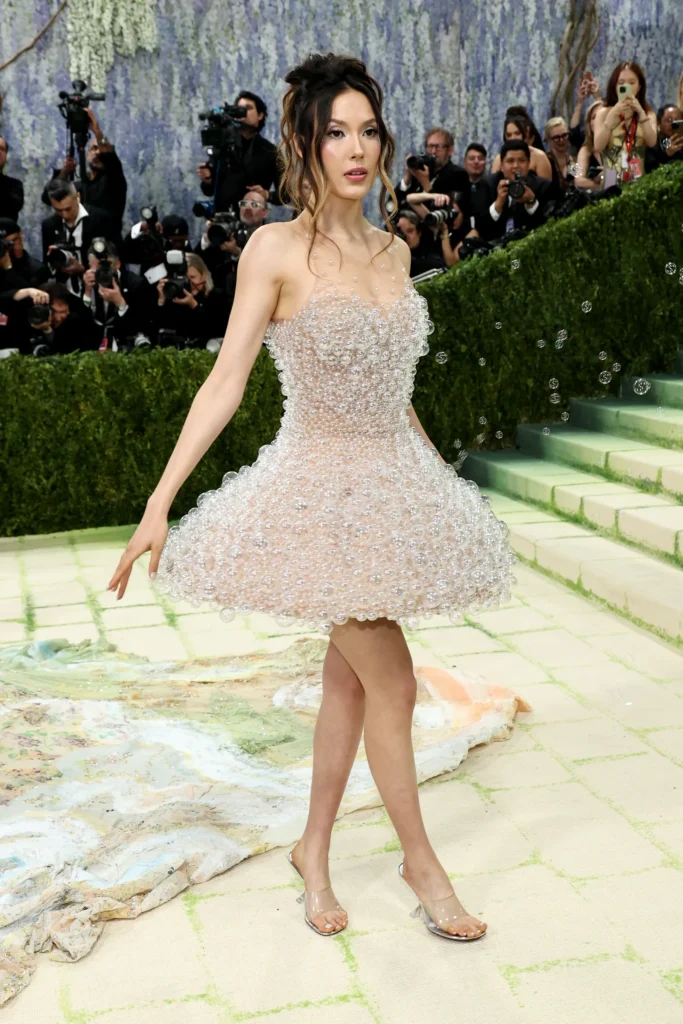
Eileen Gu in Iris van Herpen wasn’t wearing a dress—she was wearing a system.
Up close, the gown was made of 15,000 individually hand-formed glass bubbles, each bonded into a delicate, cloud-like structure that looked impossibly light. The surface shimmered with an iridescent finish, catching light like oil on water—constantly shifting, never static.
But beneath that softness was something much more complex:
- microprocessors hidden within the structure
- tiny air pumps and bubble nozzles integrated into the silhouette
- an algorithm controlling the timing of bubble release
Every 2–5 seconds, actual bubbles emerged from the dress, turning her walk into a kinetic sculpture.
The craftsmanship here isn’t just about handwork—it’s interdisciplinary. Couture, engineering, coding. It took 2,550 hours to build something that looks effortless but is anything but.
Eileen Gu in Iris van Herpen
Emma Chamberlain: when fashion becomes a literal canvas
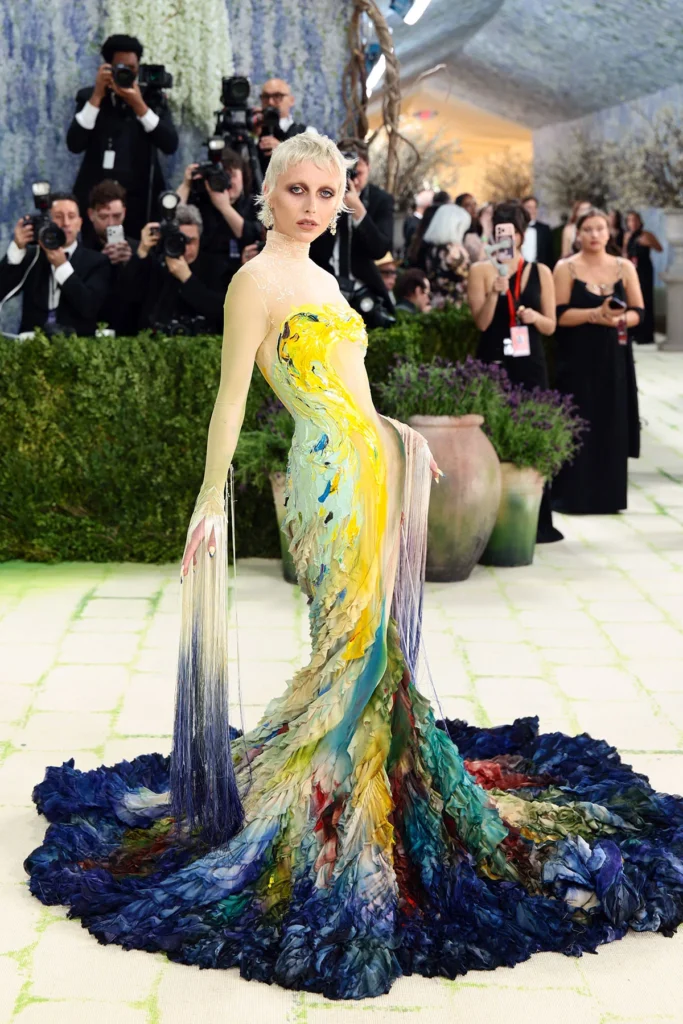
Emma Chamberlain’s custom Mugler gown was deceptively simple in silhouette—but incredibly labor-intensive in surface.
The entire dress was hand-painted using traditional fine art materials, not textile dyes. That distinction matters:
- real pigments layered like a canvas
- roughly 30 base colors, mixed into countless custom shades
- visible brushstroke textures embedded into the fabric
The artist spent 40 hours painting, then days letting it dry—because unlike fabric printing, this process behaves like actual painting.
The result? The dress didn’t just look like art—it had depth, variation, and imperfection. You could almost trace the movement of the brush across her body.
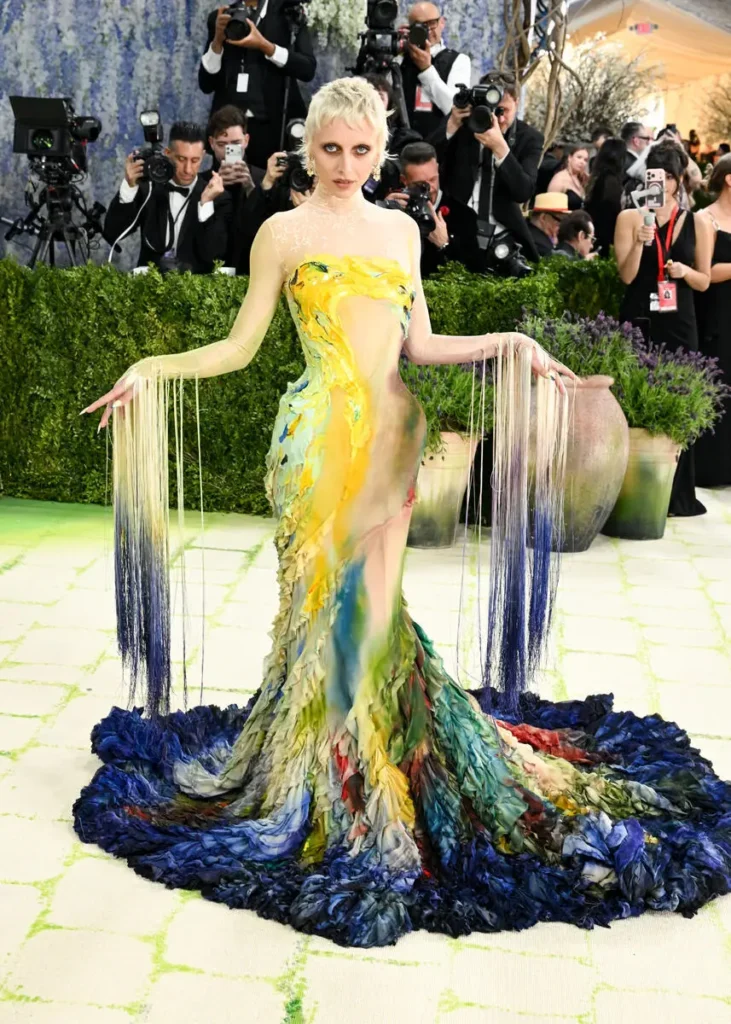
Emma Chamberlain in Mugler
Jisoo: quiet luxury, but make it Impressionist
Jisoo’s Dior gown was a masterclass in restraint and detail.
From afar, it reads as a clean column silhouette. But up close, the surface is incredibly dense:
- gazar fabric providing structure while staying lightweight
- full embroidered garden scenes stitched across the dress
- layered floral motifs that mimic depth, almost like an Impressionist painting
The embroidery wasn’t flat—it created dimension, like petals sitting on top of each other. The headpiece echoed this with fabric flowers, reinforcing the idea of the body as part of the landscape.
It’s quiet craftsmanship—the kind that doesn’t demand attention but rewards it.
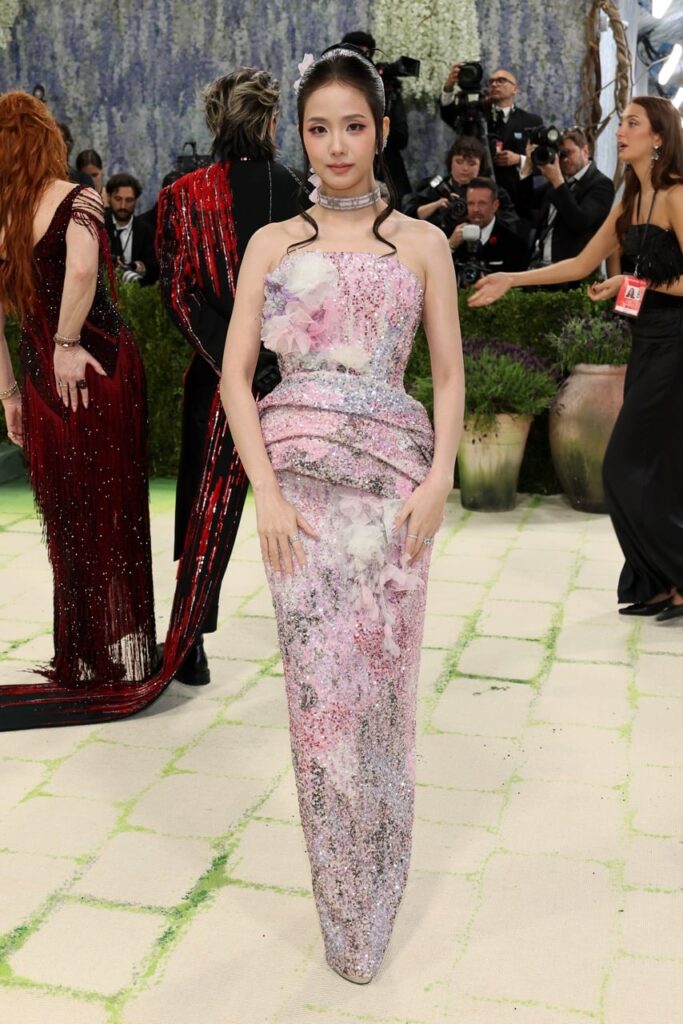
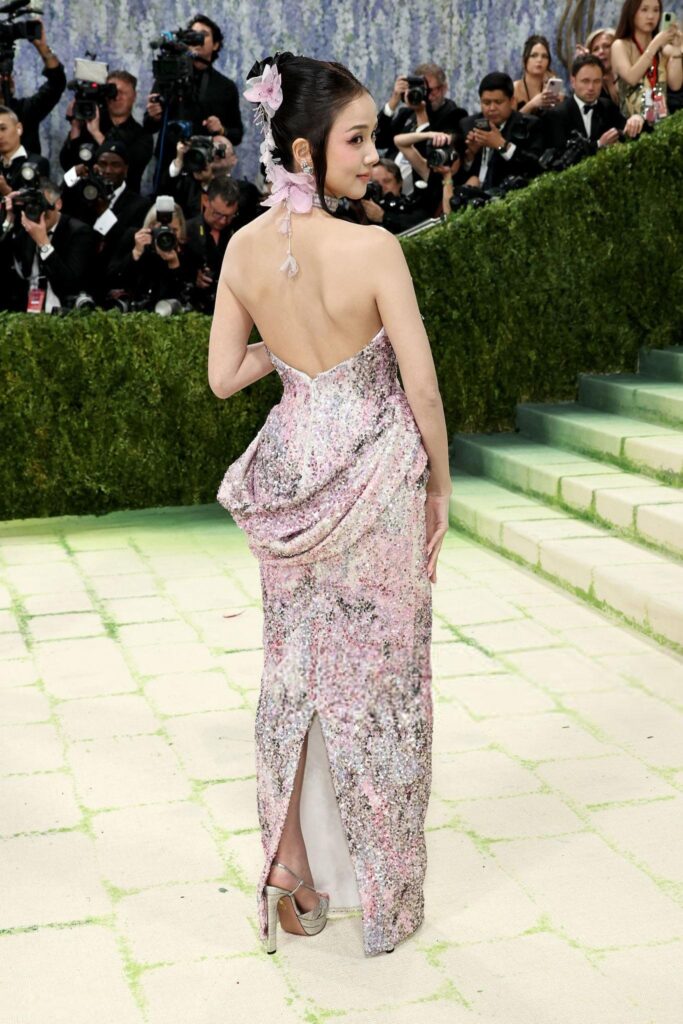
Jisoo in Dior
Sabrina Carpenter understood the assignment… and made it fun
Sabrina Carpenter’s custom Dior gown leaned into storytelling through construction.
The base was a tulle dress with a dramatic slit, soft and fluid, but layered with:
- rhinestone-embedded film strips wrapping around the body
- micro-detailed embellishments that mimicked actual frames of Sabrina
- precise placement to create movement, like film rolling as she walked
The craftsmanship here lies in placement and narrative detail—each embellishment had to align visually to maintain the illusion.
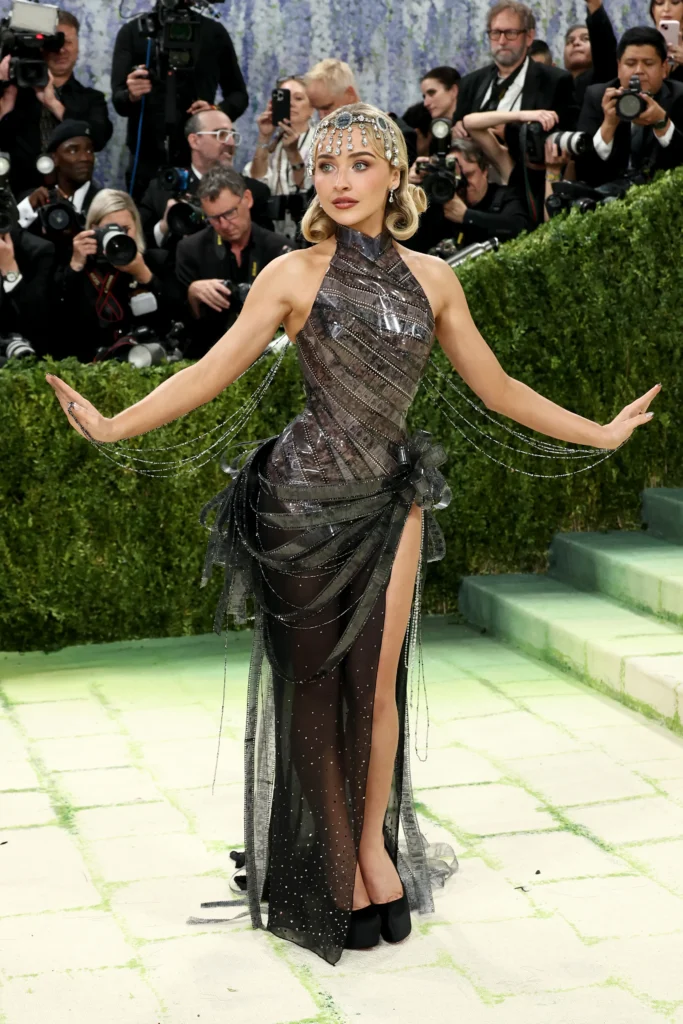
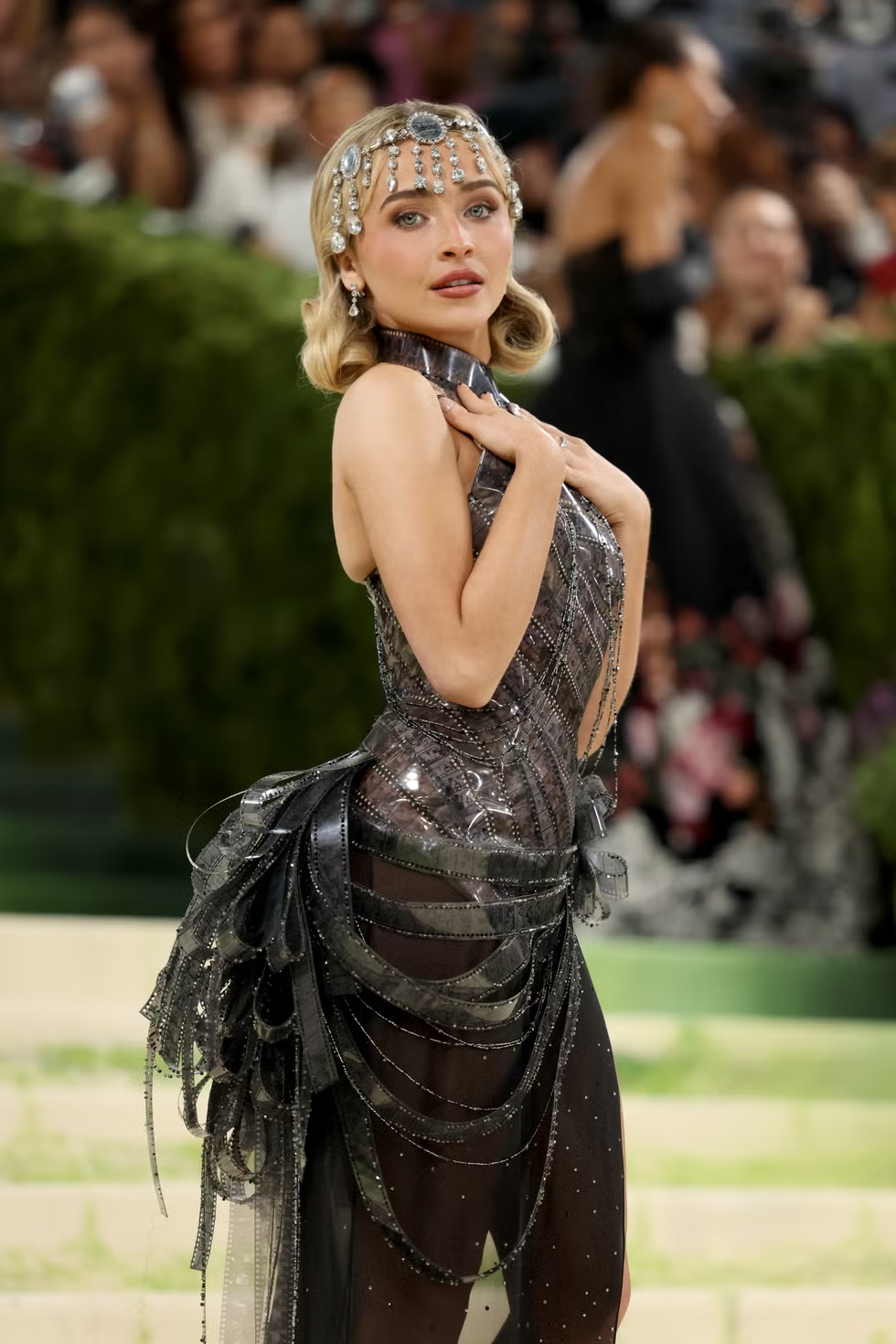
Sabrina Carpenter in Dior
Honorable Mentions:
Lisa: surreal, sculptural, and slightly unsettling
Lisa in Robert Wun delivered one of the most technically demanding looks.
The gown featured:
- 66,960 Swarovski crystals, individually applied
- a sheer base layered to create a liquid, almost disappearing effect
- a mermaid silhouette that subtly flared into a train
But the real centerpiece was the sculptural arm structure:
- engineered extensions rising from the shoulders
- holding a crystal-embroidered veil above her head
- creating the illusion that she is both subject and creator of the look
This is couture as architecture. Every angle had to be calculated so the illusion held from all sides.
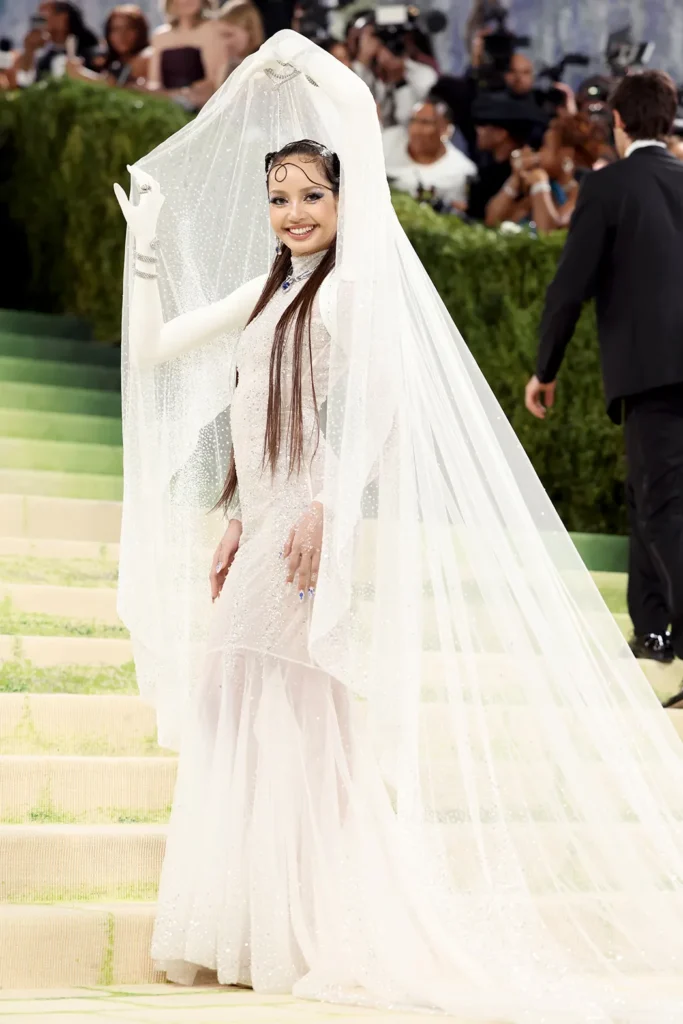
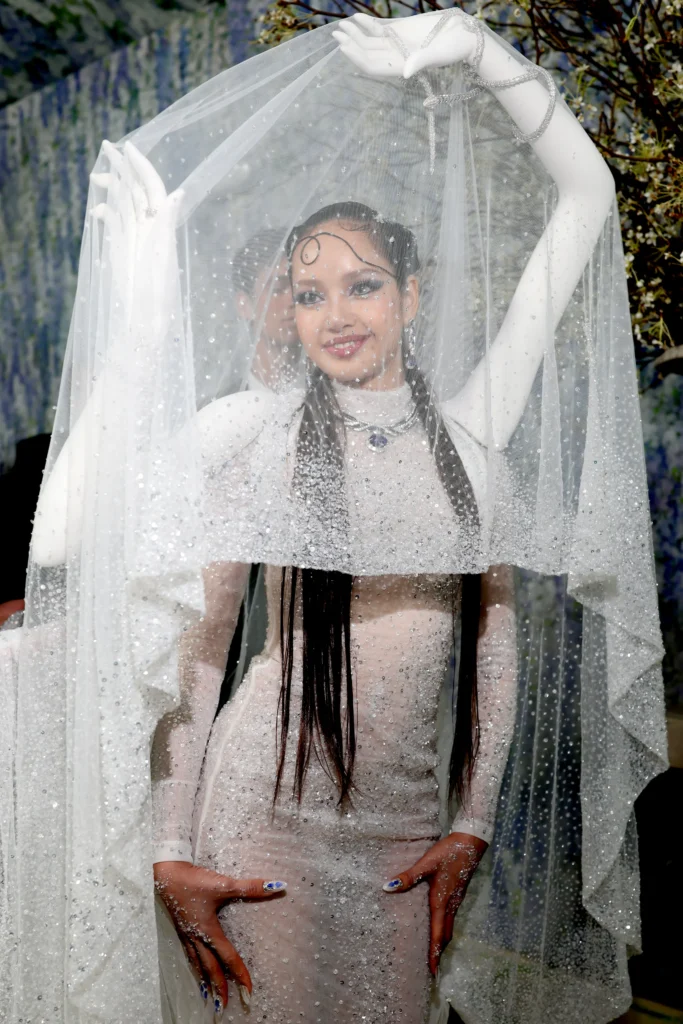
Lisa in Robert Wun
Hunter Schafer: not just referencing art—deconstructing it
Hunter Schafer’s Prada gown was deceptively complex. At first glance, it’s soft and romantic. But the closer you look:
- the linen outer layer is intentionally torn and distressed
- beneath it, floral silk chiffon emerges in controlled reveals
- the edges are uneven, almost raw, but precisely engineered
Even the rosette detailing under the bust references Gustav Klimt—but the execution subverts it.
This isn’t careless destruction—it’s designed decay. Every tear is placed to expose just enough, creating tension between fragility and control.
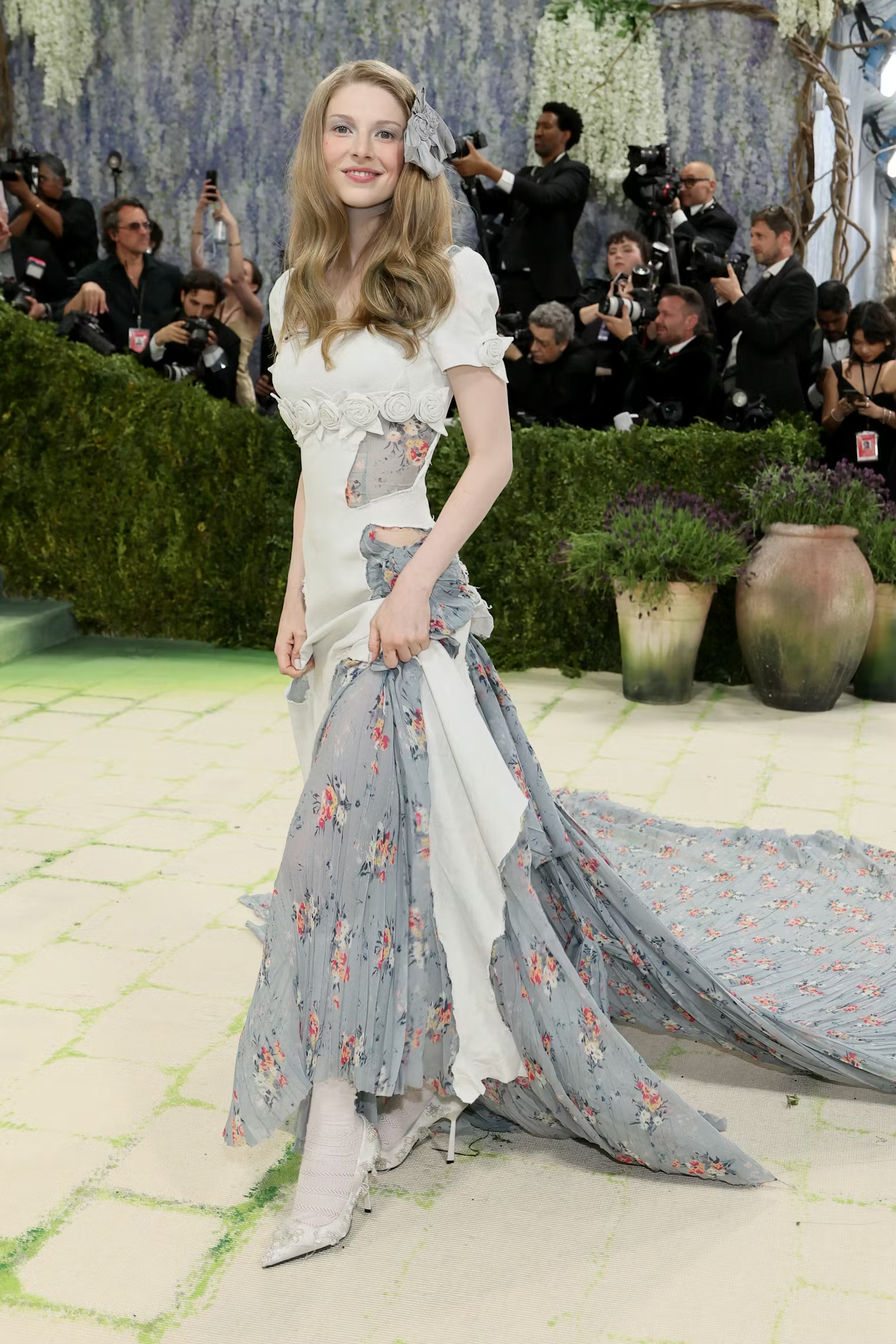
Hunter Schafer in Prada
So… why did this year actually work?
Because people finally stopped treating the theme like a dress code—and started treating it like a concept.
There was range:
- science and technology
- painting and craftsmanship
- art history
- cinema
- surrealism
But somehow, it all felt connected.
No one was just wearing a dress. They were presenting an idea.