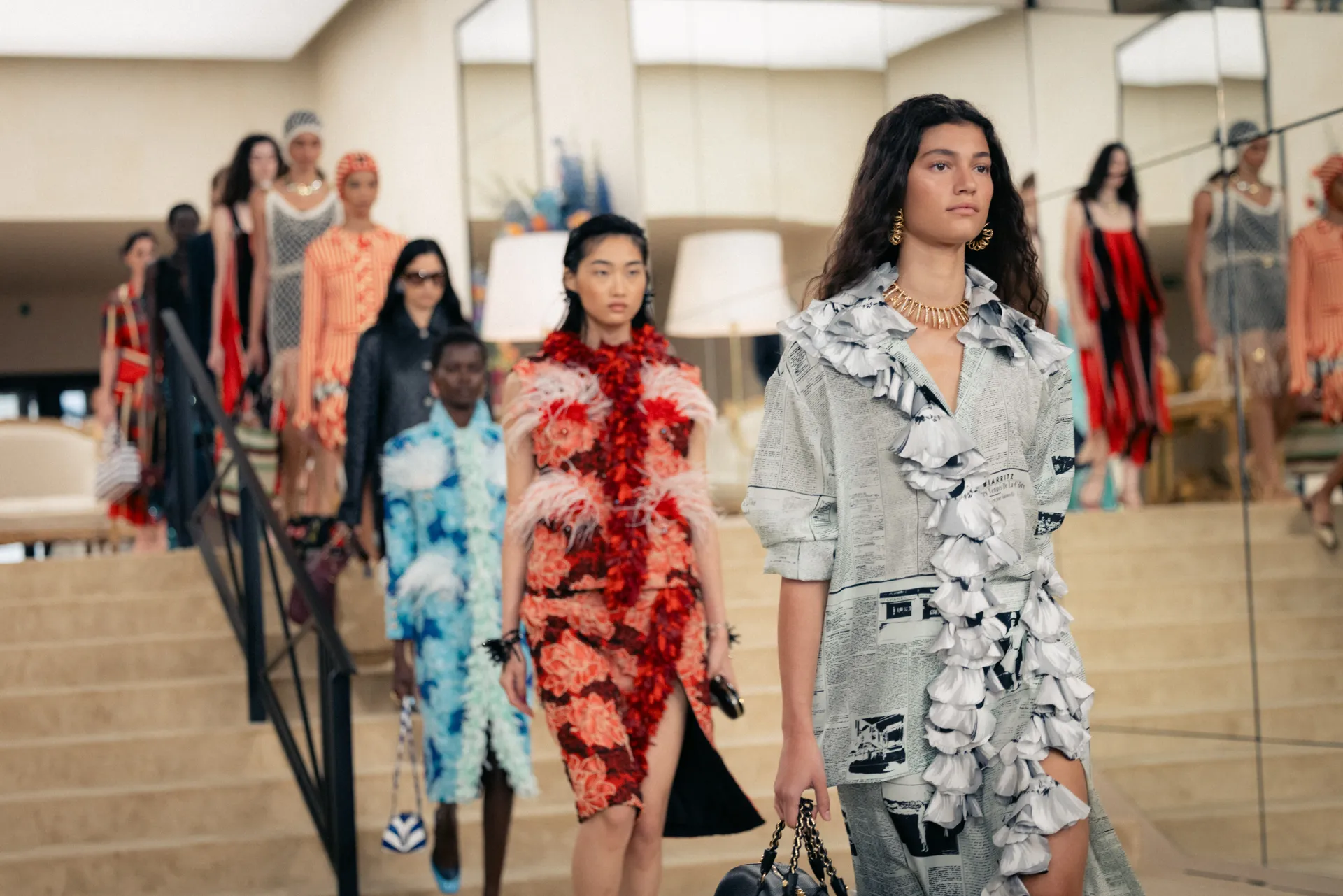
For his first-ever Cruise collection at Chanel, Blazy brought the maison back to one of its most historically significant locations: Biarritz, where Coco Chanel opened her first couture house in 1915. More than a century later, the house returned to the French seaside town not simply to revisit its past, but to reimagine the very foundations of Chanel style through Blazy’s increasingly distinctive lens.
Hosted at the Art Deco-style Le Casino Municipal, the show transformed the seafront venue into a surreal beachside dreamscape. Beige carpeting mimicked sand beneath mirrored columns and electric floral arrangements, while guests including Nicole Kidman, Tilda Swinton, A$AP Rocky, and Sofia Coppola gathered to witness what increasingly feels like a defining new era for Chanel.
The emotional significance of the location was impossible to ignore. Karl Lagerfeld — who maintained a holiday home in Biarritz — had long dreamed of staging a Chanel show there, even photographing a now-iconic 2003 campaign featuring models carrying Chanel surfboards through the town. Yet he never realized the vision himself. Blazy’s Cruise debut therefore felt not only like a continuation of Chanel history, but also a poetic fulfillment of Lagerfeld’s unfinished fantasy.
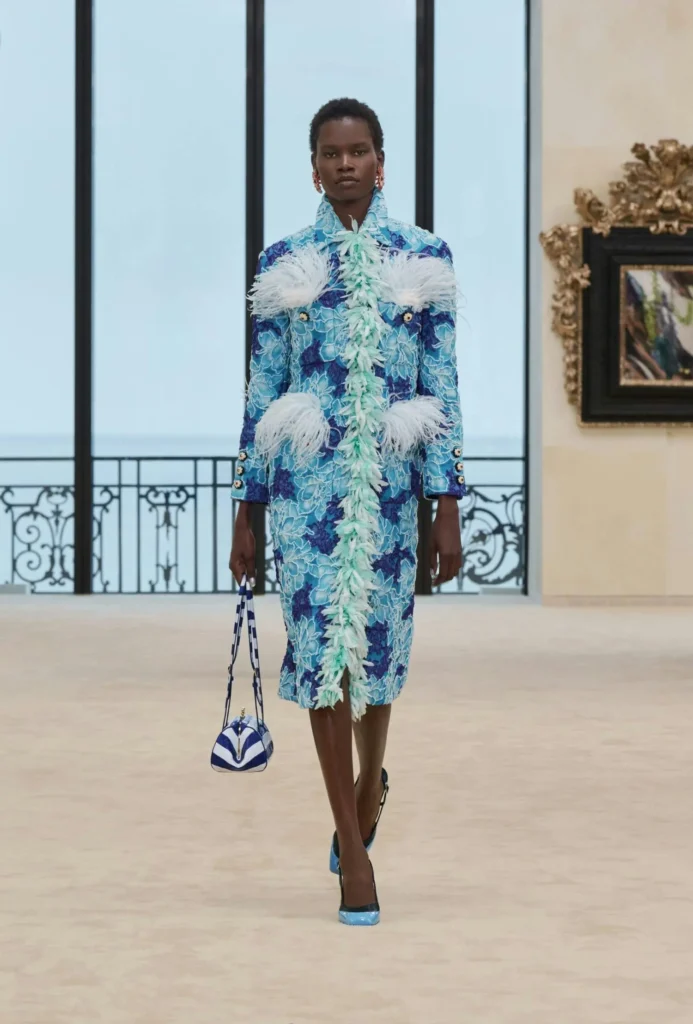
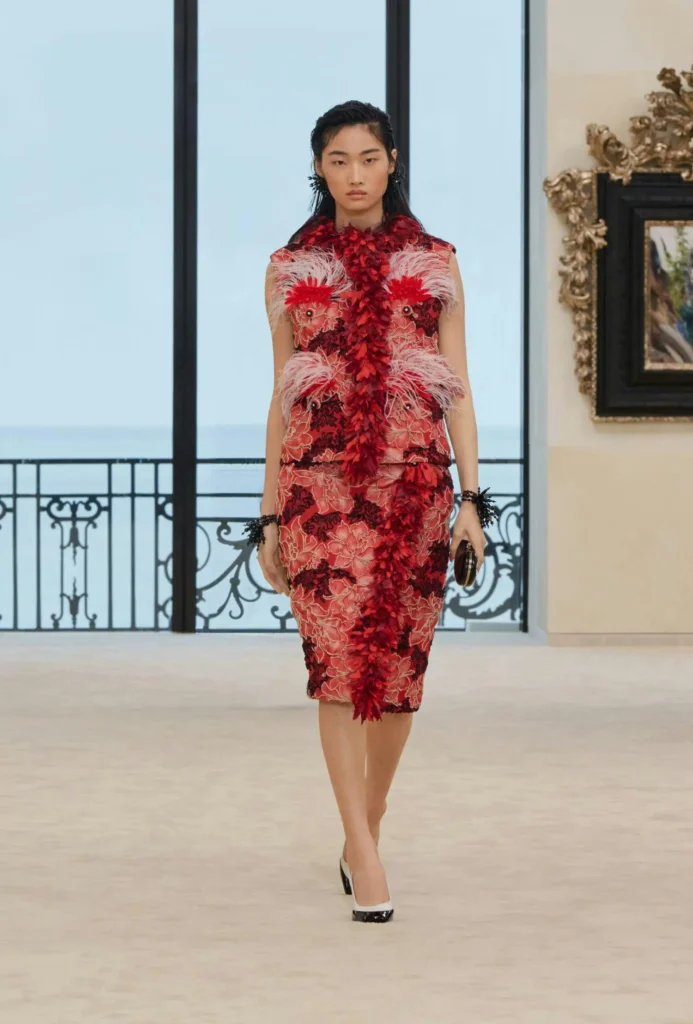
Chanel Cruise 2027 Collection
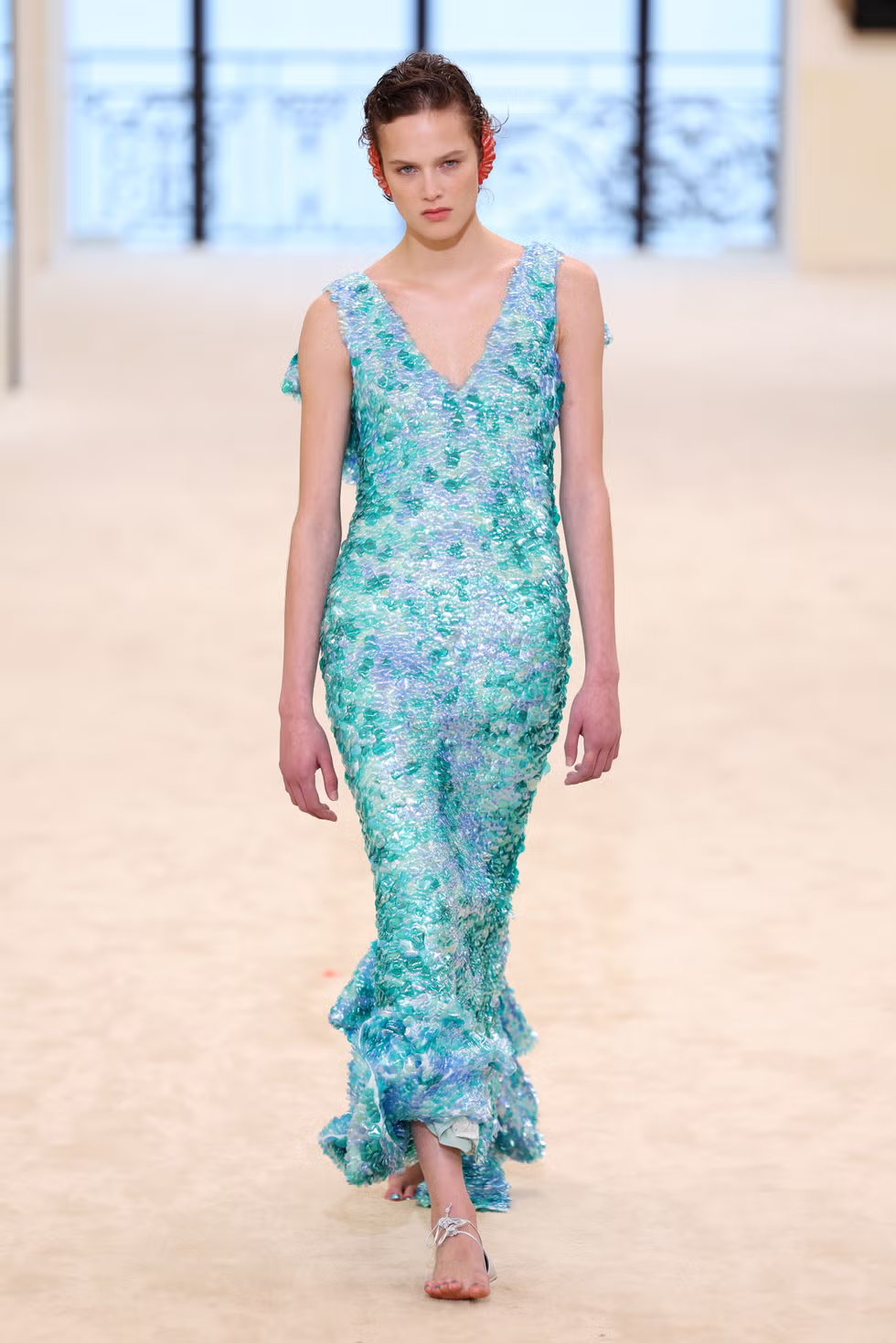
But rather than approaching Biarritz with nostalgia alone, Blazy infused the collection with his own obsessions — most notably mermaids. A recurring symbol throughout the show, the mythical sea creature became both literal and metaphorical shorthand for transformation, escapism, and feminine fluidity. Model Noor Khan appeared in the teaser film as a mermaid figure before closing the show in a shimmering turquoise fishtail gown covered in scale-like sequins.
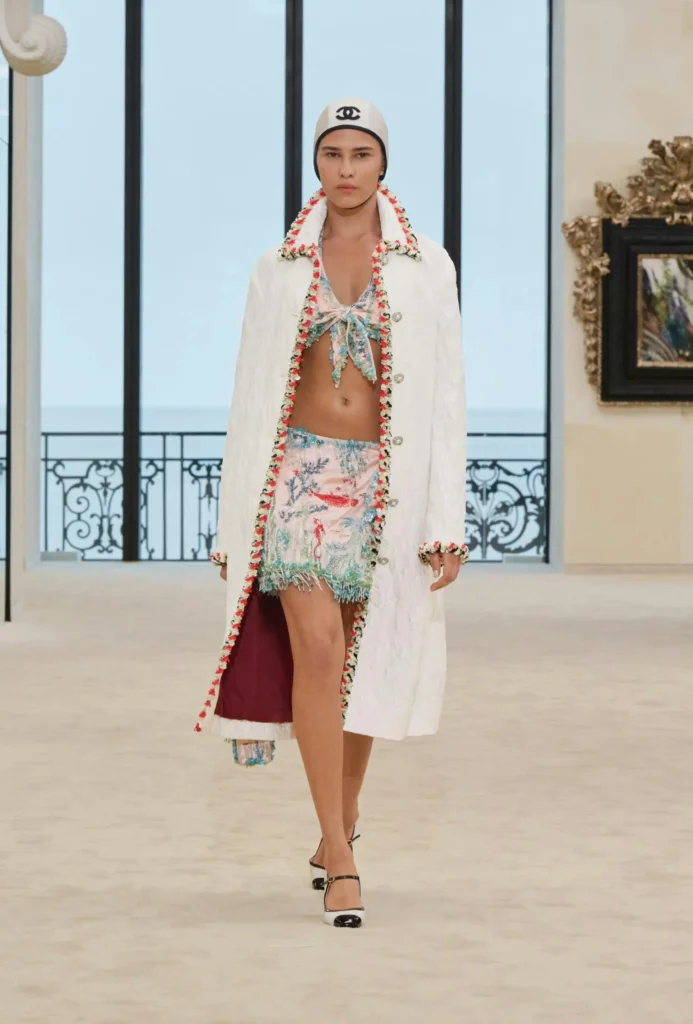
Still, beneath the fantasy was a remarkably disciplined exploration of Chanel’s original philosophy. Biarritz was where Coco Chanel first observed women dressing for freedom rather than performance. She watched sailors, swimmers, and vacationers, absorbing the ease of seaside life and translating it into a radically modern wardrobe built on jersey, sportswear, and movement. Blazy returned to those same ideas, grounding the collection in sailor stripes, Breton knits, relaxed tailoring, and fluid silhouettes that nodded to Chanel’s early liberation of the female body.
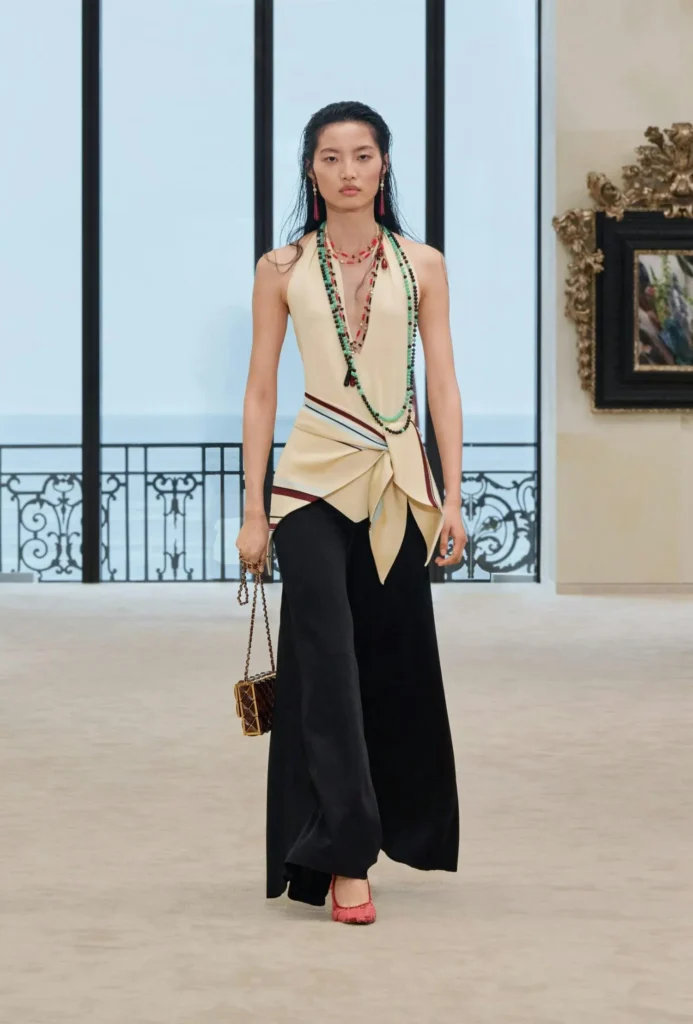
Chanel Cruise 2027 Collection
One of the collection’s strongest themes was this tension between couture and casualness. Oversized Basque-striped sweaters were paired with dramatic ball skirts. Louche genderless tailoring appeared alongside 1920s-inspired swimwear. Drop-waist dresses embroidered with Art Deco piping referenced archival Chanel sketches while feeling entirely contemporary in their looseness and ease. Even the collection’s tweeds — traditionally associated with polished bourgeois dressing — felt softer, more playful, and deliberately imperfect.
Blazy’s ongoing fascination with archetypes of dress also remained central. Much like his Chanel Métiers d’Art Show 2026, where he imagined characters one might encounter on a New York subway, this collection constructed a cast of seaside personalities: glamorous swimmers, eccentric aristocrats, rebellious vacationers, and fictional mermaids. The result was eclectic but emotionally coherent — a wardrobe rooted less in trends and more in storytelling.
Chanel Cruise 2027 Collection
And then there were the accessories.
If one item defined the internet reaction to the show, it was undoubtedly the now-viral “barefoot sandals.” The surreal shoes covered almost nothing at all, consisting merely of a heel cap strapped delicately behind the foot with ribbon ties, leaving the wearer effectively barefoot. Equal parts absurd, elegant, and meme-worthy, the design instantly exploded across social media.
The shoes encapsulated Blazy’s understanding of contemporary luxury perfectly. In an era when virality increasingly shapes desirability, the most powerful accessories are no longer necessarily practical — they are conversational. The heel caps functioned almost as anti-shoes: a conceptual object disguised as footwear. They tapped into the same fashion absurdism that once made items like Loewe balloon heels or Bottega Veneta puddle boots cultural phenomena. Yet unlike trend-driven gimmicks, Blazy anchored the surrealism within Chanel’s larger narrative of seaside liberation and playful fantasy.
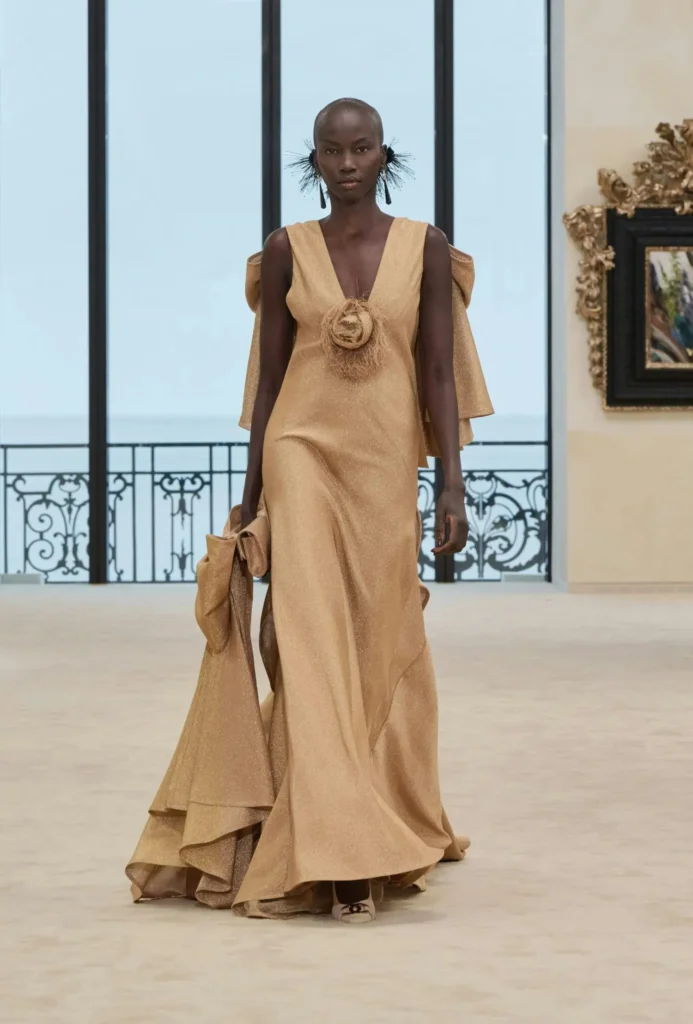
Chanel Cruise 2027 Collection
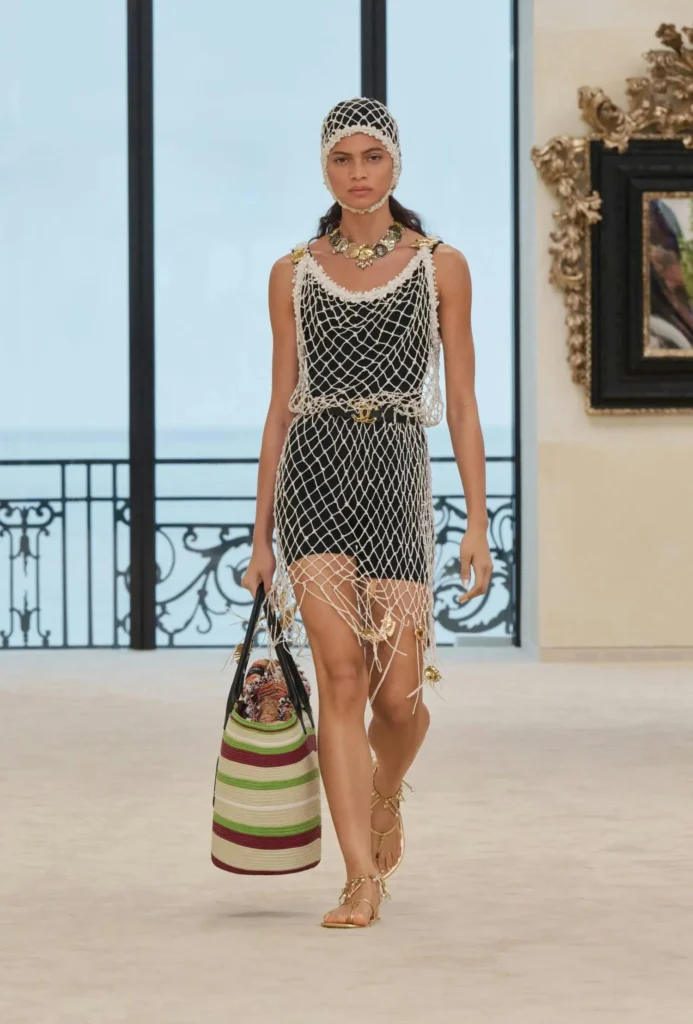
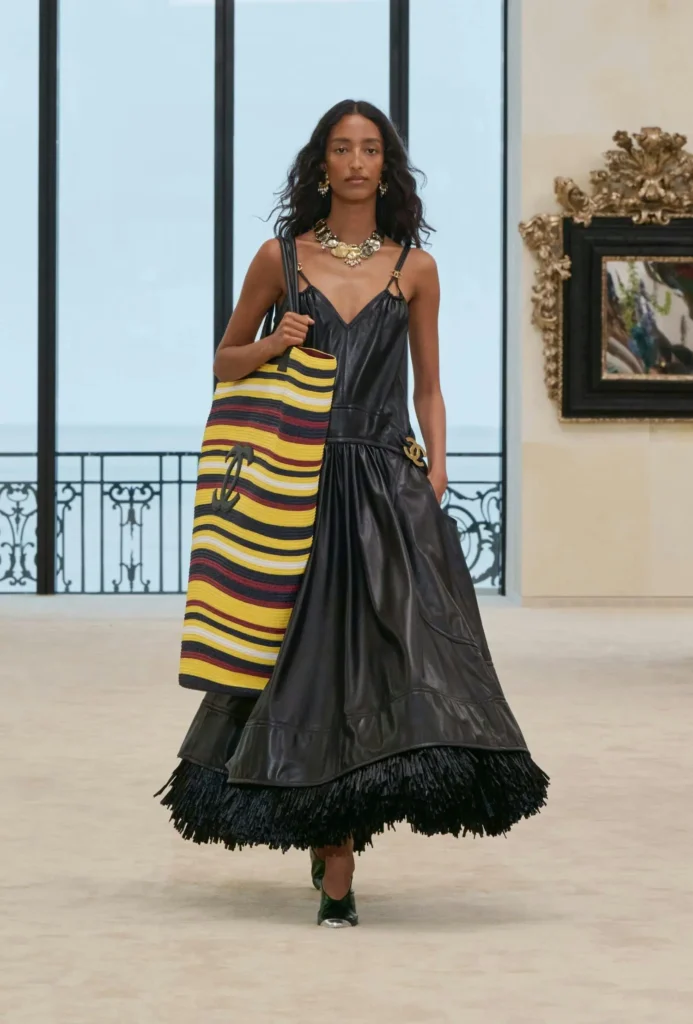
Other accessories reinforced this whimsical direction: giant straw totes, fishnet cover-ups, pepper-shaped earrings, rubber wading boots, and body-sized beach baskets blurred the line between luxury object and theatrical prop. Here, Blazy felt closer than ever to Lagerfeld, whose genius often lay in transforming fashion into pop-cultural spectacle without losing craftsmanship or sophistication.
Analysis
What makes this Cruise collection particularly fascinating is its audience positioning. Unlike many luxury brands aggressively chasing Gen Z through hyper-trendy aesthetics, Blazy’s Chanel appears more interested in reconnecting with long-time Chanel clients while subtly modernizing the house’s emotional appeal.
The collection’s references — Art Deco glamour, 1920s swimwear, seaside aristocracy, couture craftsmanship — clearly speak to Chanel’s established clientele. Yet Blazy avoids making the collection feel conservative through humor, eccentricity, and a carefully controlled sense of excess. His version of Chanel doesn’t reject youth culture; rather, it filters it through intelligence and emotional depth instead of pure trend-chasing.
This is perhaps Blazy’s greatest strength so far at Chanel: he understands that luxury today is not merely about novelty, but about creating worlds people emotionally want to inhabit. In recent years, many luxury houses became trapped between minimalism and commercial repetition, producing clothing that felt technically expensive but emotionally empty. Blazy’s Chanel moves in the opposite direction. It embraces fantasy, narrative, imperfection, and even silliness — qualities increasingly rare in corporate luxury fashion.
Importantly, the collection also demonstrates how Blazy is carefully negotiating Chanel’s enormous historical weight. His first collections focused heavily on decoding the fundamentals of Gabrielle Chanel’s design language. Here, he finally seemed more relaxed, allowing his own instincts — humor, surrealism, eclecticism — to emerge more visibly. Yet he never loses sight of the house’s core identity. The result feels neither archival cosplay nor radical disruption, but rather a gradual expansion of what Chanel can emotionally represent.
The Cruise collection also reflects broader changes in luxury fashion itself. As aspirational consumers pull back amid economic uncertainty, brands increasingly rely on emotional storytelling and cultural resonance rather than pure status signaling. Blazy’s Chanel understands this shift instinctively. The collection wasn’t about intimidating wealth; it was about joy, escapism, and fantasy — all increasingly valuable forms of luxury in unstable times.
Ultimately, this show confirmed that Matthieu Blazy is not trying to recreate Chanel’s past. He is trying to make people feel something through it. Whether through a glittering mermaid gown, a surreal barefoot heel, or a striped sweater blowing in the imaginary sea breeze of Biarritz, his Chanel feels alive — playful, emotional, and refreshingly human.