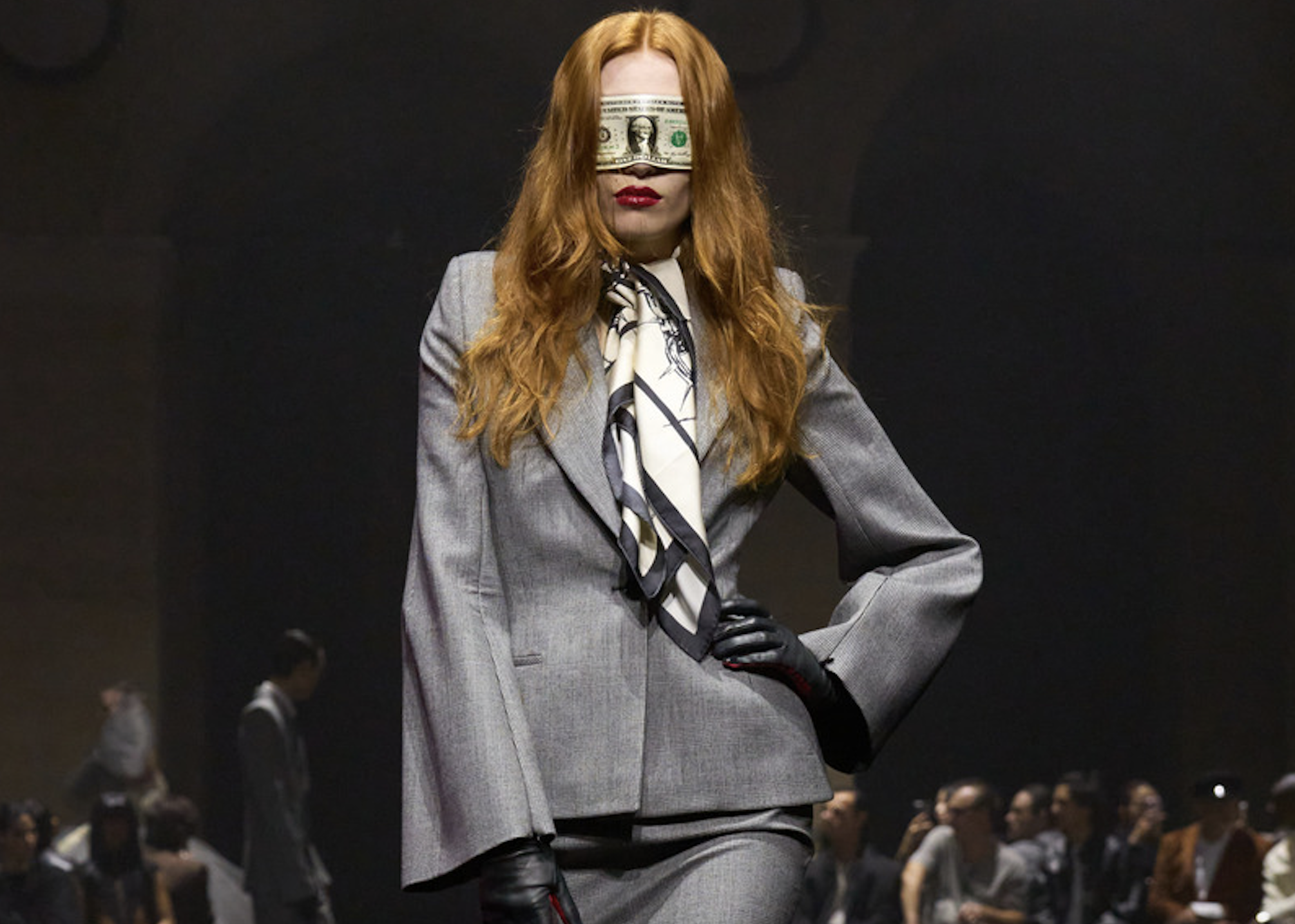
There are runway shows that sell a dream, and then there are shows that completely reject the idea of dreaming altogether. Matières Fécales’ Fall/Winter 2026 presentation, The One Percent, firmly sits in the second category.
This wasn’t about beauty. It was about discomfort — and more specifically, what power looks like when it’s pushed to an extreme.
Matières Fécales Fall/Winter 2026 Collection
The Opening: Bourgeois, But Distorted
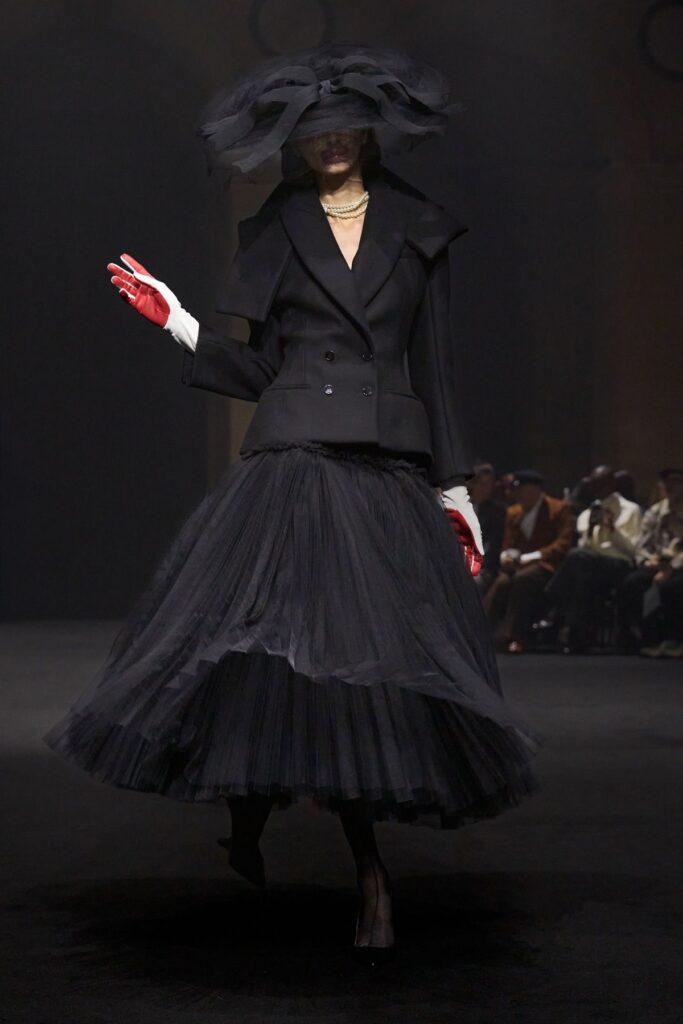
The show opened with what looked, at first glance, like familiar luxury codes: tailored coats in double-face cashmere, Prince of Wales suiting, tweed sets, and structured skirts reminiscent of Dior’s New Look.
But nothing sat quite right.
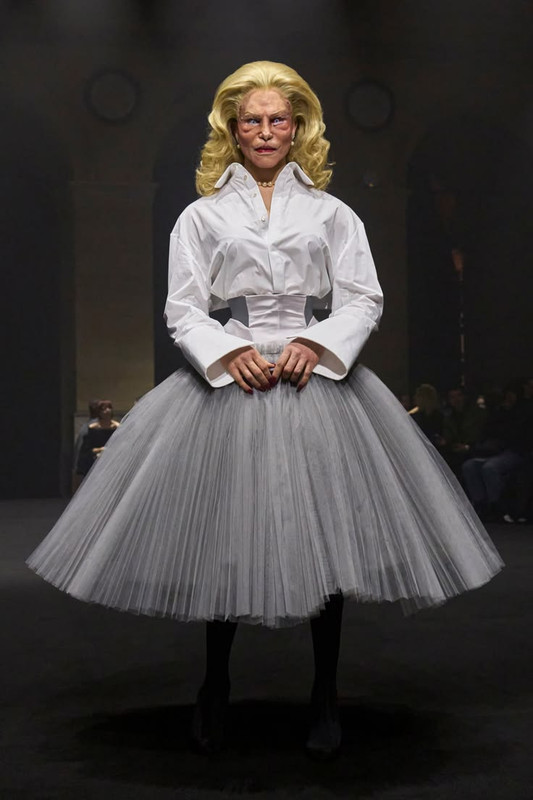
Silhouettes were exaggerated — hips extended, waists cinched beyond proportion, shoulders sharpened into something almost architectural. The body didn’t look dressed; it looked reconstructed. It immediately set the tone: this wasn’t elegance, it was a distortion of it.
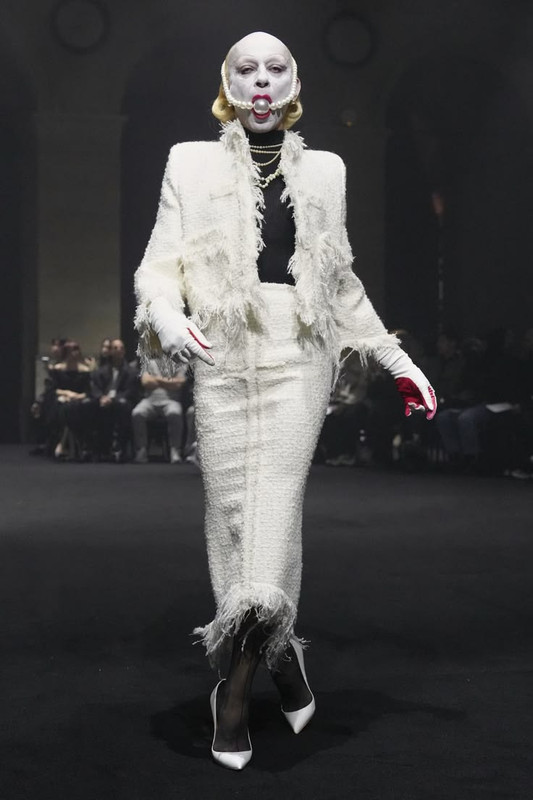
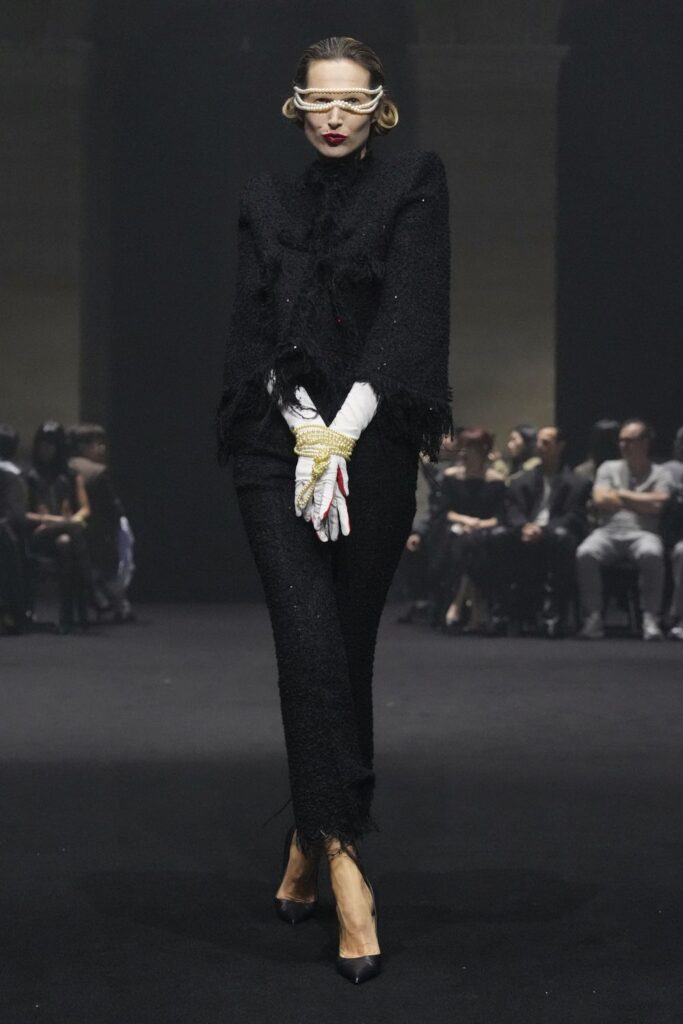
Accessories pushed that idea further. Long white lambskin gloves — dubbed “Guilt Gloves” — appeared pristine from afar but revealed red-stained palms up close. Paired with towering heels developed with Christian Louboutin, the look carried a quiet violence beneath its polish.
Then came the masks. Faces were covered with banknote-inspired designs, erasing identity entirely. These weren’t individuals — they were walking symbols of wealth.
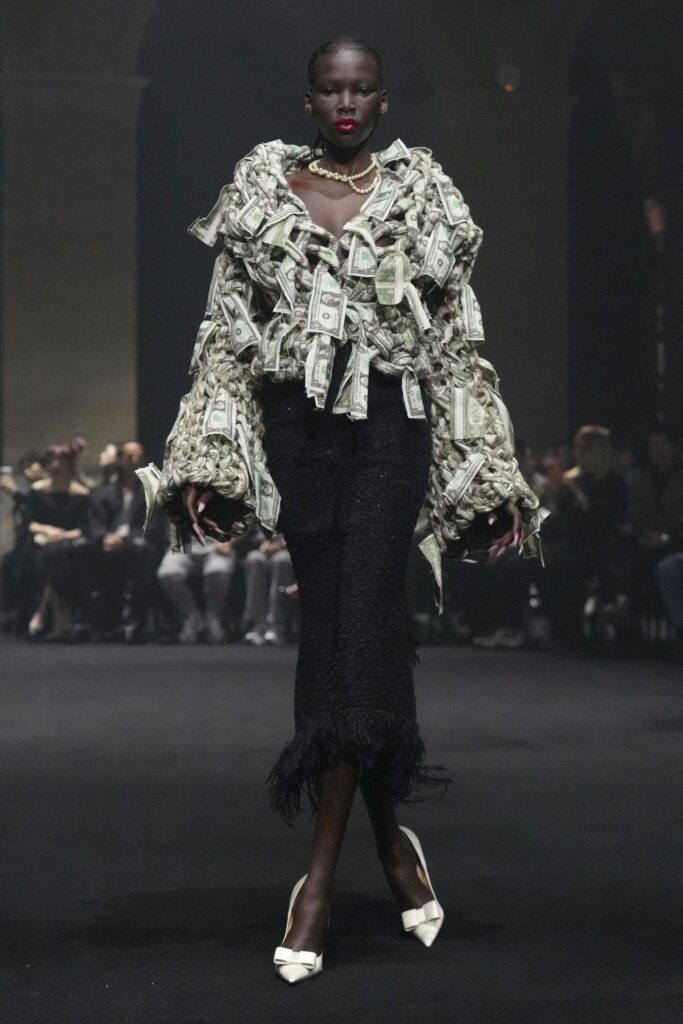
Matières Fécales Fall/Winter 2026 Collection
The Details That Made You Look Twice
What made the collection so effective was how it twisted traditional luxury elements into something unsettling.
Pearls, usually a symbol of refinement, were placed inside the mouth — turning adornment into something invasive. It felt less like decoration and more like consumption, as if wealth had moved from surface to something internal, almost suffocating.
There were also exaggerated daywear pieces: oversized blazers, pleated skirts, and heavy coats that mimicked “old money” dressing, but pushed to caricature. Some looks leaned almost theatrical — a Mr. Monopoly-style suit, bouffant gowns, and exaggerated twin-like figures that felt more eerie than elegant (looks like a widow pretending to mourn for her rich husband after she killed him).
Everything familiar was made grotesque. CULT & POWER.
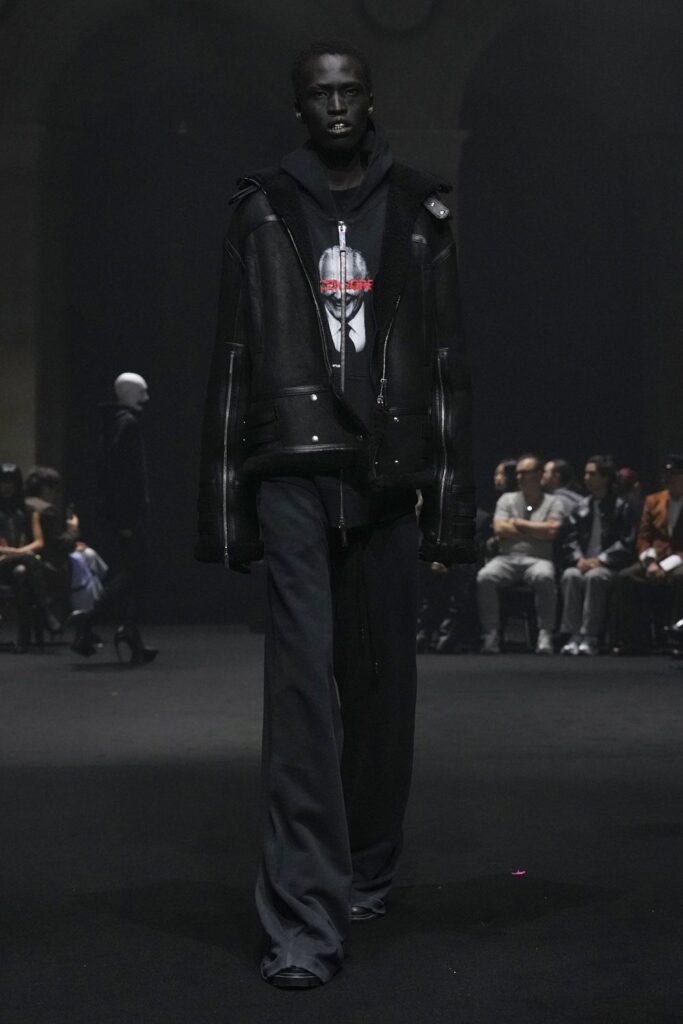
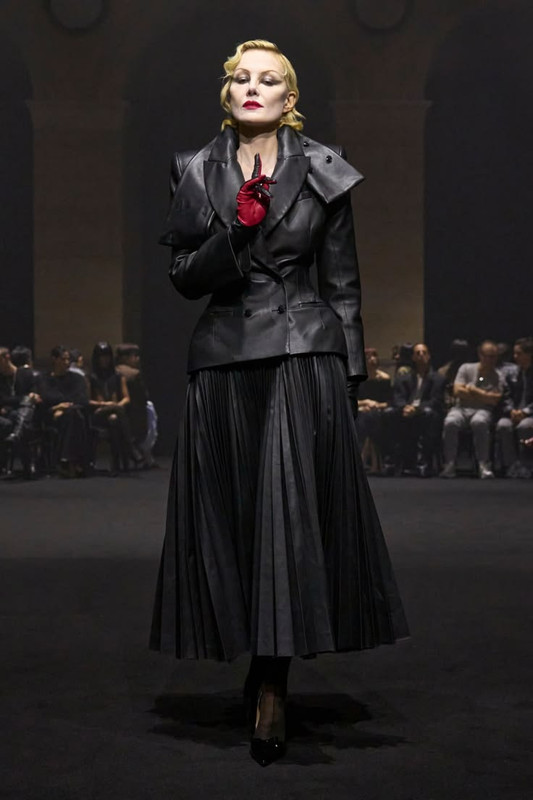
Matières Fécales Fall/Winter 2026 Collection
The Shift: Community vs. Power
Midway through, the show transitioned into something softer — or at least, more human.
Jersey hoodie-capes with elongated kangaroo pockets appeared, worn by people closely connected to the brand. The silhouettes were still dramatic, but the energy shifted. Less rigid, less controlled. It felt like a counterpoint to the first half — a reminder that identity can exist outside of rigid power structures.
Where the first section focused on isolation and status, this part hinted at community and belonging.
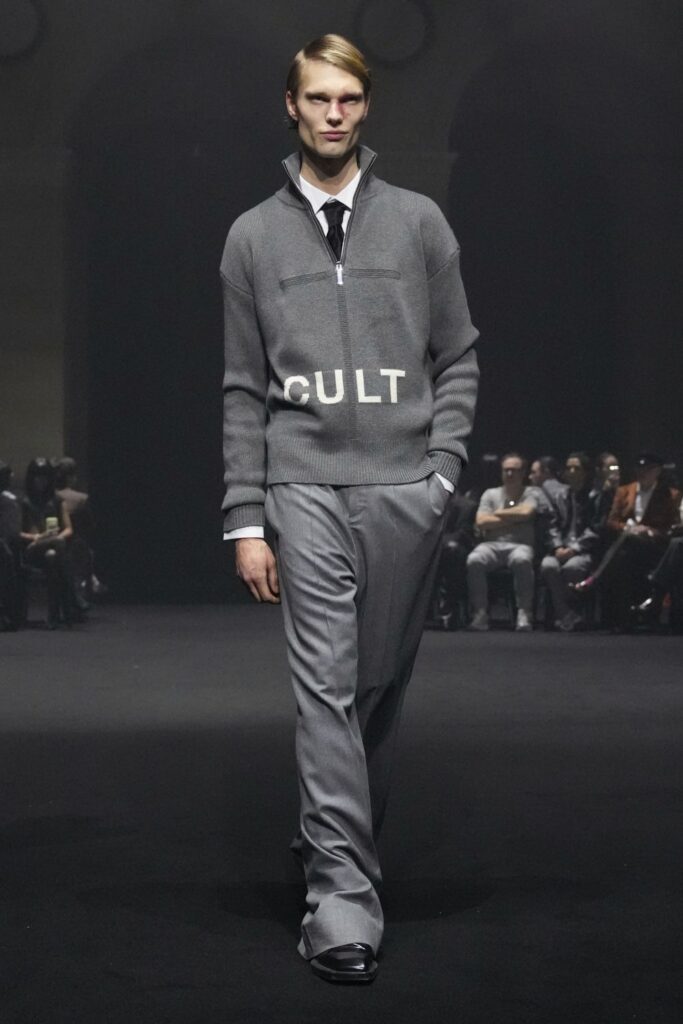
Matières Fécales Fall/Winter 2026 Collection
The Finale: The Immortals
The final act, titled “The Immortals,” pushed the concept even further.
Here, the body became almost post-human. One standout look featured an albino python cocoon skirt paired with heelless “skin boots” that blurred the line between garment and anatomy. The idea wasn’t just wealth anymore — it was transcendence.
The reference felt clear: today’s elite aren’t just chasing status, they’re chasing longevity, perfection, even immortality.
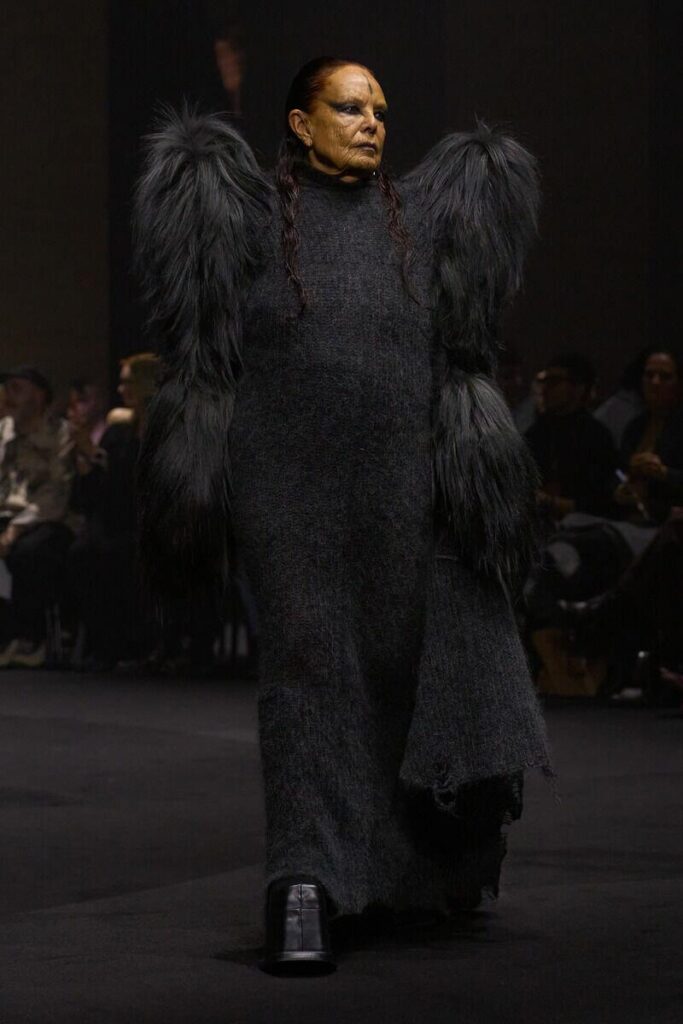
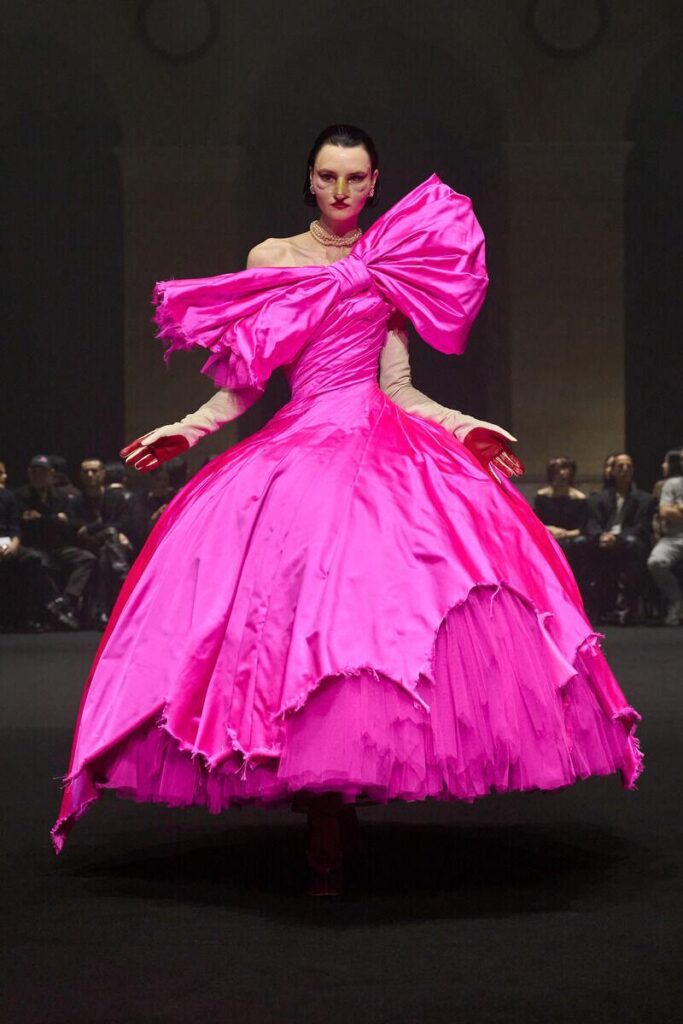
The show closed with a monumental Elizabethan-inspired silhouette worn by Debra Shaw — regal, imposing, and slightly unsettling. A reminder that power, whether historical or modern, has always relied on spectacle.
Matières Fécales Fall/Winter 2026 Collection
The Bigger Picture
What Matières Fécales did so effectively was flip the usual fashion narrative.
Luxury is typically presented as something to aspire to. Here, it was something to question.
And it’s interesting to see how this kind of commentary exists within the fashion system itself. Major publications like Vogue, Elle, or WWD choose not to publish this collection even though they normally do — not because they lack relevance, but because they challenge the very structures those platforms operate within.
Even events like the Met Gala exist within that same tension. With figures like Jeff Bezos tied to broader conversations around wealth and influence, fashion’s relationship with power feels more visible than ever, explaining the boycott of celebrities towards this year’s event.