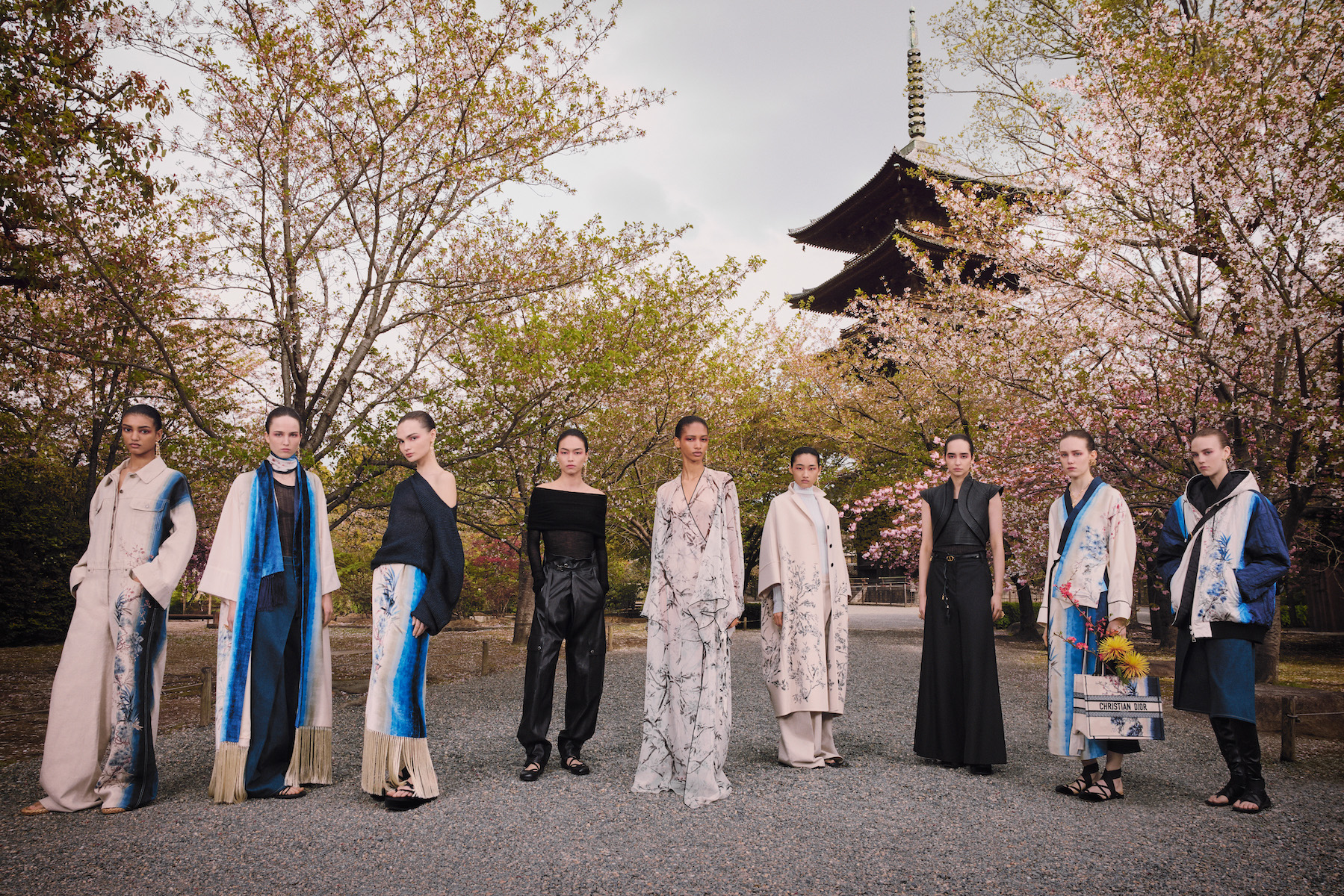
Cherry blossoms, centuries-old craftsmanship, and the poetic silence of a temple garden—Dior’s Pre-Fall 2025 show in Kyoto wasn’t just a fashion presentation; it was a cinematic homage to cultural dialogue, legacy, and the enduring magic of couture.
On a crisp spring evening under the luminescent canopy of sakura, Dior launched the destination fashion show calendar in spectacular style. Against the mystical backdrop of Kyoto’s historic To-ji Temple, Maria Grazia Chiuri unveiled her Pre-Fall 2025 collection with a moonlit runway that meandered through gravel paths and falling petals. It wasn’t merely a show—it was a scene from a dream, captured between the past and the present, tradition and transformation.
As the lights softly illuminated the cherry blossoms, guests including Lily James, Sonam Kapoor, Pretty Yende, and Deva Cassel watched models glide through the garden—each step a reverent nod to Japan’s refined visual culture and the maison’s decades-long conversation with the East.
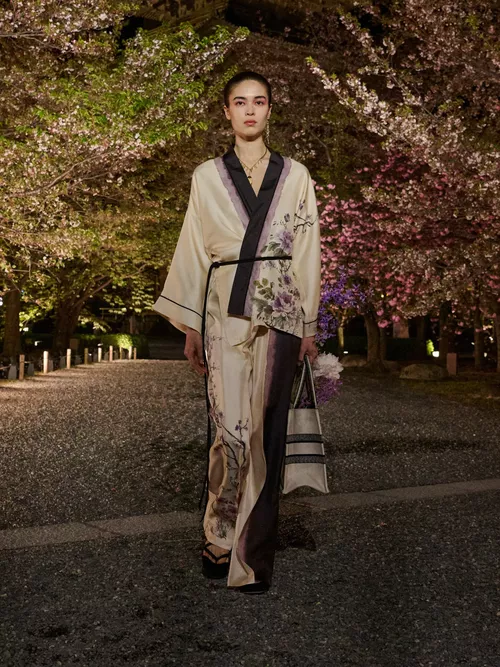
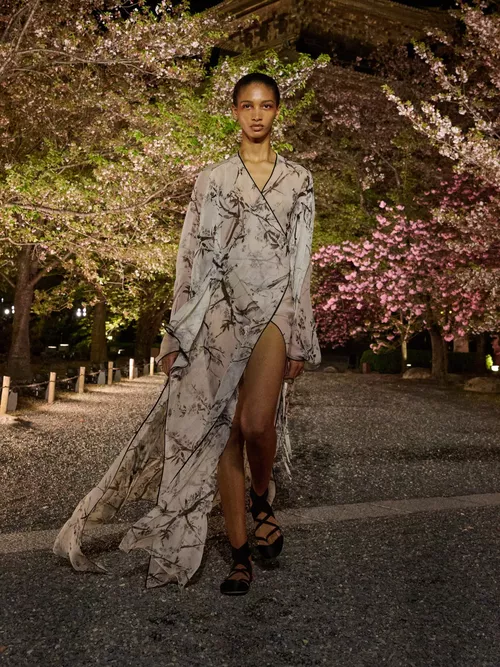
Dior’s Pre-Fall 2025 Collection
A Dialogue Spanning Decades
Christian Dior’s fascination with Japan began long before he ever set foot in the country—though, in truth, he never did. Yet in 1953, he became the first Western couturier to present a collection in Japan, a visionary move that cemented Dior’s identity as a globally attuned house. His designs soon reflected that affection: the Tokio dress in 1952, the Jardin Japonais ensemble in 1953, and Outamaro in 1954, woven from brocade crafted by Kyoto’s own Tatsumura Textile atelier—the very same atelier Chiuri would revisit for this show, nearly seventy years later.
Each Dior creative director since has left their own Japanese brushstroke—Marc Bohan’s kabuki-inspired 1971 Tokyo show, Galliano’s Hokusai references, and now, Chiuri’s serene contemplation of the kimono and its philosophy.
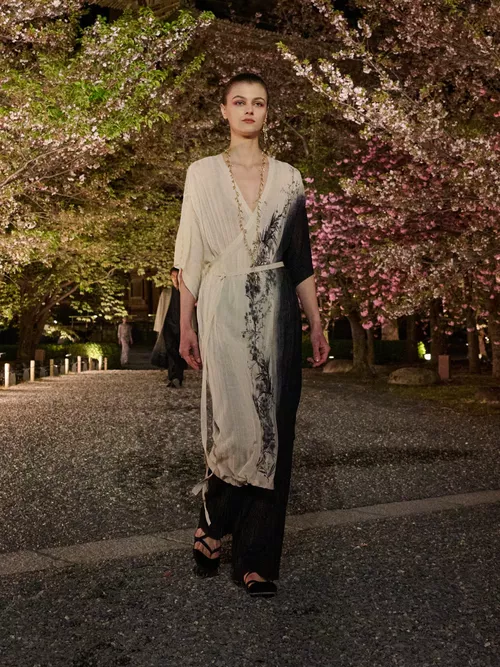

Dior’s Pre-Fall 2025 Collection
Kimono as Philosophy
Backstage, Chiuri revealed her source of inspiration: the kimono—not just as garment, but as a way of thinking. “It’s the body that defines the shape of the kimono,” she mused. “In Western fashion, it’s often the opposite—the body is expected to conform to the garment.” This inversion of control, where fabric yields to the human form, rather than constraining it, is where her creative thesis lies.
Chiuri transformed this idea into a collection marked by graceful restraint and utilitarian elegance. Jackets and coats had generous, enveloping silhouettes. Kimono-style overcoats in deep brocade paired with loose trousers. Wide-leg pants and fluid skirts undulated like waves with each step. The collection blurred gendered boundaries—like the kimono itself—favoring comfort, elegance, and dignity over spectacle.
A Celebration of Japanese Artistry
The spirit of collaboration was woven—quite literally—into every garment. Chiuri returned to Tatsumura Textile, the Kyoto atelier that had once worked with Monsieur Dior, where the 90-year-old artisan who helped craft the original 1954 brocade still works. Brocades with subtly modernized geometric motifs, floral gold robes, and obi-inspired sashes all paid tribute to this enduring lineage of craftsmanship.
Other Japanese artisans also brought their legacy to the runway: master dyer Tabata Kihachi and the Fukada family‘s traditional dyeing techniques elevated garments with ombré transitions from ivory to deep forest green. Petal embroidery appeared on cashmere coats, minimalist sketches of Japanese gardens adorned denim trapeze jackets, and even the musicians’ attire became canvases—hand-painted jackets moving in harmony with live violins.
From the technique of shibori to the glow of metallic thread, this was craftsmanship as poetry—one stitch at a time.
Not a Cruise, But a Statement
Unlike most destination shows, this wasn’t part of Dior’s cruise schedule. It was a Pre-Fall collection—one that arrives in stores next week. Yet its theatricality surpassed cruise expectations. In a season where every major luxury house is plotting passport-stamped runways—Chanel at Lake Como, Louis Vuitton in Avignon, Gucci in Florence—Dior reminded us that location isn’t just spectacle, but storytelling.
With Delphine Arnault seated front row, Dior underscored the strategic weight of this collection: Kyoto wasn’t a photo op, but a cultural commitment. One that intertwined identity, geography, and fashion with deliberate elegance.
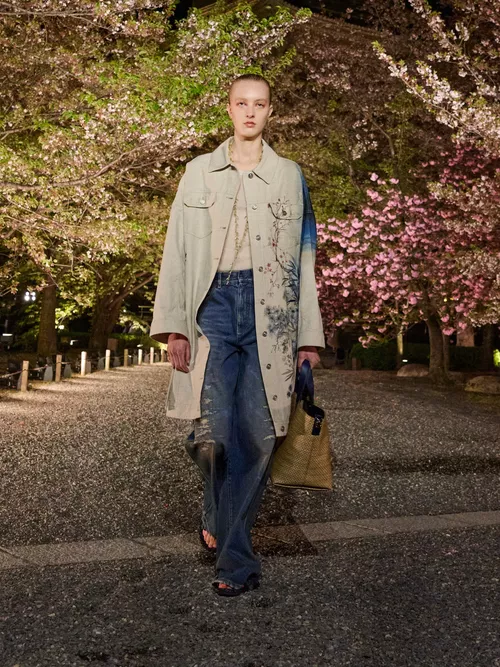
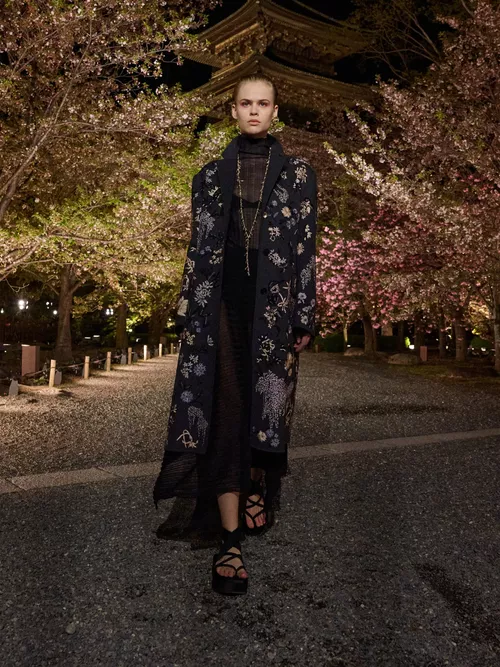
Dior’s Pre-Fall 2025 Collection
Metamorphosis in Motion
This was a metamorphic collection, as layered and fleeting as the cherry blossoms under which it was shown. The deep blacks of coats gave way to glints of golden embroidery, floral prints unfolded like haikus in motion, and silhouettes carried a serene confidence. The garments did not scream for attention—they whispered, commanding it in the process.
Chiuri’s vision—rooted in historical homage, shaped by a feminist lens, and elevated by the quiet confidence of Japanese tradition—reminds us that true luxury is not just made, but lived. It is not only about being seen, but about seeing—and feeling—the story behind the seams.
As petals fell on gravel, and centuries-old temple bells chimed softly in the distance, Dior in Kyoto became more than a show. It became a moment.