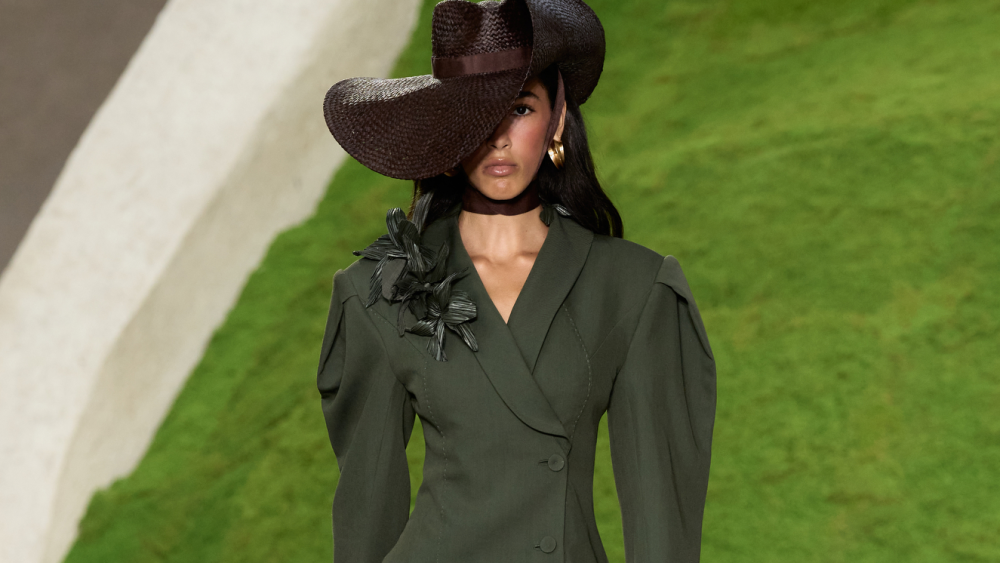
Cult Gaia returned to New York Fashion Week with Behesht, Persian for “heaven,” but Jasmin Larian Hekmat’s idea of paradise was far from perfect or untouched. Instead, the Spring 2027 collection was shaped by grief, specifically the loss of her grandmother, Mommy Aghdas, and the idea that beauty can emerge from even the most painful experiences.
Presented at the Gilder Center inside the American Museum of Natural History, the setting became an important part of the collection’s story. The architecture of the space, with its cavernous concrete forms and moss-covered surfaces, reflected Hekmat’s central contrast: hardness becoming softness, and something lifeless eventually giving way to new growth. It was an appropriate environment for a collection built around transformation.
Cult Gaia Spring/Summer 2027 Collection
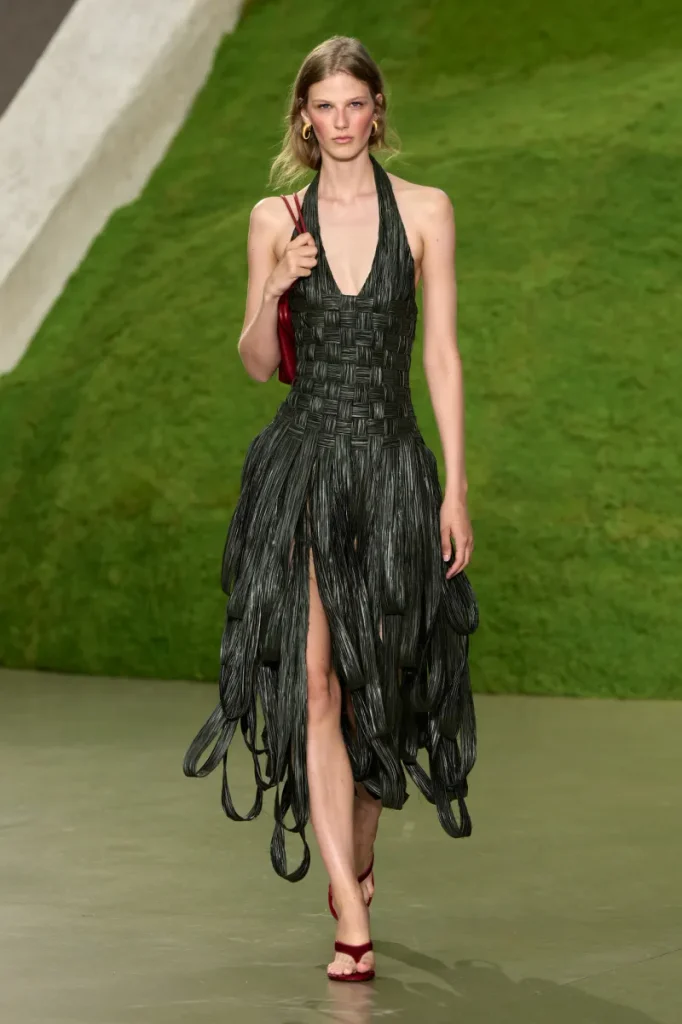
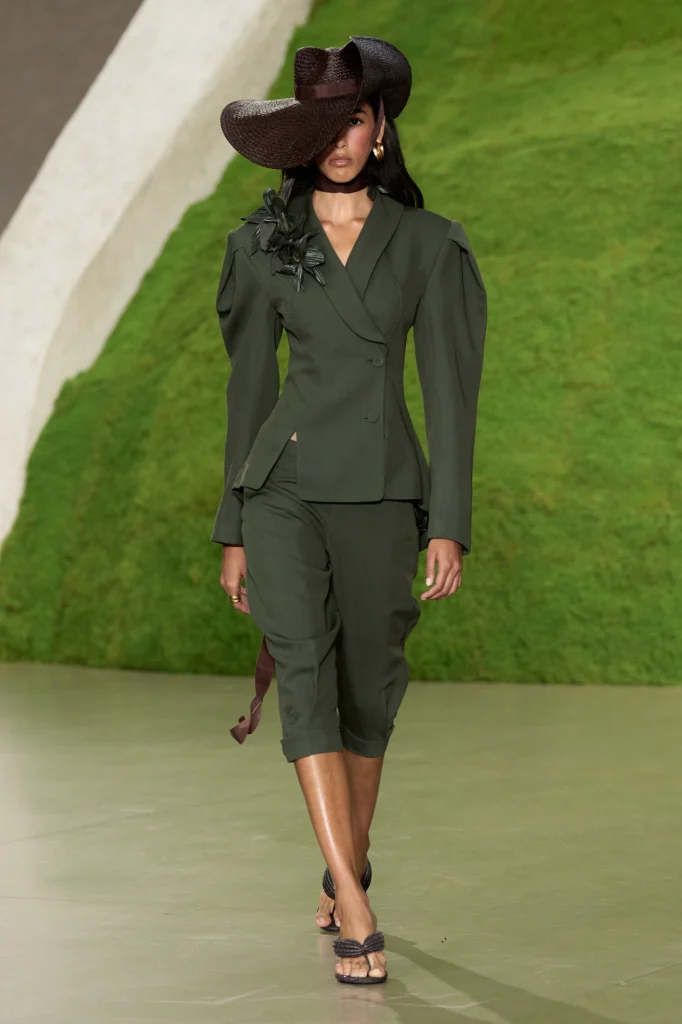
The opening looks established this tension immediately. A hunter-green tailcoat featured exaggerated shoulders and sculptural leg-of-mutton sleeves, giving the silhouette an almost architectural quality. Cult Gaia then brought its signature sensuality into the equation through bustiers and board shorts in chintz plissé, which were given additional structure through basket-weaving techniques. Rather than allowing the fabric to remain delicate and fluid, Hekmat manipulated it into something almost architectural.
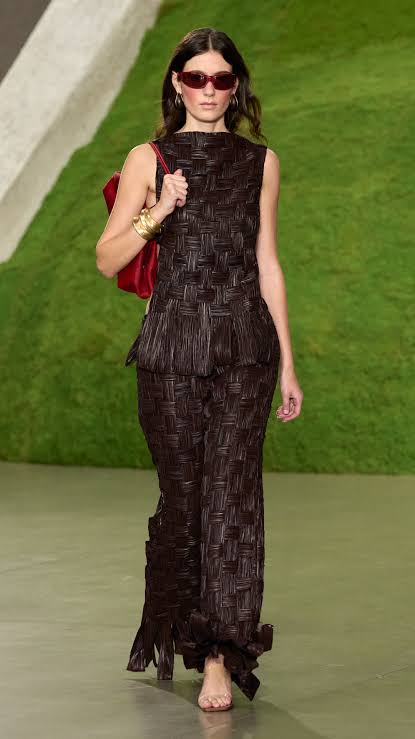
Cult Gaia Spring/Summer 2027 Collection
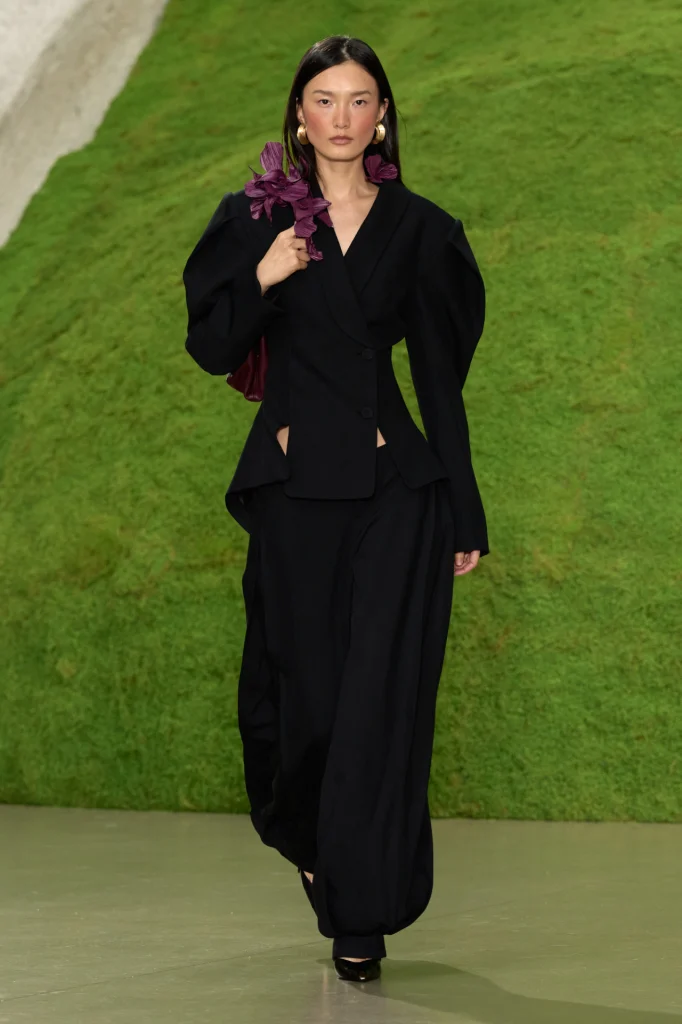
That balance between softness and structure continued throughout the collection. Golden discs, originally associated with Cult Gaia’s instantly recognisable handbags, were transformed into elaborate garments, including a metallic minidress and sweeping maxiskirt. Made from thousands of individually connected rings, the pieces captured the brand’s love of spectacle while pushing its accessories into the realm of fashion itself. Paired with glittering tweed jackets, the combination had a distinctly retro-futuristic quality, somewhere between Paco Rabanne’s metallic experimentation and Chanel’s polished glamour.
Cult Gaia Spring/Summer 2027 Collection
Colour became another way of expressing the collection’s emotional progression. The palette began with charcoal and darker neutrals before gradually opening into hunter green, sky blue, vivid red and soft pink. It felt almost like watching a landscape return to life. The shift was subtle rather than literal, allowing the clothes to communicate the movement from mourning toward renewal without turning the collection into a straightforward visual metaphor.
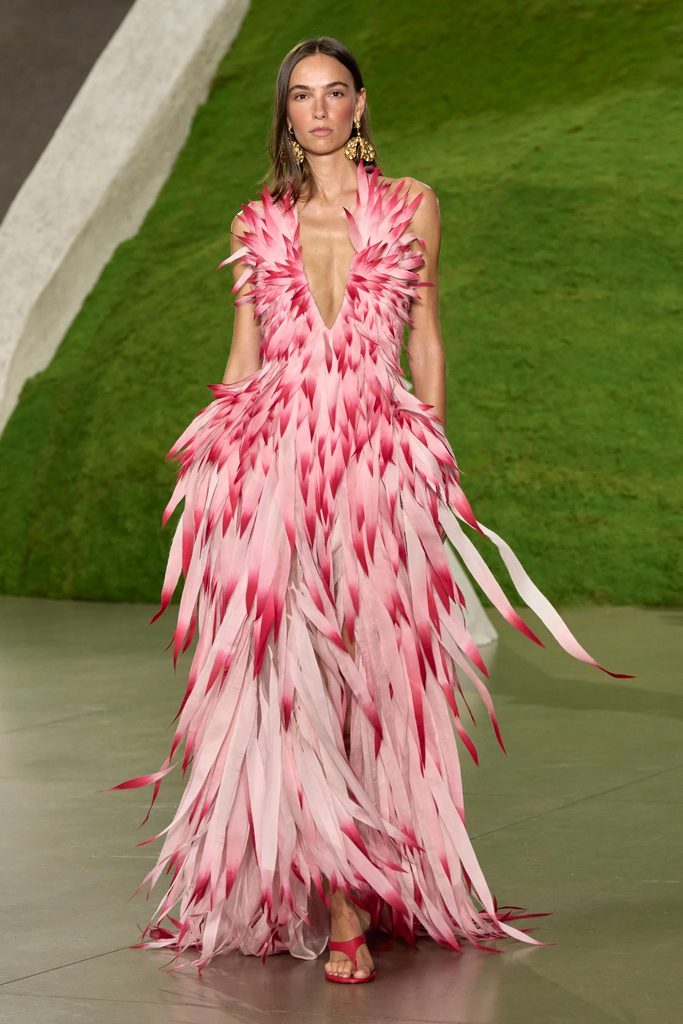
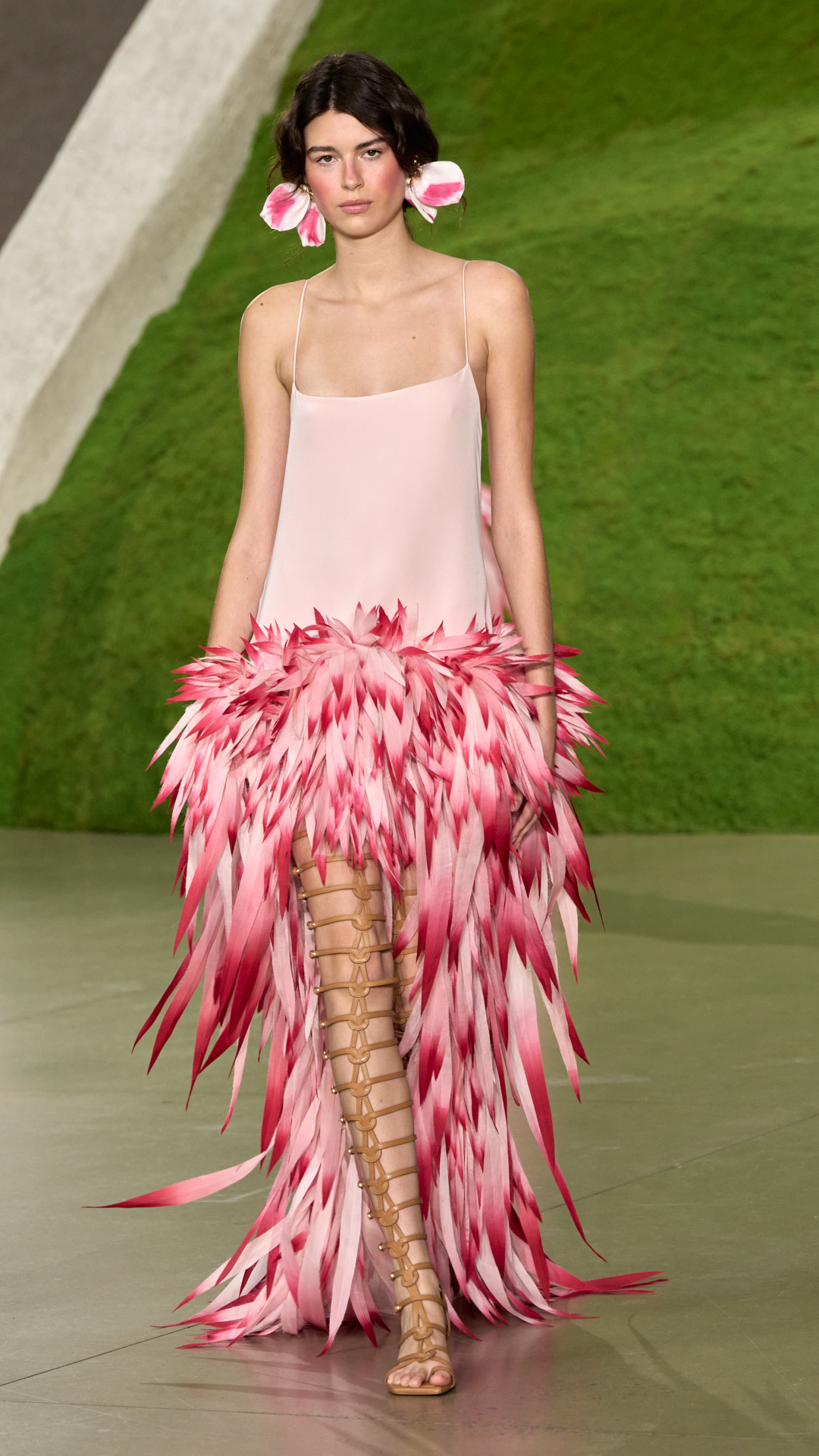
The eveningwear made that idea particularly clear. Dip-dyed pink silk organza emerged from gowns in clusters of delicate, flower-like forms, creating silhouettes that appeared to bloom directly from the body. The finale took the concept even further, with petals falling over the runway as the final looks appeared. After the darker beginning, the effect was less about celebrating perfection than acknowledging that something beautiful can still grow after loss.
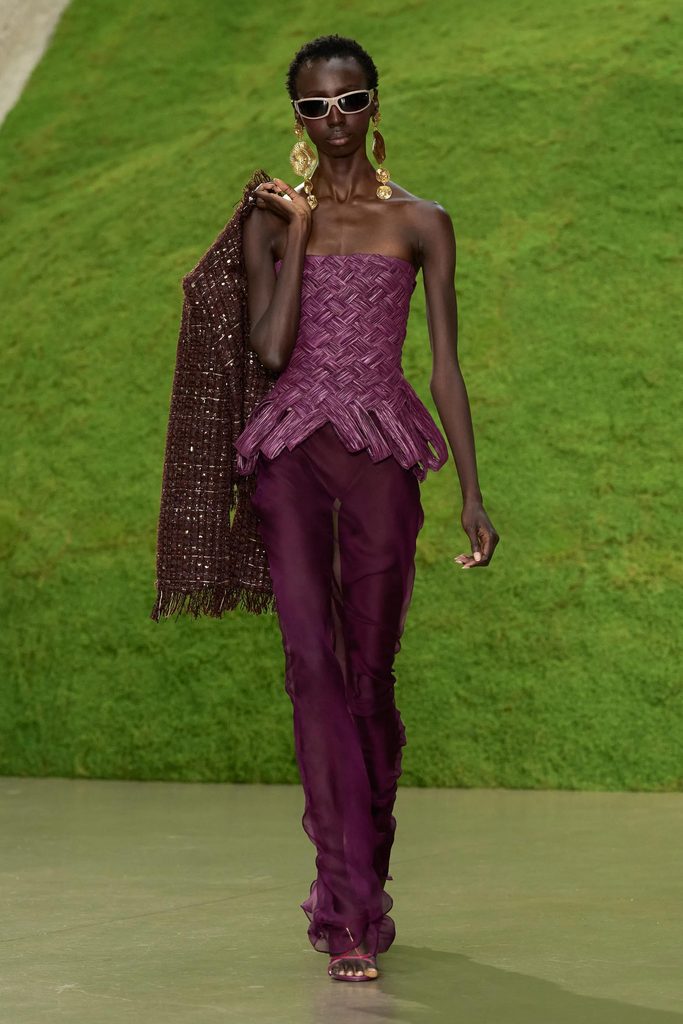
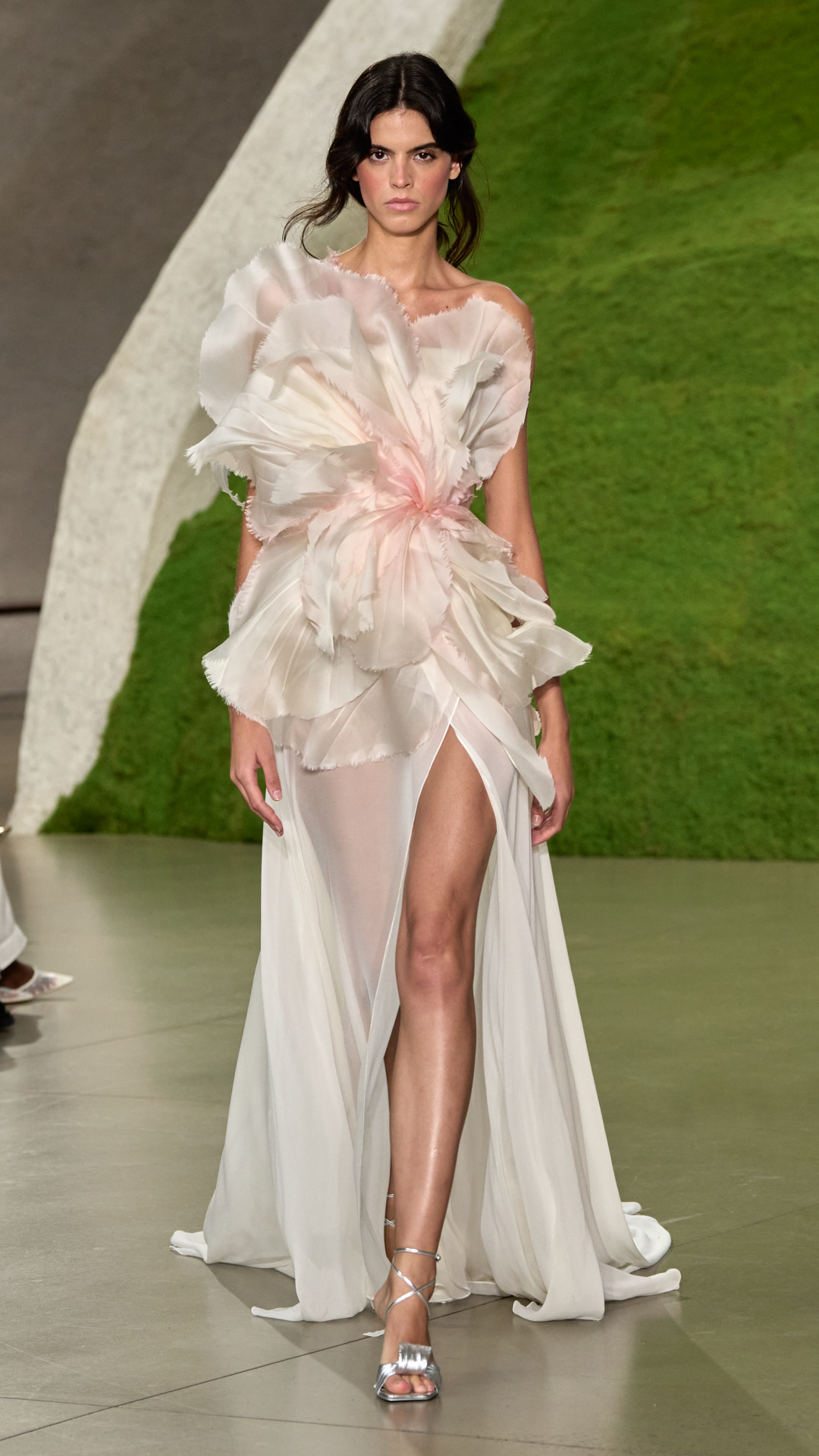
Cult Gaia Spring/Summer 2027 Collection
This emotional dimension also made Cult Gaia’s familiar glamour feel different. The brand has built much of its identity around highly photographed accessories, sculptural silhouettes and clothes designed to command attention. Behesht still had all of those elements, from gold hardware to skin-baring shapes, but there was more vulnerability underneath the spectacle. The clothes were not simply designed to be seen; they were carrying an emotional narrative.
Even the beauty look resisted excessive perfection. Undone hair by Karim Belghiran for TRESemmé and warm, flushed makeup by Raoul Alejandre using Lisa Eldridge products made the models appear sun-kissed and slightly undone. This softness helped counterbalance the architectural clothing, making the overall image feel human rather than overly constructed.
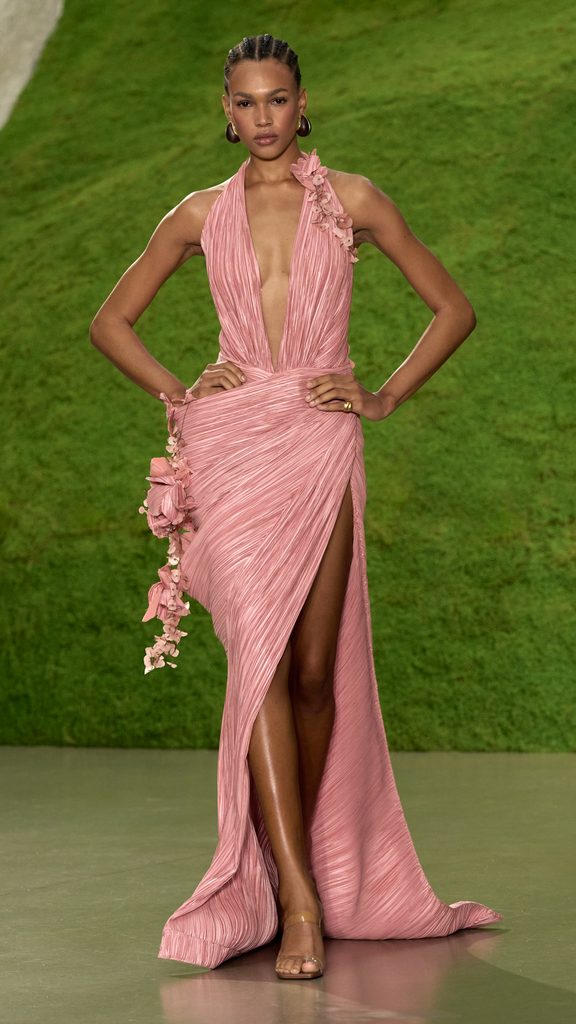
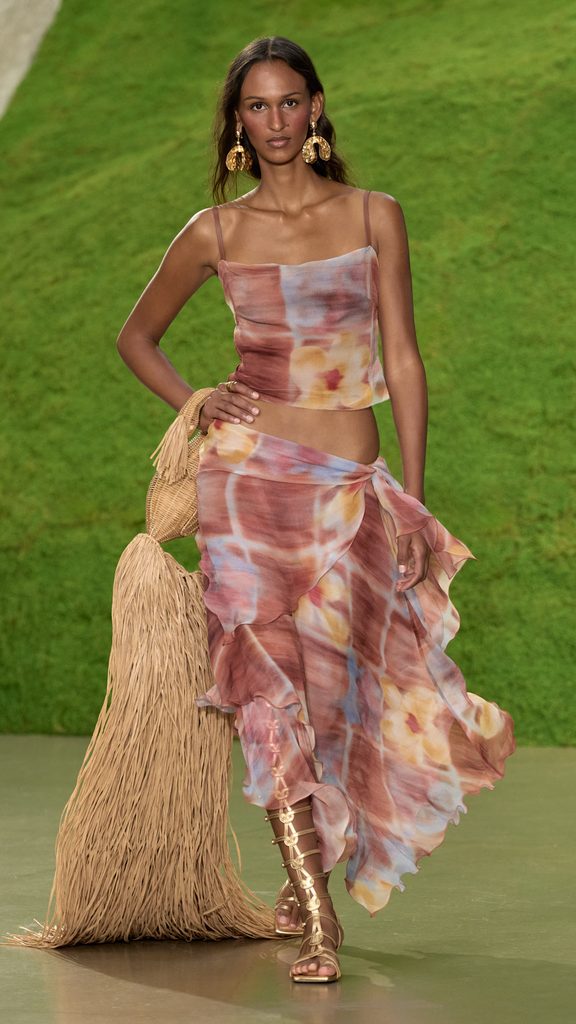
Cult Gaia Spring/Summer 2027 Collection
There was also a sense that Cult Gaia itself is entering another stage of growth. The brand’s menswear, introduced last season, continued to develop, even if the women’s collection remained firmly at the centre. Meanwhile, the opening of a new Madison Avenue store signals Hekmat’s growing investment in New York and the brand’s ambitions beyond its Los Angeles roots.
Ultimately, Behesht was most compelling when Cult Gaia allowed its familiar maximalism to coexist with something much more personal. Hekmat did not interpret heaven as an escape from grief. Instead, she imagined it as the possibility of finding beauty after it — in colour returning to darkness, flowers emerging from concrete, and soft materials becoming strong enough to hold their own shape.
For a brand known for creating objects of desire, Spring 2027 offered something more intimate: a reminder that beauty does not have to erase pain to exist alongside it.
Leave a Reply