For Fall 2026, Chet Lo did more than stage a runway show—he reimagined what fashion week can feel like. Titled Night Market, the collection transformed the ballroom of Mandarin Oriental Hyde Park into a living tribute to Hong Kong’s nocturnal street culture, while simultaneously setting a new benchmark for accessibility in fashion.
The result was a season defined by community, sensuality, and inclusivity—proof that Lo’s brand evolution extends far beyond his signature spiked knitwear.
Chet Lo Fall 2026 Ready-to-Wear Collection
Fashion You Can Feel: Accessibility at the Forefront
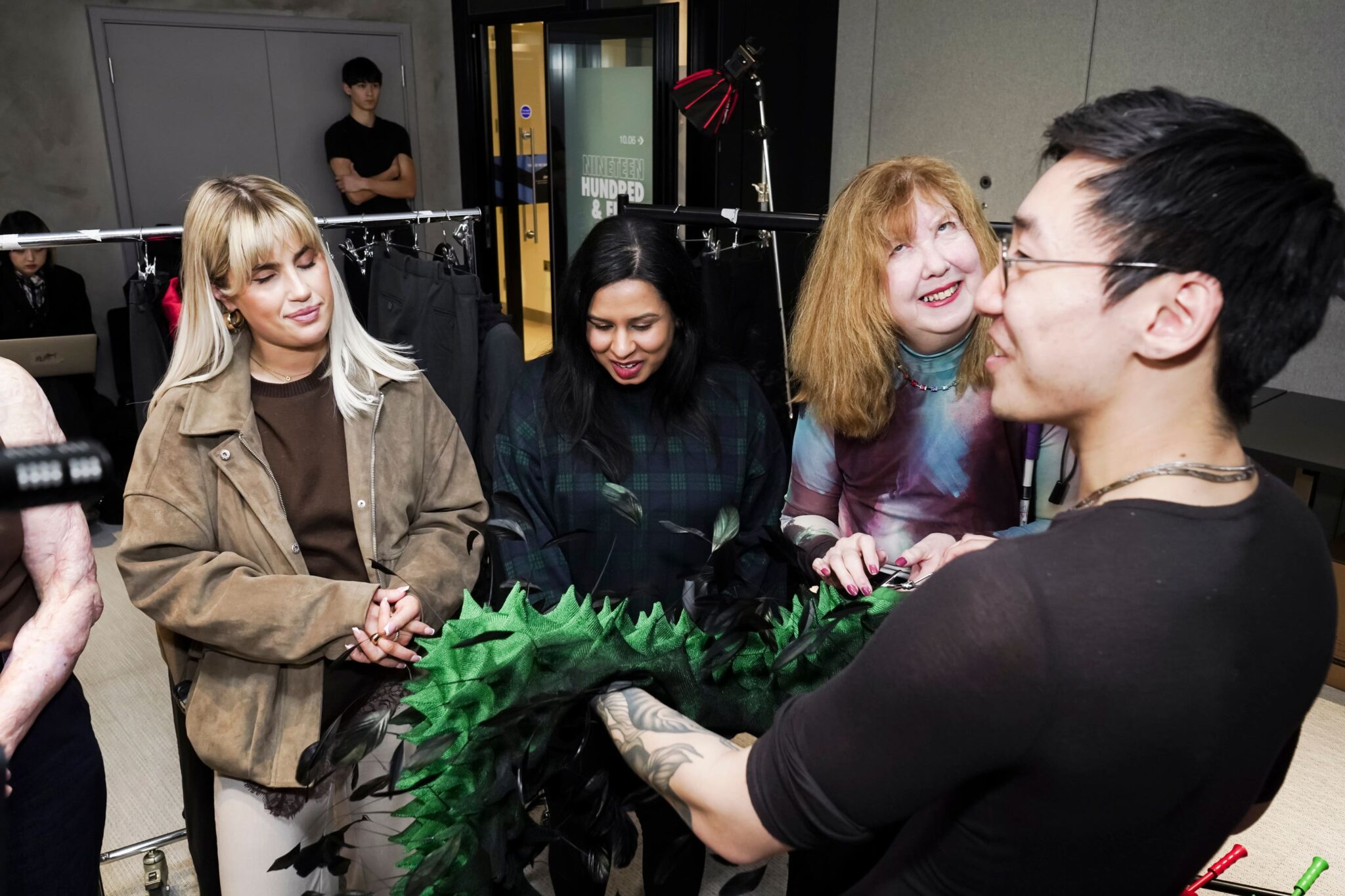
In an industry built around visual spectacle, Lo inverted the hierarchy of the senses. Before the runway began, blind and low-vision guests were invited to participate in a “touch tour,” an initiative led by hairstylist Anna Cofone through her Hair & Care programme.
Each attendee had the opportunity to physically explore key garments from the collection while Lo personally described their construction, silhouette, and intent. Audio descriptions were meticulously prepared in advance, ensuring blind and visually impaired guests could follow the show in real time via headphones, supported by the Asian People’s Disability Alliance and partners including Philips Sound and Authentic Beauty Concept.
The concept was deceptively simple: allow texture and storytelling to build a visual world before the first model stepped onto the runway.
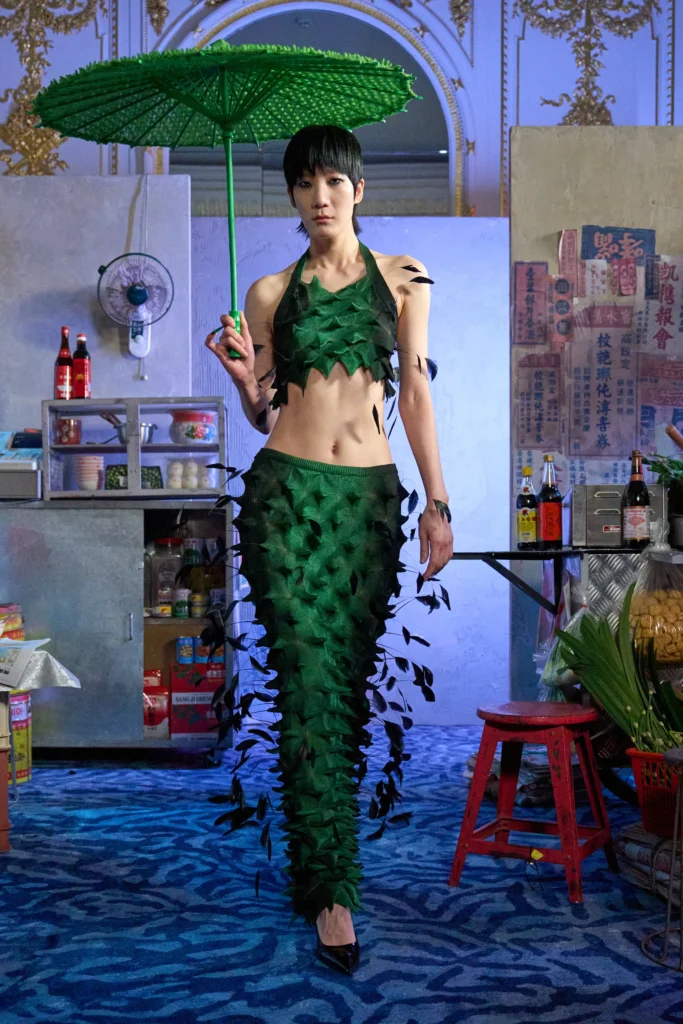
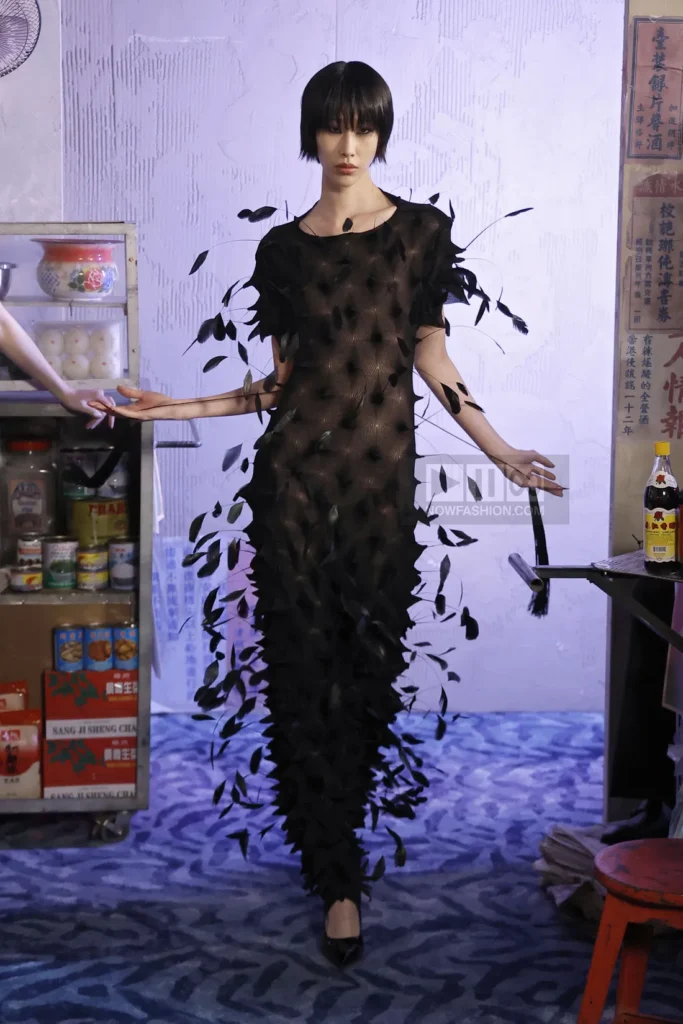
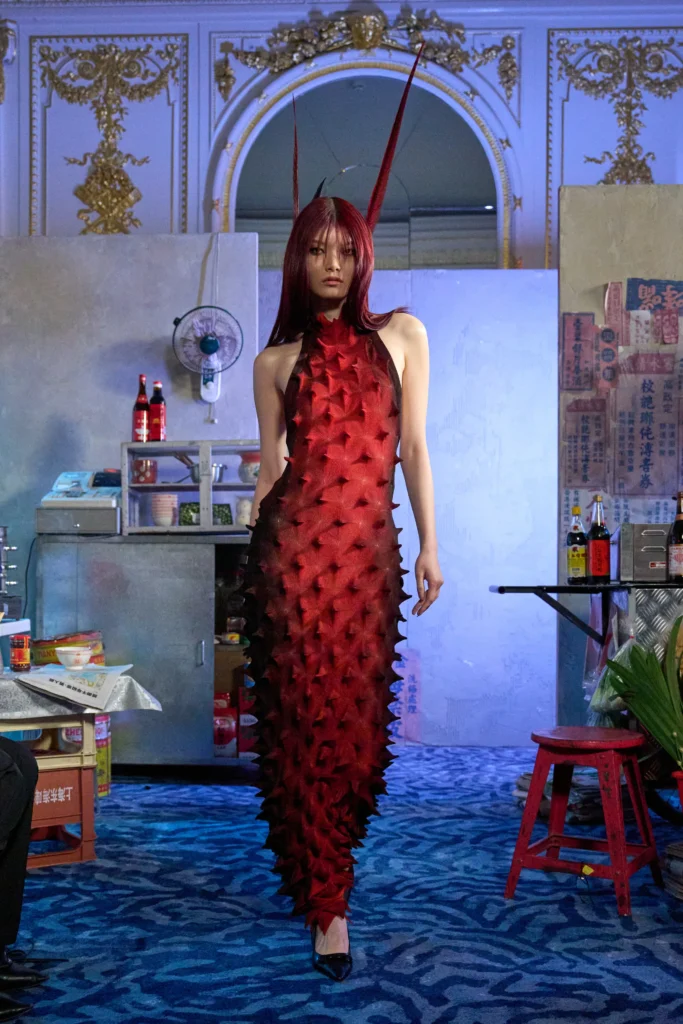
For Lo, whose work is inherently tactile—defined by sculptural spikes, second-skin silhouettes, and experimental surfaces—the format felt organic. Black and emerald spiked knits, feather-fluted fabrics, silk trousers with felt insets: each piece revealed its narrative through touch. The juxtaposition between coarse and smooth materials, rigid and fluid elements, became not just aesthetic, but experiential.
In doing so, Lo reframed accessibility not as accommodation, but as creative expansion.
Chet Lo Fall 2026 Ready-to-Wear Collection
Recreating Hong Kong’s Night Market Energy
At its core, Night Market was rooted in Lo’s personal heritage. Inspired by a recent trip to Hong Kong with his partner—who was visiting Asia for the first time—Lo rediscovered the romance and electricity of the city’s night markets through fresh eyes.
Inside the venue, stalls curated by 10 Asian artists, designers, and charities surrounded the runway, encouraging guests to browse before and after the show. The immersive set evoked neon-lit streets, steam rising from food vendors, and the layered sensory overload of Hong Kong after dark.
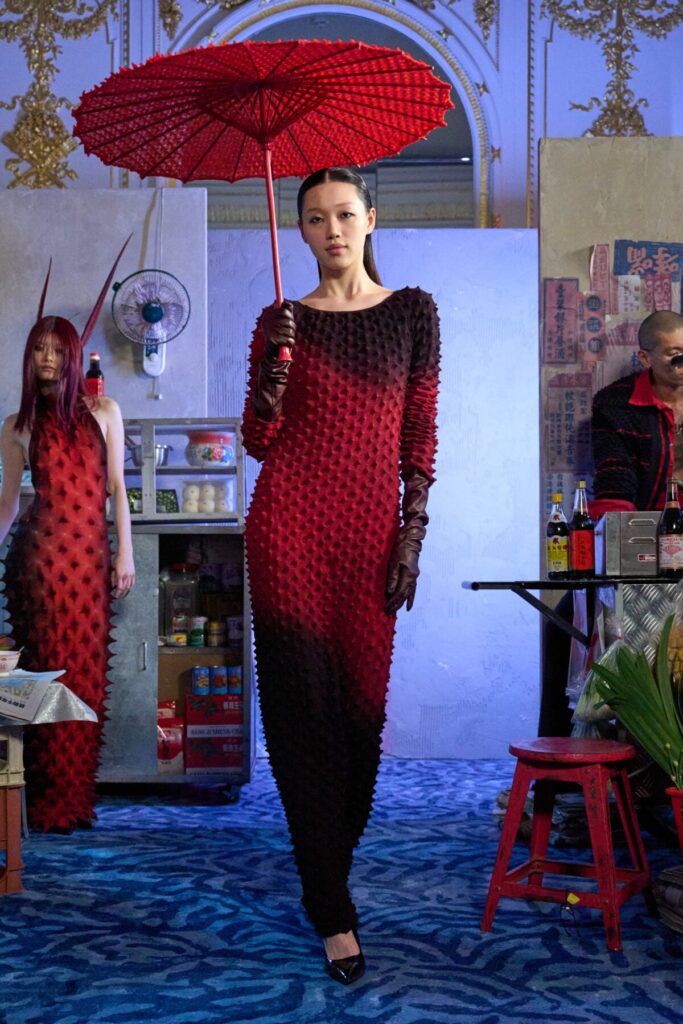
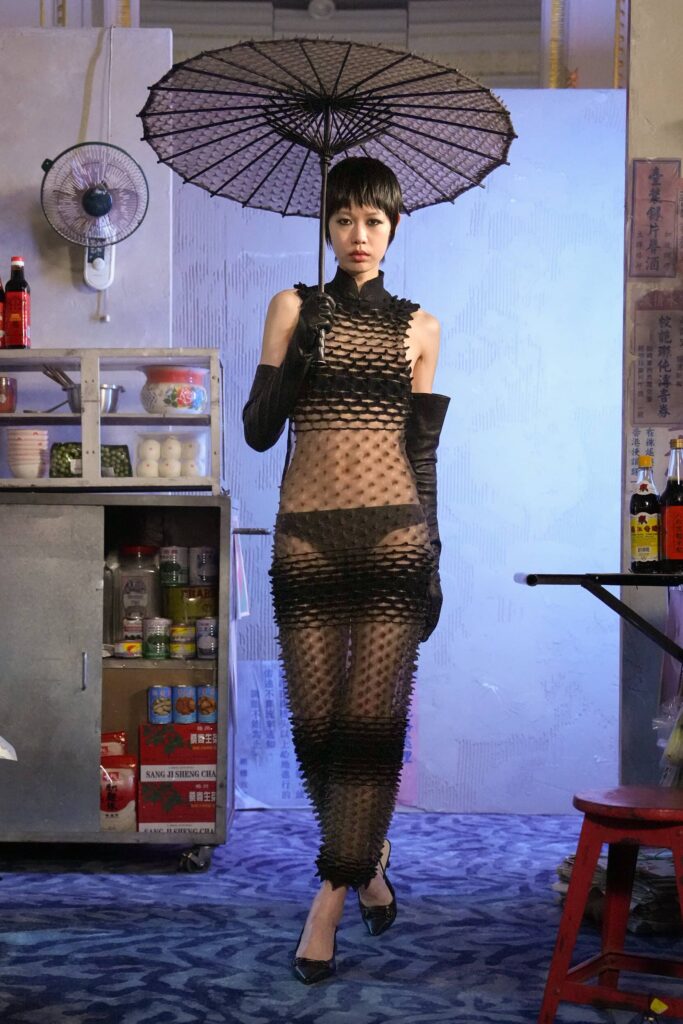
The palette—green, red, charcoal—mirrored glowing signage and crowded urban corridors. Wafer-thin parasols nodded to the city’s humid, rain-slicked climate. The atmosphere was less about nostalgia and more about reanimation: a memory re-experienced in real time.
Chet Lo Fall 2026 Ready-to-Wear Collection
The Evolution of the Spiked Knit
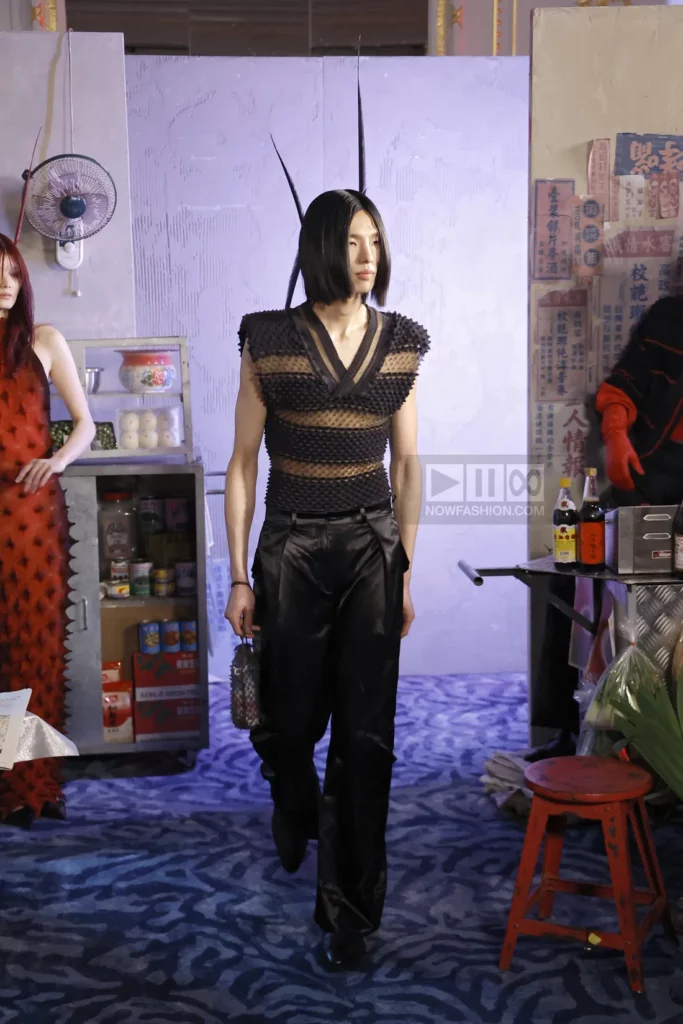
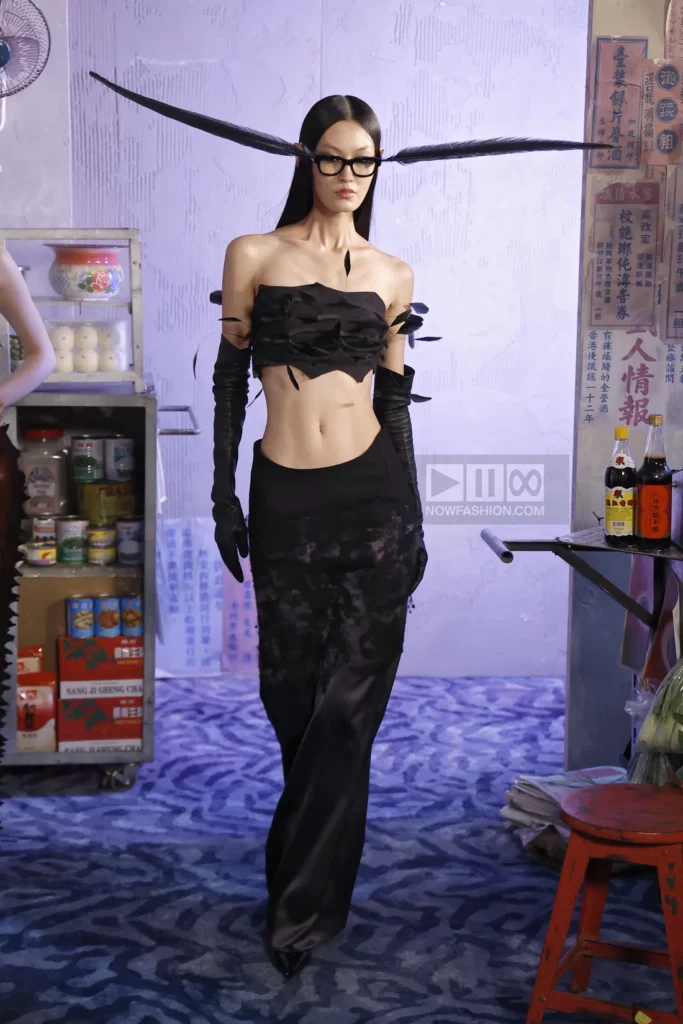
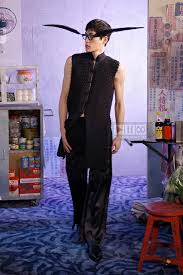
Lo’s signature spiked knitwear remains central to his brand identity, but for Fall 2026 it felt recalibrated. The spikes appeared less aggressive and more protective—armor rather than weapon. Skin-baring dresses and sharply tailored suiting worn without shirts injected sensuality, while feathers emerging from the tips of knits added theatrical softness.
Second-skin silhouettes hugged the body with confidence. Tailoring felt sharper, more self-assured. The collection retained Lo’s “cool kid” sex appeal but grounded it in cultural storytelling and community pride.
Standout accessories included dramatic eyewear created in collaboration with Cubitts, inspired by Peking opera, complete with elongated pheasant feathers framing the face—equal parts performance and street style statement.
Chet Lo Fall 2026 Ready-to-Wear Collection
Community as Creative Strategy
Lo has become a fixture on the London Fashion Week calendar, but for Fall 2026 he deliberately shifted the spotlight outward. Rather than positioning himself as a lone creative voice, he centered the Asian diaspora in London—artists, food vendors, charities, collaborators—transforming the show into a collective platform.
“I want people to feel like there’s a lot of Asian talent in London,” he has said. That intention materialized not only in casting and set design, but in the show’s broader message: representation thrives when it is visible, audible, and tangible.
By embedding community into both concept and logistics, Lo demonstrated that brand-building can coexist with cultural stewardship.
From Knit Specialist to Cultural Architect
After briefly stepping back from the wholesale treadmill, Lo has emerged with renewed clarity. Fall 2026 suggests a designer no longer confined to the label of “spiky knit specialist.” Instead, he positions himself as a cultural architect—designing experiences as much as garments.
The accessibility initiative alone signals a forward-thinking approach that many heritage houses have yet to meaningfully embrace. In an era when inclusivity risks becoming performative, Lo operationalized it. He built it into the show’s structure.
At the same time, the collection proved commercially viable. The tailored suits, tactile trousers, and reworked knits are easily translatable to retail, while the more theatrical pieces reinforce brand identity. It’s a careful balance between experimentation and wearability—between spectacle and sustainability.
Fall 2026 was ambitious. Logistically complex. Community-driven. But it also felt joyful.
By recreating Hong Kong’s night markets inside a grand London hotel, amplifying Asian creatives, and making the runway physically accessible to blind and low-vision guests, Chet Lo expanded the definition of what a fashion show can be.
In doing so, he delivered not just a collection—but a blueprint.
Fashion, in Lo’s world, isn’t just something you see. It’s something you feel.