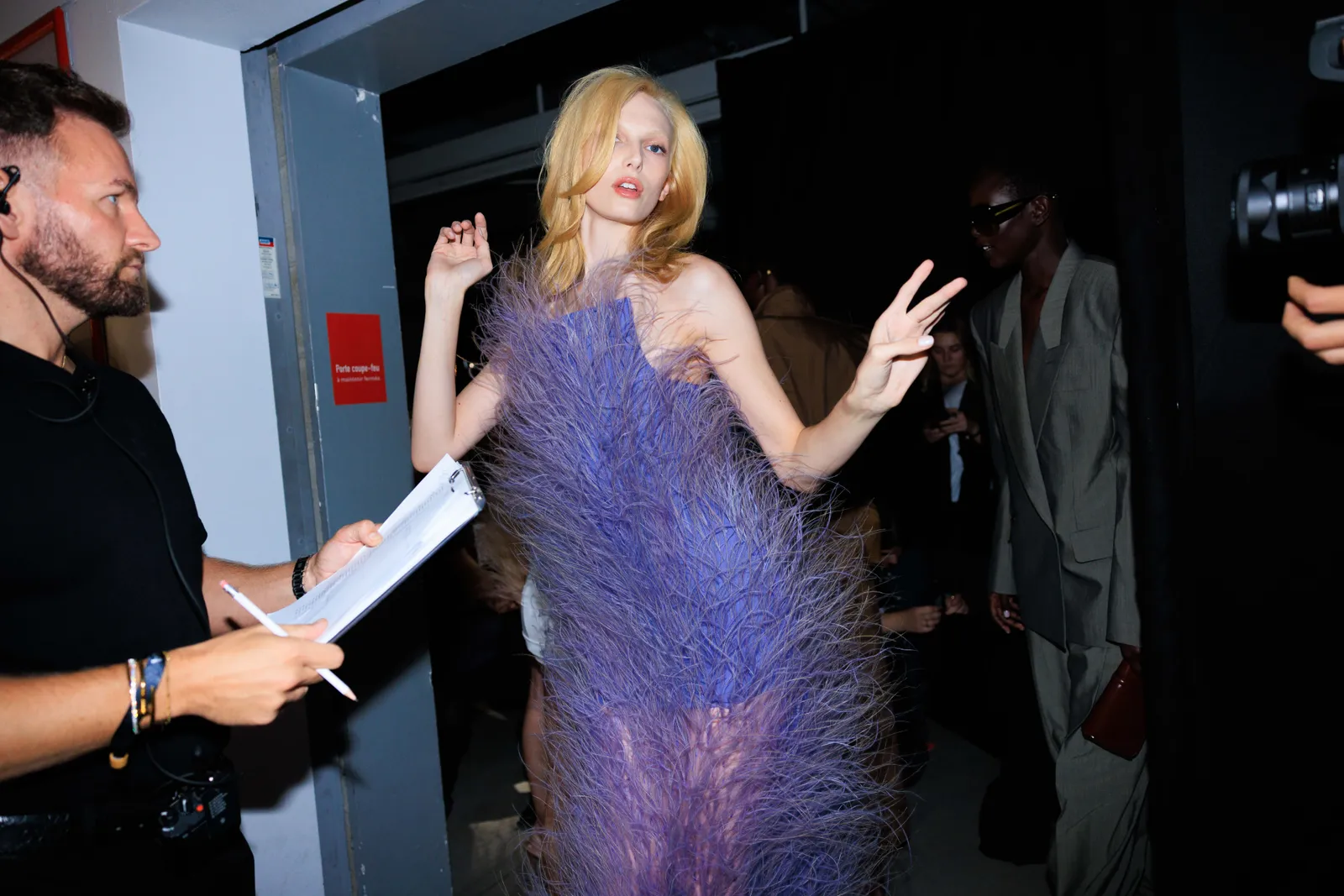
Feathers have long been shorthand for extravagance in fashion — light, dramatic and irresistibly eye-catching. Yet the fantasy they sell often masks a troubling reality. At Paris Fashion Week Spring/Summer 2026, Stella McCartney challenged that contradiction head-on, unveiling a new plant-based material designed to replicate the allure of feathers without relying on birds at all.
The innovation, known as “fevvers,” appeared in the closing moments of McCartney’s runway show, offering a vision of spectacle untethered from animal exploitation and pushing ethical fashion into new creative territory.
Stella McCartney Spring/Summer 2026 Collection
Reimagining fashion drama without animal harm
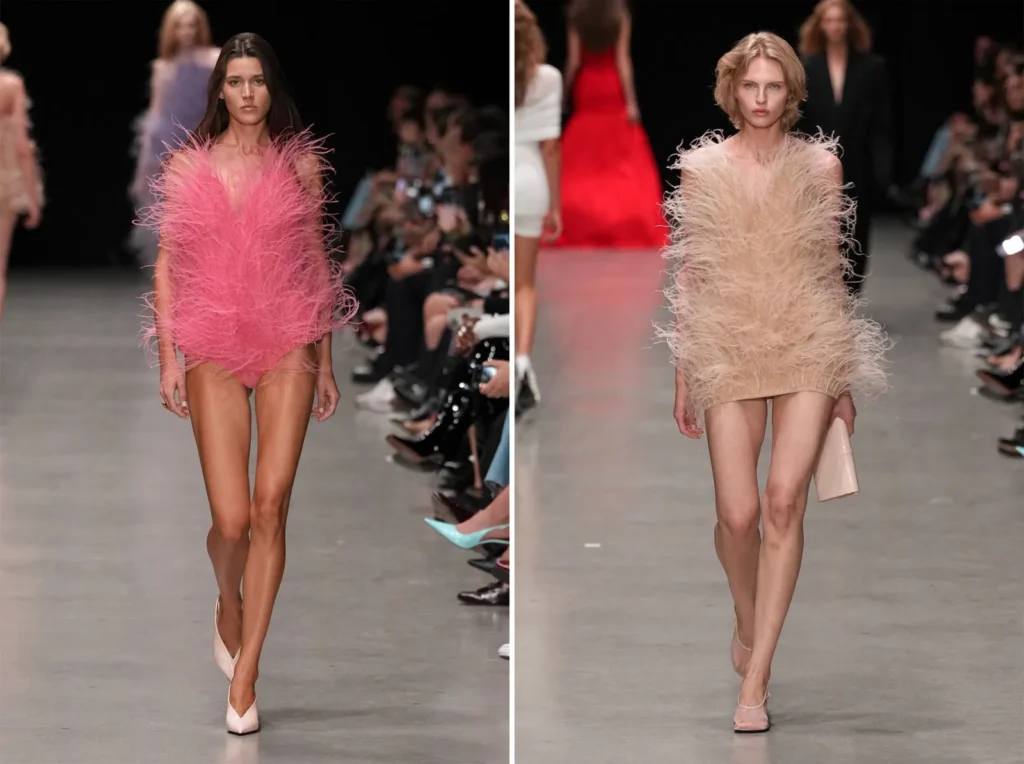
The fevvers made their debut in several statement looks, including flowing gowns and compact dresses that delivered volume, texture and movement traditionally associated with feathers. Crafted from plant-derived materials and coloured using natural dyes, the material demonstrated that visual impact does not require animal sacrifice.
Speaking backstage, McCartney questioned why fashion continues to frame plucked feathers as something refined or romantic. Her goal, she explained, is to preserve fashion’s sense of theatre while removing practices that depend on animal suffering — a principle that has defined her label since its founding.
As the brand approaches its 25-year milestone, McCartney remains one of luxury fashion’s most consistent critics from within. Her house has never incorporated fur, leather, feathers or skins, making it an early pioneer of material innovation long before sustainability became an industry-wide talking point.
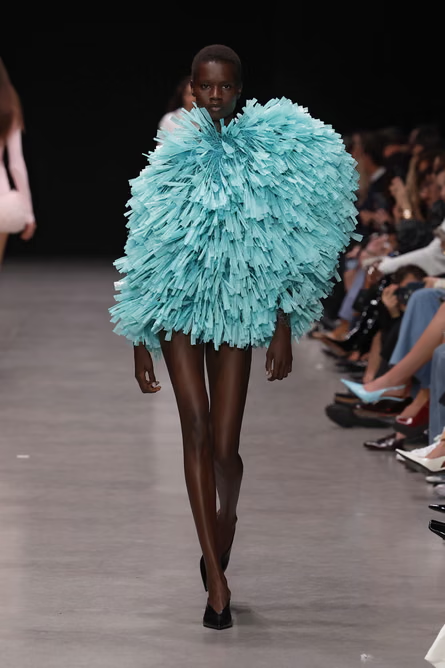
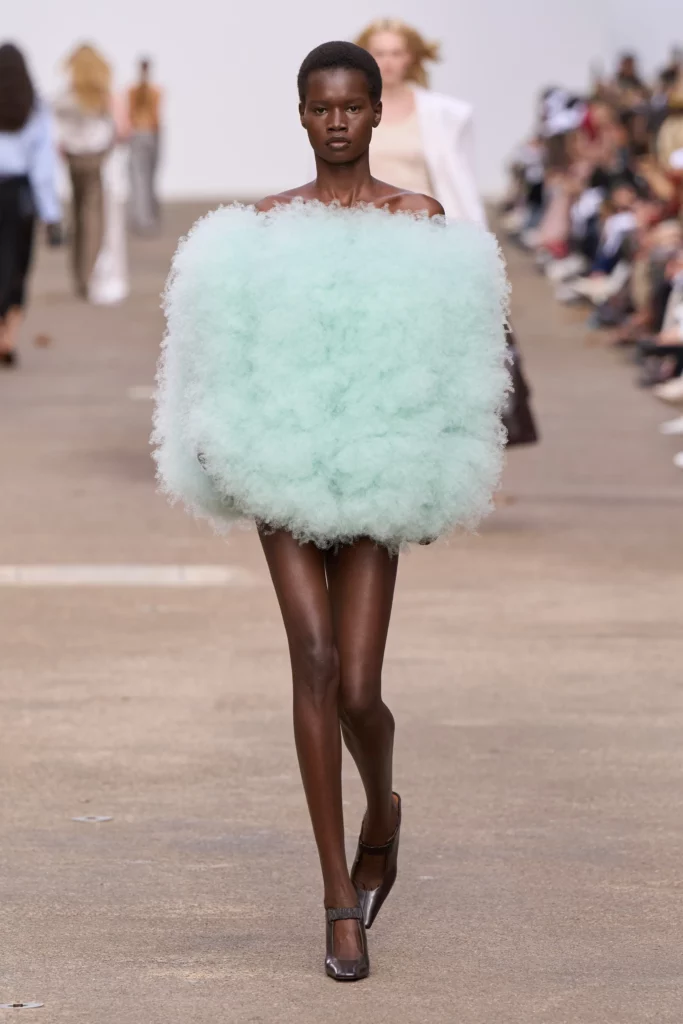
Stella McCartney Spring/Summer 2026 Collection
A Paris runway built on innovation
Staged at the Centre Pompidou, the Spring/Summer 2026 collection, titled Come Together, opened with a spoken performance by Helen Mirren, setting a cinematic tone. The runway explored contrasts between traditionally masculine and feminine silhouettes — structured tailoring alongside fluid draping — but the emphasis remained on clothes designed for real wear.
While Paris Fashion Week has yet to adopt a formal fur-free policy, McCartney’s show stood apart as a clear statement of intent. The collection achieved 98% sustainable sourcing, underscoring how far material science has advanced in luxury fashion when ethics are treated as design constraints rather than limitations.
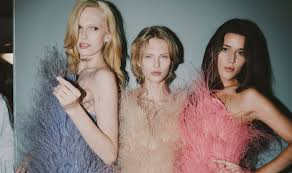
Stella McCartney Spring/Summer 2026 Collection
The overlooked ethics of feathers in fashion
Despite growing restrictions on fur and exotic skins, feathers have largely avoided scrutiny. Many consumers assume they are naturally shed, when in reality birds are often killed or repeatedly live-plucked to meet fashion demand. Existing substitutes have struggled to offer a convincing alternative, frequently relying on plastics or stiff textiles that lack the softness and movement designers seek.
Fevvers emerged to fill that gap.
Developed by UK startup Fevvers, founded by textile specialist Nicola Woollon and creative strategist James West, the material mimics the delicate structure of natural feathers while remaining entirely plant-based. Each piece carries slight variation, creating an organic feel that mirrors the individuality of natural plumage — without its ethical cost.
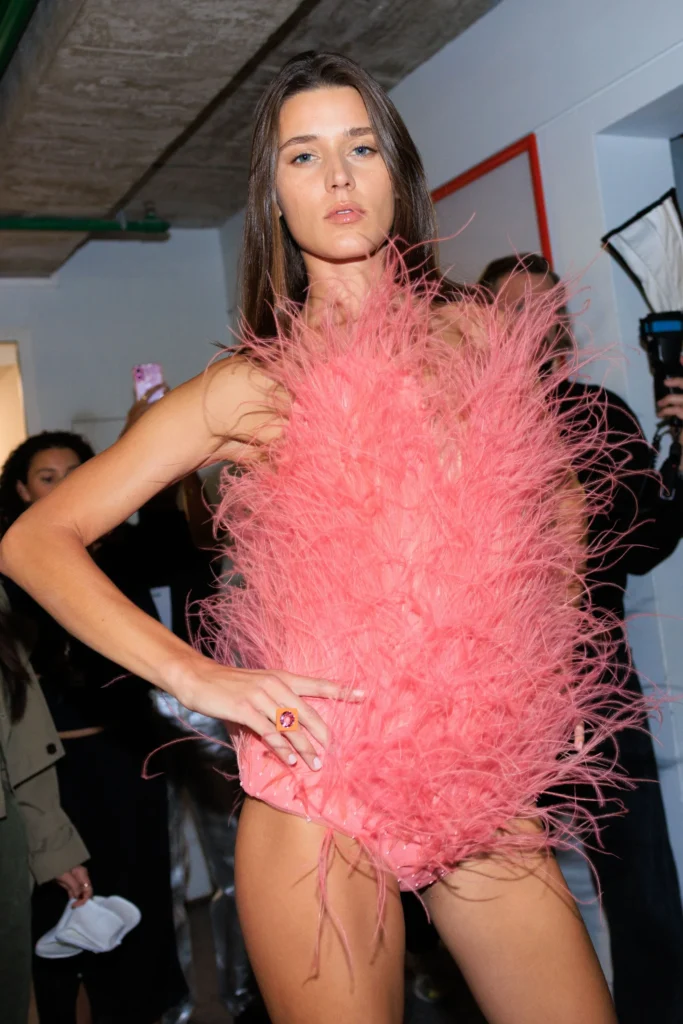
Stella McCartney Spring/Summer 2026 Collection
From experiment to industry challenge
What began as a limited experiment for McCartney’s SS26 collection quickly expanded as the material proved visually compelling on the runway. While fevvers are not yet durable enough for large-scale production, the founders are now focused on refining the technology for broader commercial use.
The ambition extends beyond fashion alone. The team sees potential applications across costume design, interiors, performance and film — industries where feathers have historically played a central decorative role.
Redefining luxury for the next era
Stella McCartney’s collaboration with Fevvers arrives at a pivotal moment. As fashion increasingly confronts its environmental and ethical impact, materials once taken for granted are being reevaluated. Feathers, long excluded from sustainability debates, may be next.
Whether fevvers become an industry standard remains to be seen. But their Paris debut has already reframed what is possible. In an industry often resistant to change, McCartney continues to demonstrate that innovation, responsibility and beauty do not have to exist at odds — and that fashion’s future may be defined not by what it takes, but by what it refuses to use.
Leave a Reply