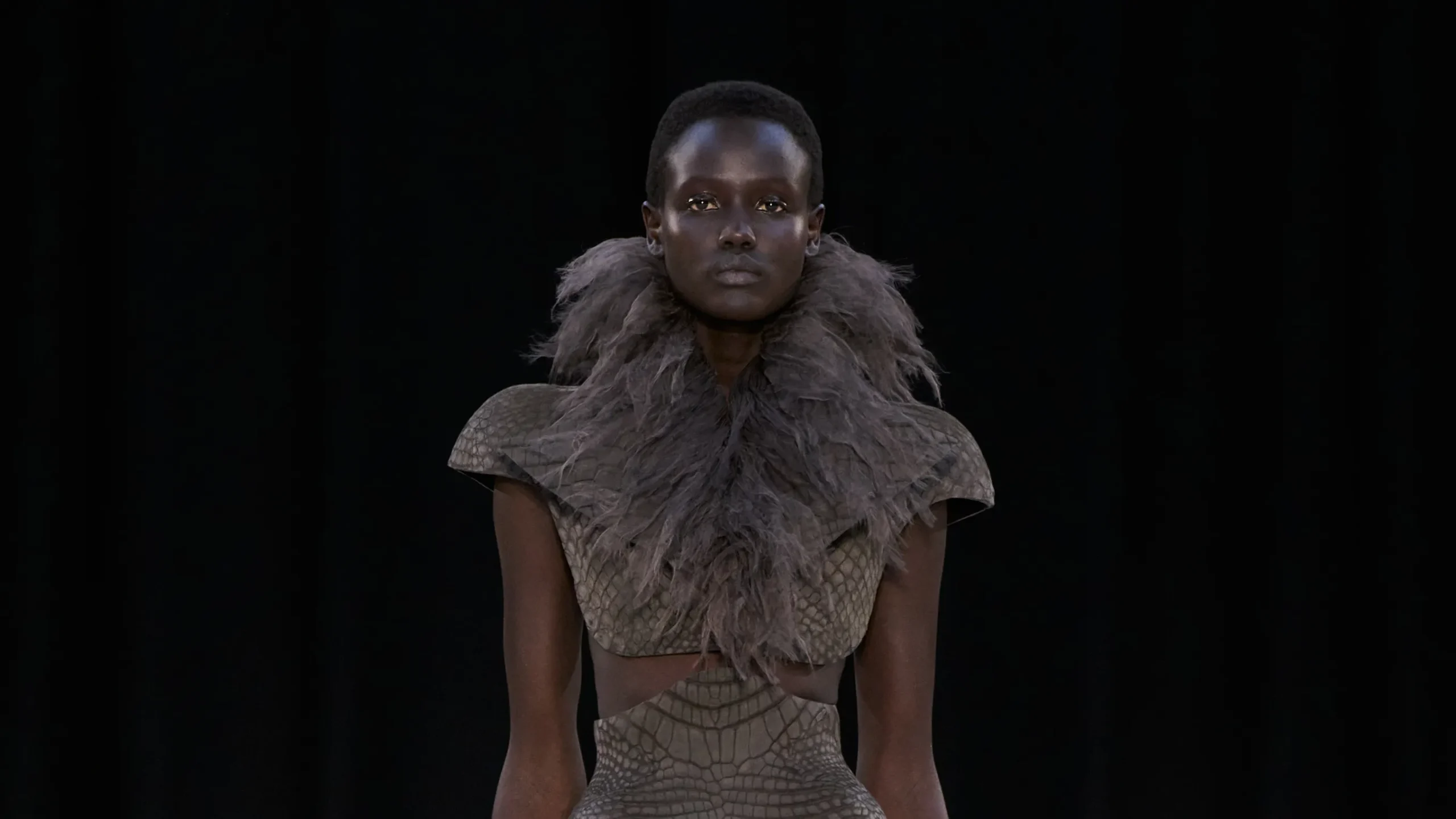
Few designers have elevated Arab fashion on the global stage quite like Mohammed Ashi. Since becoming the first Gulf designer to join the official Paris Haute Couture calendar in 2023, the founder of Ashi Studio has built a reputation for sculptural couture worn by some of the world’s biggest names, including Beyoncé, Lady Gaga, Zendaya, Kylie Jenner, Jenna Ortega, Teyana Taylor, and Queen Rania of Jordan.
That influence was evident at his Fall/Winter 2026 Haute Couture presentation, where longtime supporters Teyana Taylor and Imaan Hammam sat front row. But rather than celebrating two decades of Ashi Studio with spectacle alone, Mohammed Ashi presented one of his most psychologically rich collections to date—a haunting exploration of identity, transformation, and the masks we wear.
Inspired by Franz Kafka’s The Metamorphosis, Victorian literature, and the legendary 1972 Surrealist Ball hosted by Baroness Marie-Hélène de Rothschild, the collection unfolded like a gothic masquerade where every guest seemed trapped between fantasy and reality.
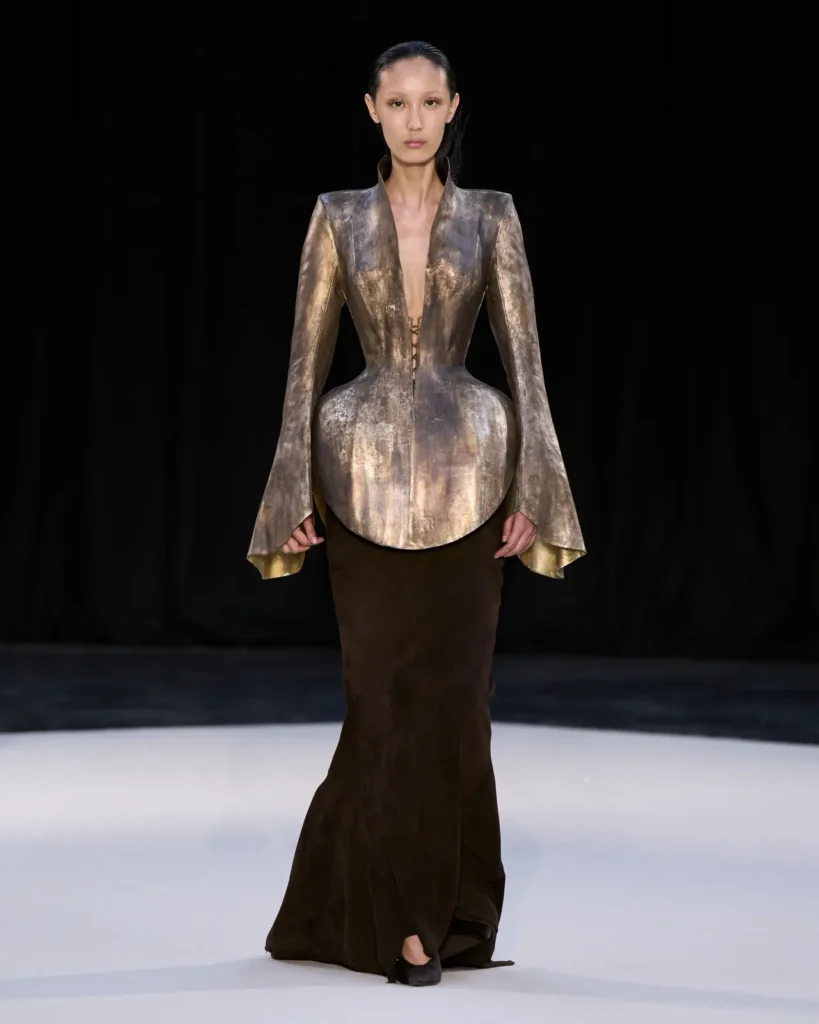
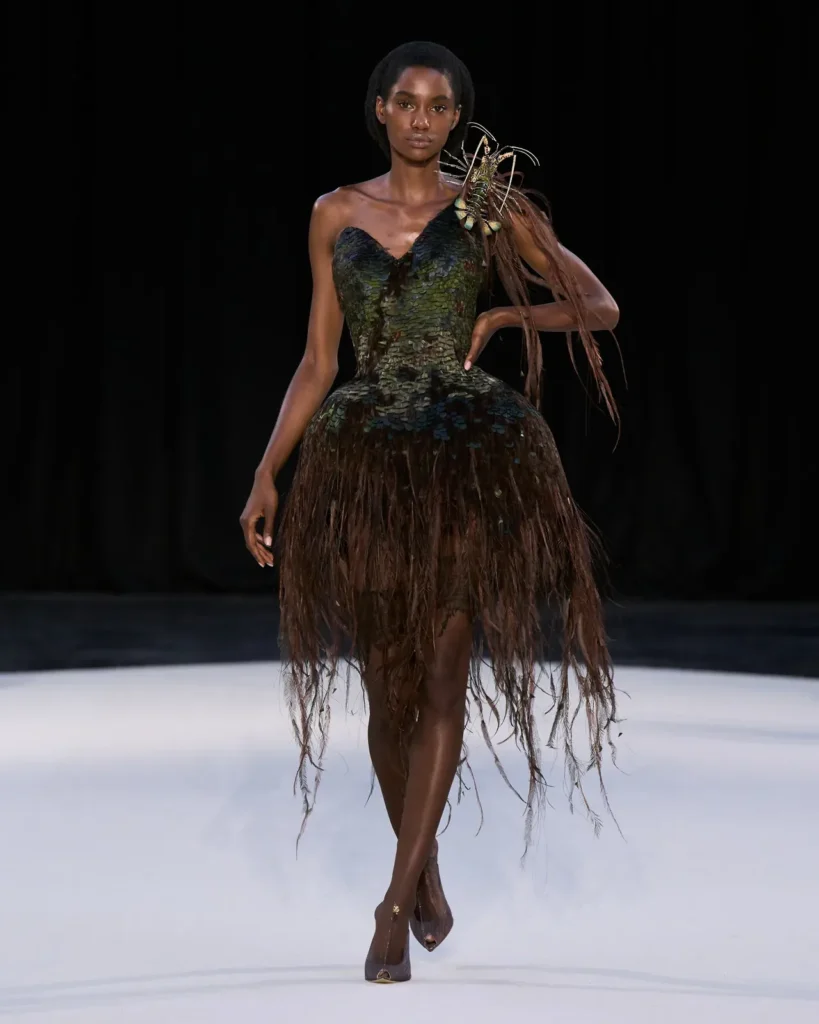
Ashi Studio Haute Couture Fall/Winter 2026 Collection
A Ballroom Filled With Haunted Characters
Instead of a conventional runway, Ashi created a cast of characters wandering through what felt like an abandoned palace.
A queen emerged in a black velvet jacket crowned by an exaggerated Elizabethan collar. A ghostly courtier followed in an ivory coat dress with distressed edges, as though both garment and wearer had quietly decayed together over centuries. A melancholic bride carried a torn parasol toward a wedding that would never happen. Each figure appeared suspended somewhere between aristocracy and nightmare.
Throughout the collection, references to insects, birds, swans, lions, and mythical creatures quietly surfaced, suggesting that these characters were no longer entirely human. Like Kafka’s Gregor Samsa, they seemed to be transforming before our eyes.
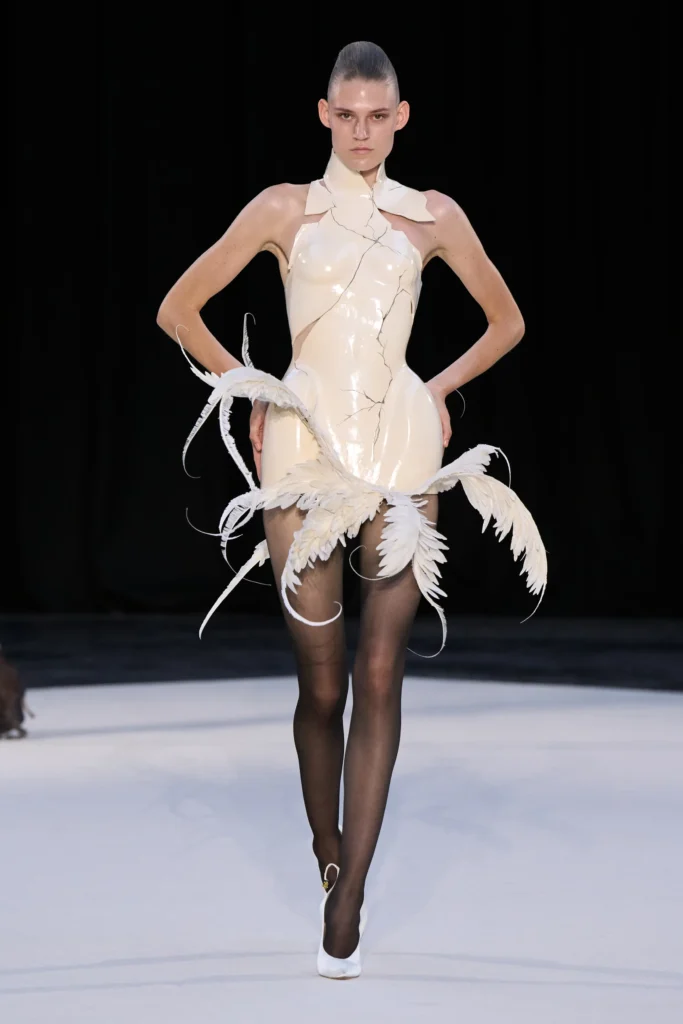
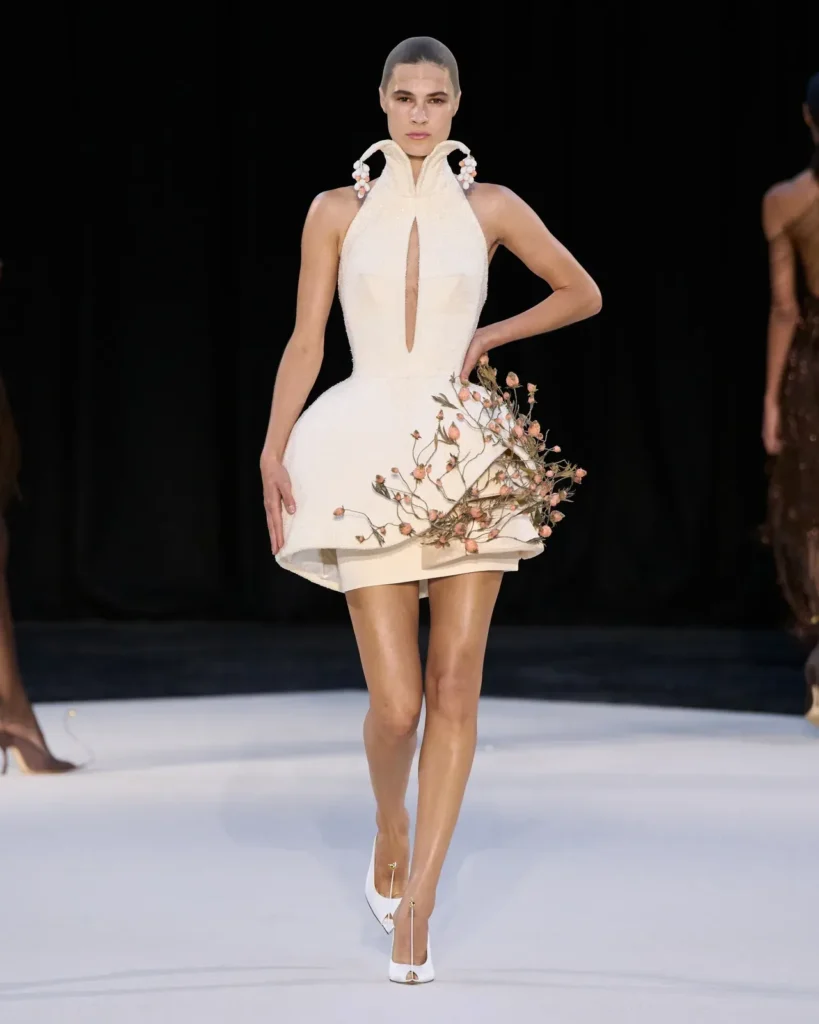
Ashi Studio Haute Couture Fall/Winter 2026 Collection
Fashion as Armor
What makes this collection particularly compelling is that it approaches transformation through protection rather than fantasy alone. Where other couture houses this season explored the changing body through mythology or material innovation, Ashi imagined beauty as something shielded by armor.
Corsets exaggerated impossible proportions. Sculpted hips projected outward like protective shells. Towering collars framed the face like defensive structures, while feathers, veils, and fringe softened silhouettes that might otherwise have appeared severe.
The central idea became clear: what happens when beauty grows a shell?
Rather than making vulnerability disappear, Ashi gives it form. His women appear powerful not because they hide their fragility, but because they wear it as armor. It’s one of the collection’s strongest and most emotionally resonant ideas.
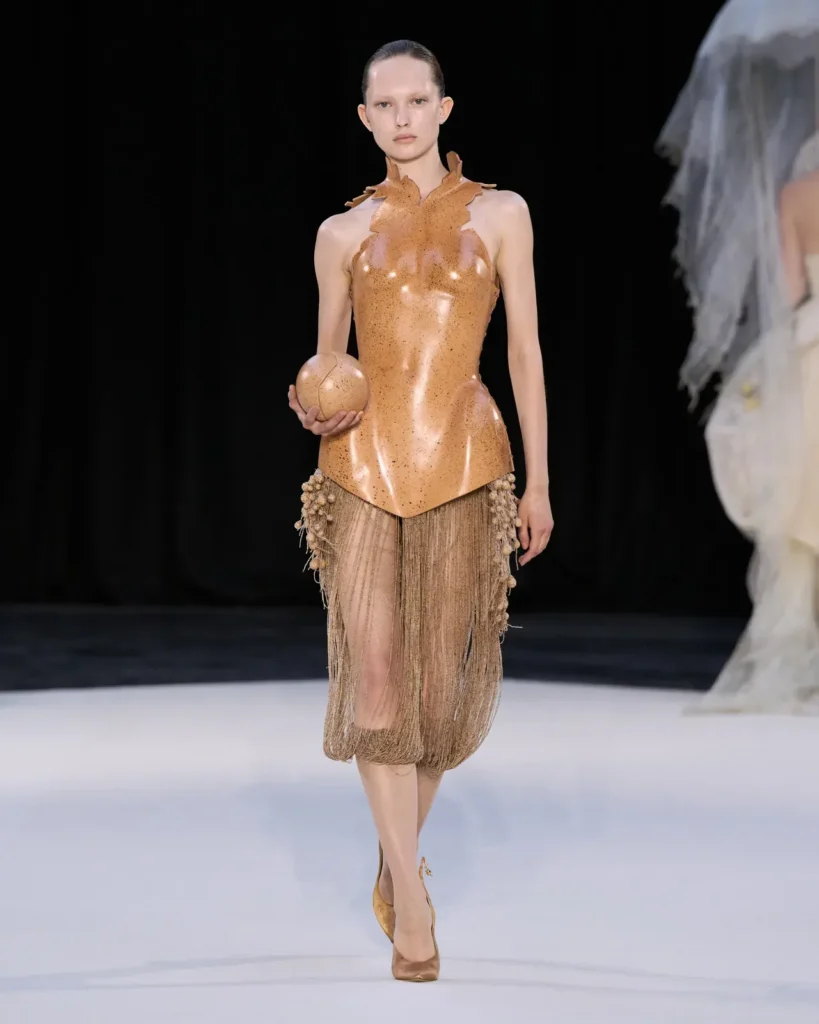
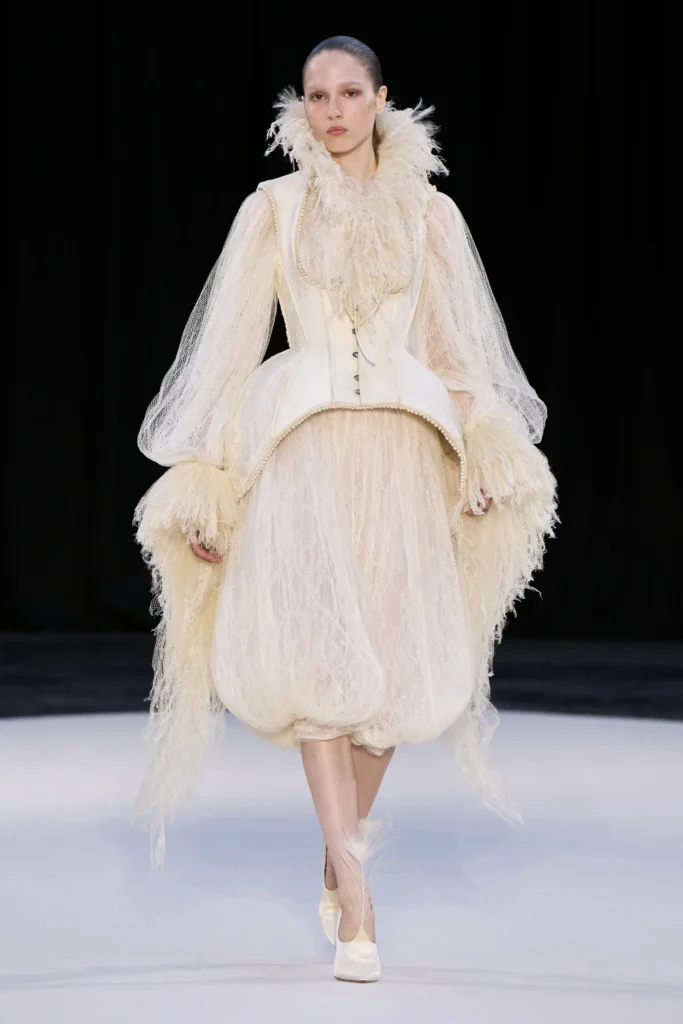
Ashi Studio Haute Couture Fall/Winter 2026 Collection
Sculpture Over Embellishment
One of Ashi Studio’s greatest strengths has always been its architectural approach to couture, and Fall/Winter 2026 reinforces that identity beautifully. Instead of relying on excessive embellishment, Ashi allowed construction to become the focal point.
The collection remained almost entirely within a restrained palette of ivory, bone, black, smoke, brown, tarnished gold, and muted metallics. That limited color story directed attention toward the extraordinary silhouettes: sculpted shoulders, dramatic hourglass waists, exaggerated hips, and sweeping volumes that have become synonymous with the house. Even against the minimalist runway, every look felt unmistakably Ashi.
As the brand continues to mature, this consistency is becoming one of its greatest assets. Like the world’s most established couture houses, Ashi Studio is developing visual house codes that audiences can recognize immediately.
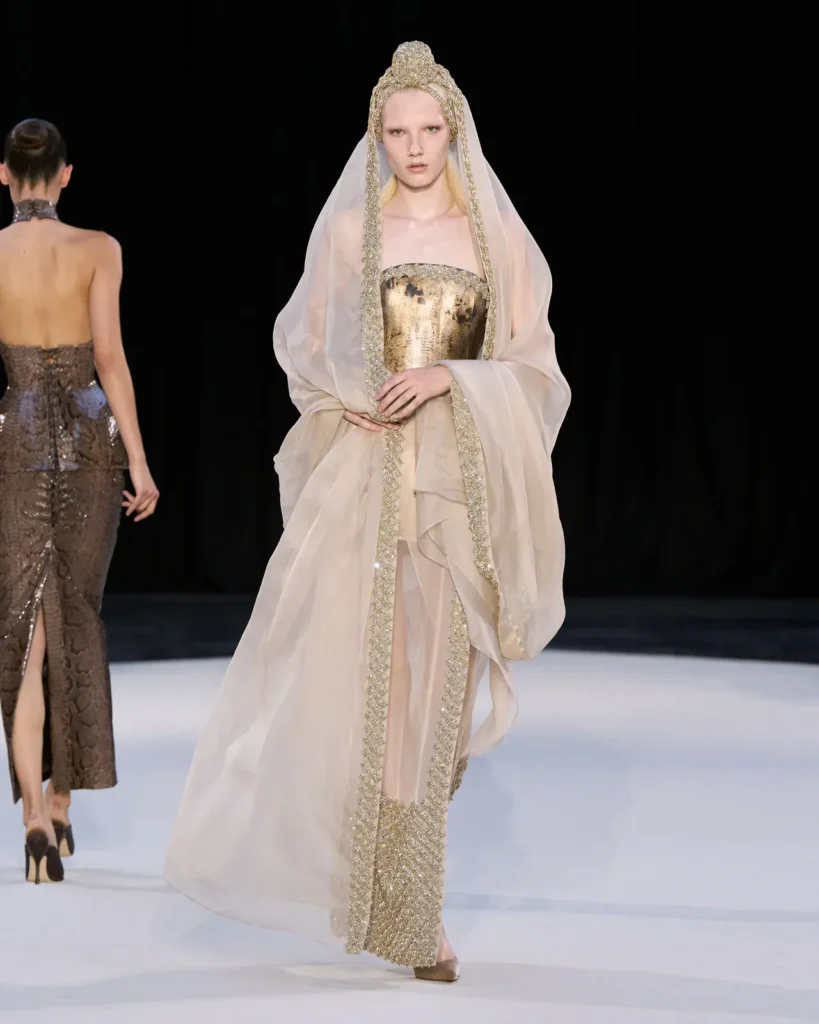
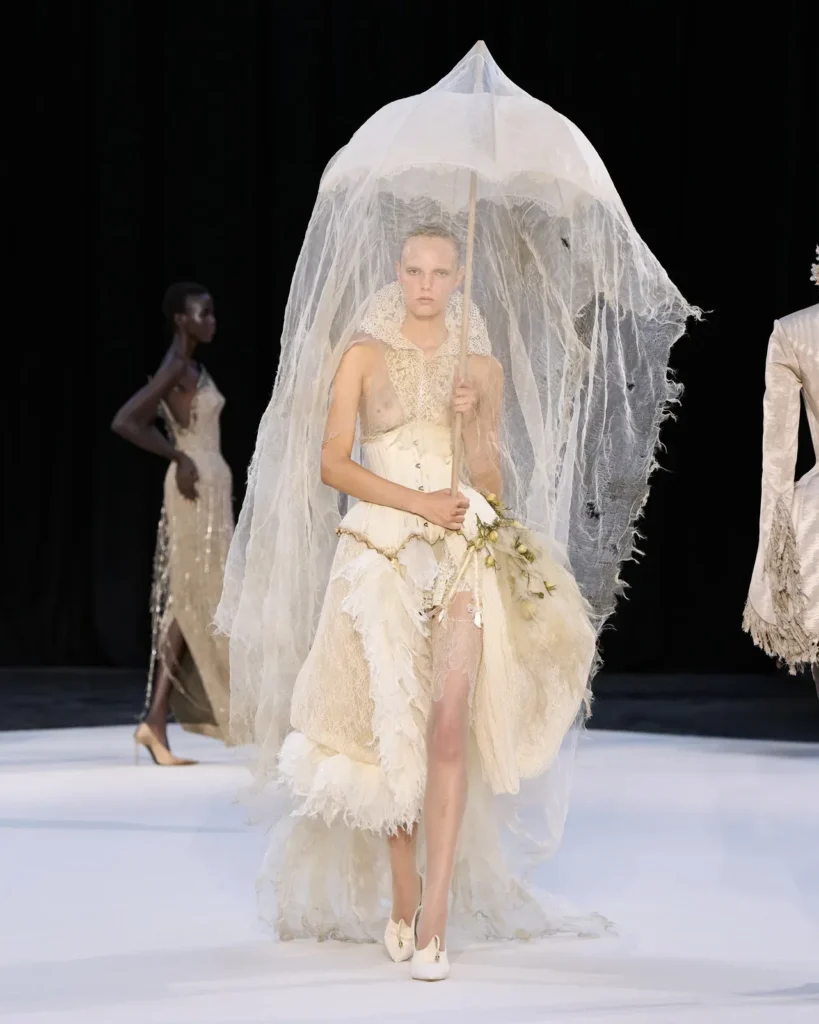
Ashi Studio Haute Couture Fall/Winter 2026 Collection
Extraordinary Craftsmanship Hidden in Every Look
Closer inspection revealed remarkable craftsmanship beneath the dramatic silhouettes.
Leather was manipulated to resemble cracked porcelain. Japanese paper mimicked fallen leaves. Hand-painted insects appeared frozen mid-flight across garments, while real lobster shells, mussels, Venetian mirrors, gilded pomegranates, and 3D-printed metal elements became integral parts of the couture construction rather than decorative novelties. Even historical textiles found new life through washed nineteenth-century Italian fabrics sourced in Florence.
These details never felt excessive because they served the collection’s narrative. Every unusual material reinforced the idea of bodies slowly transforming into something unfamiliar.
When Fashion Becomes Psychological
More than anything, Fall/Winter 2026 demonstrates Ashi’s ability to use couture as storytelling. The recurring mirrors, insects, hourglasses, veils, shells, and fragmented silhouettes all reinforce themes of identity and metamorphosis without becoming overly literal.
Some references inevitably leaned close to costume, particularly in the more theatrical looks. But the collection was at its strongest when transformation emerged through construction rather than symbolism. A sculpted corset suggested an exoskeleton. A feathered collar became protective rather than decorative. Glossy molded bodices reshaped the body into something almost otherworldly. Those moments felt less like costumes and more like psychological portraits.
Ashi Studio Continues to Define Sculptural Couture
As Ashi Studio celebrates its twentieth anniversary, this collection feels like an important milestone. The drama audiences expect from Mohammed Ashi remains intact, but it’s now supported by a stronger emotional narrative. His sculptural language has become more refined, more focused, and more confident. Rather than presenting couture as pure spectacle, Fall/Winter 2026 explores defense, vulnerability, and transformation through architecture, proving that the most powerful garments are often the ones that alter not just the body, but the character wearing them.
The result is one of Ashi Studio’s strongest couture collections to date—cinematic, emotionally charged, and visually coherent. In a season fascinated by transformation, Mohammed Ashi offered perhaps its most compelling interpretation: beauty not as something delicate, but as something that has learned to protect itself.