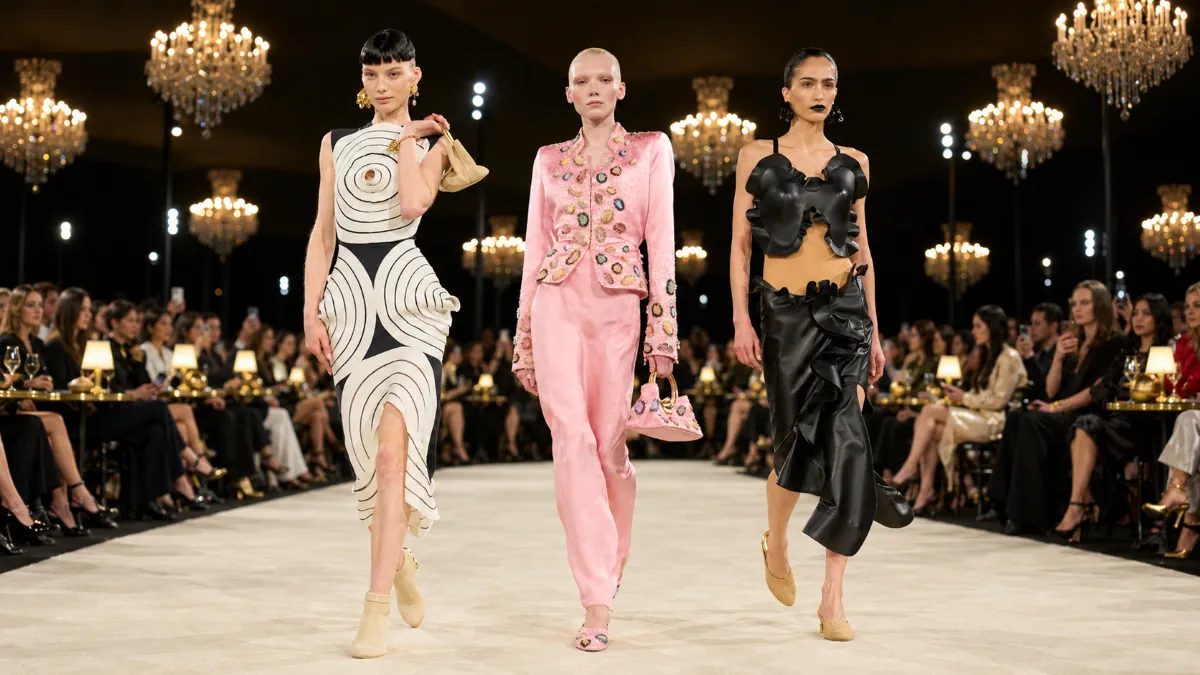
For a house famous for gilded body parts, surrealist accessories and couture that rarely goes unnoticed, Schiaparelli Spring Summer 2027 was surprisingly restrained. Daniel Roseberry called the collection “Going Clean,” and the name reflected a broader attempt to strip away the noise surrounding fashion and return to what he believes ready-to-wear should actually do: offer clothes people want to live in. After deleting his social media apps over the summer and taking a long road trip along the U.S. East Coast, Roseberry returned to Paris with a noticeably clearer perspective. The result was a collection built around separates, practicality and a tightly edited palette of Schiaparelli black, bone and butter, with flashes of colour and eccentricity appearing exactly where they were needed.
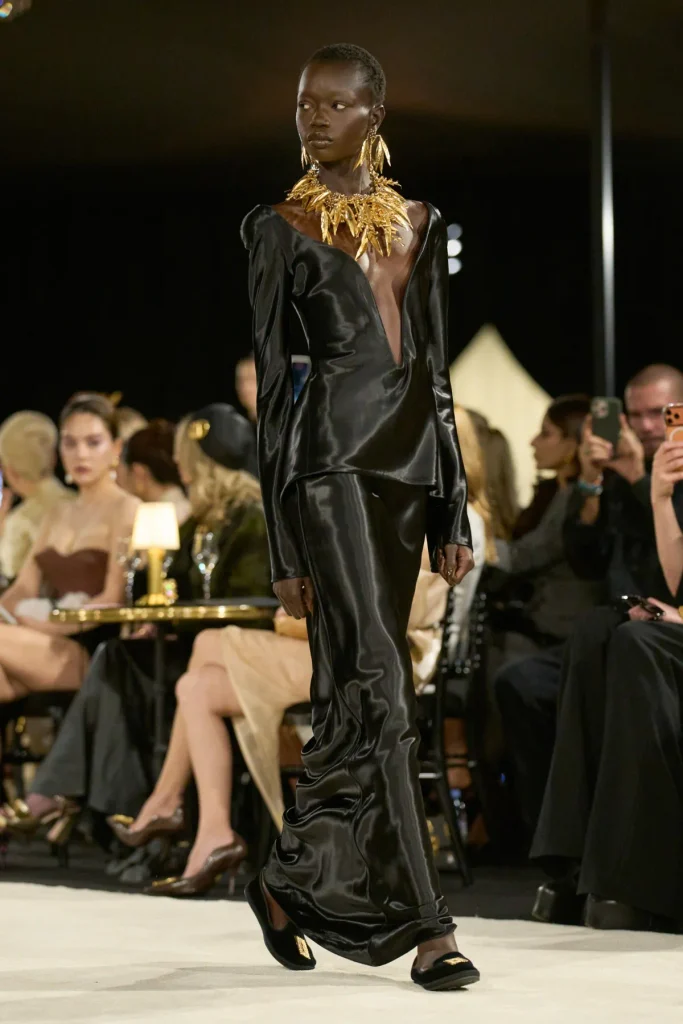
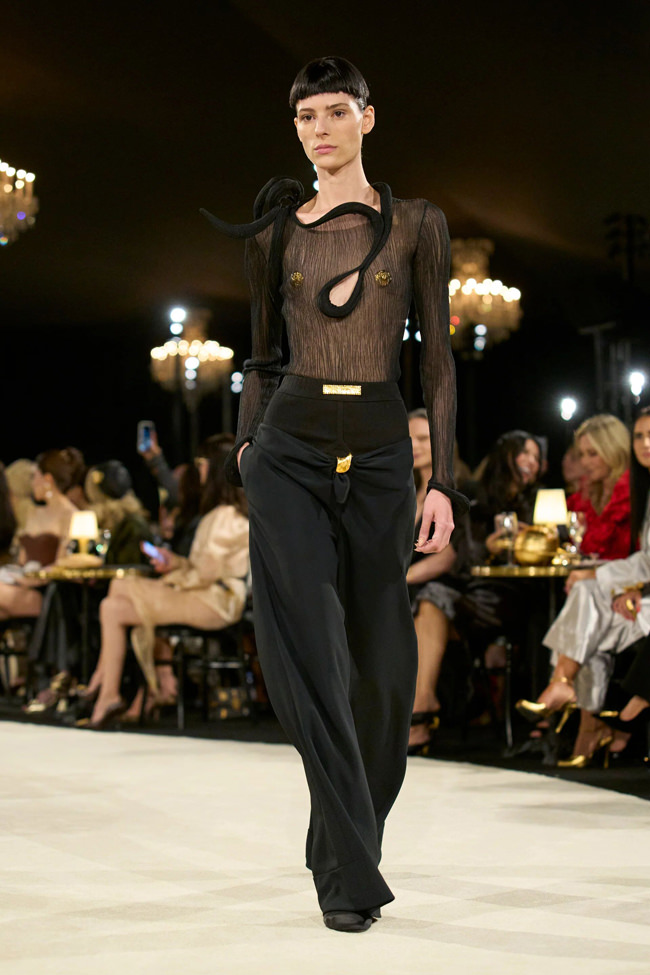
Schiaparelli Spring Summer 2027 Collection
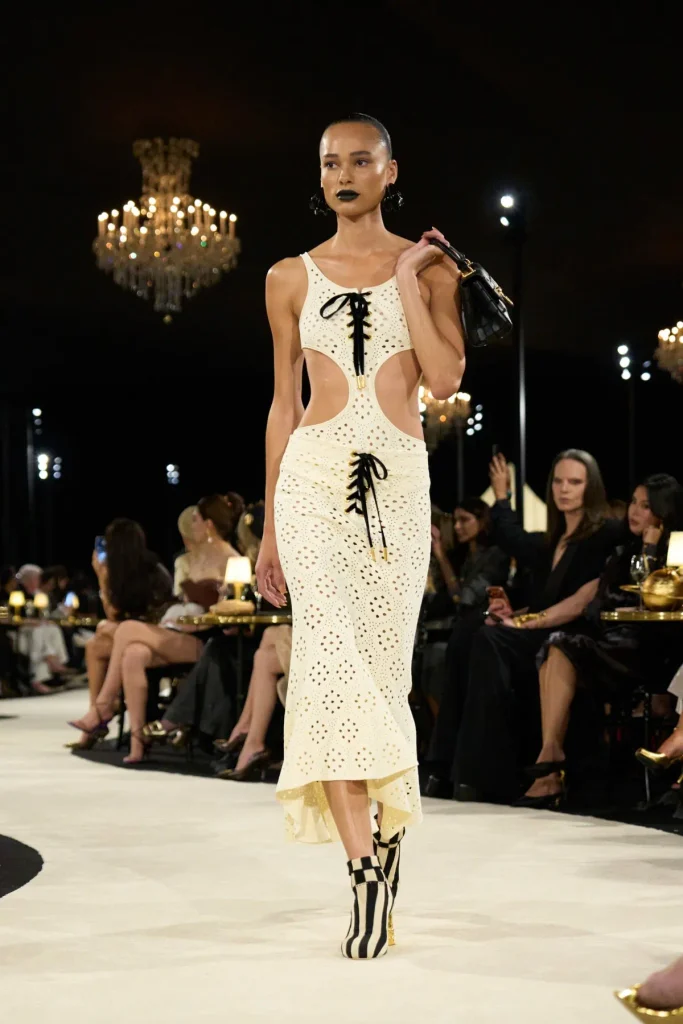
The change in mood was apparent before the first look even appeared. The Schiaparelli SS27 show took place in the basement of the Carrousel du Louvre, transformed into an intimate speakeasy with small café tables, warm chandeliers and Champagne rather than the theatrical setting one might expect from the house. Guests including Tate McRae and Marisa Berenson sat around the winding runway as the collection unfolded around them. The setting was important because it grounded Schiaparelli in something familiar and social. Instead of presenting the clothes as untouchable fantasy, Roseberry placed them in an environment where people might actually wear them.
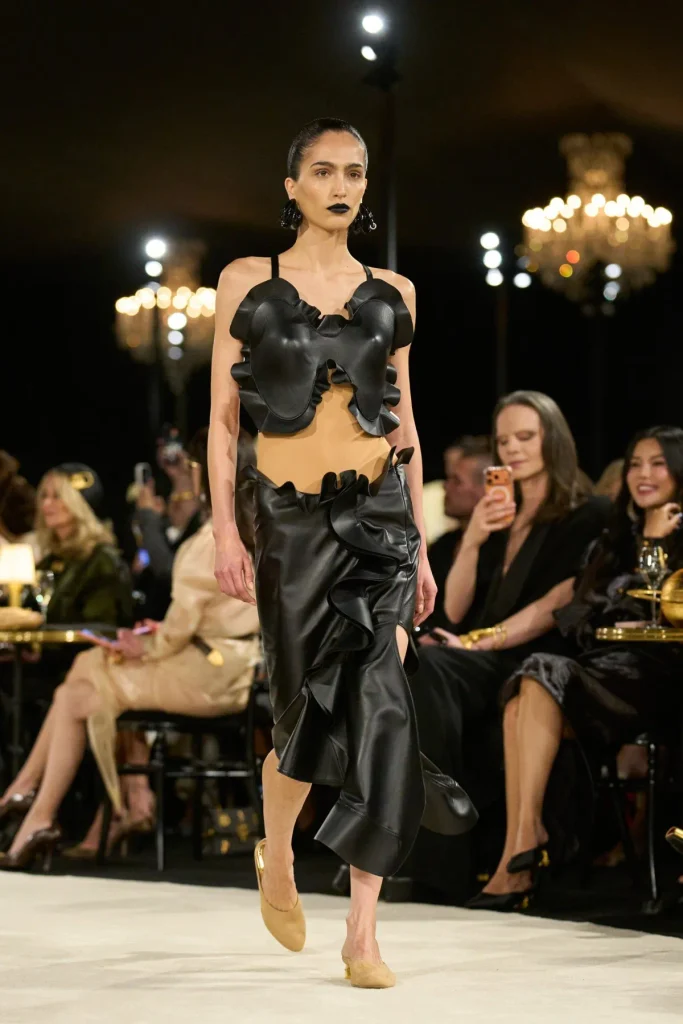
Schiaparelli Spring Summer 2027 Collection
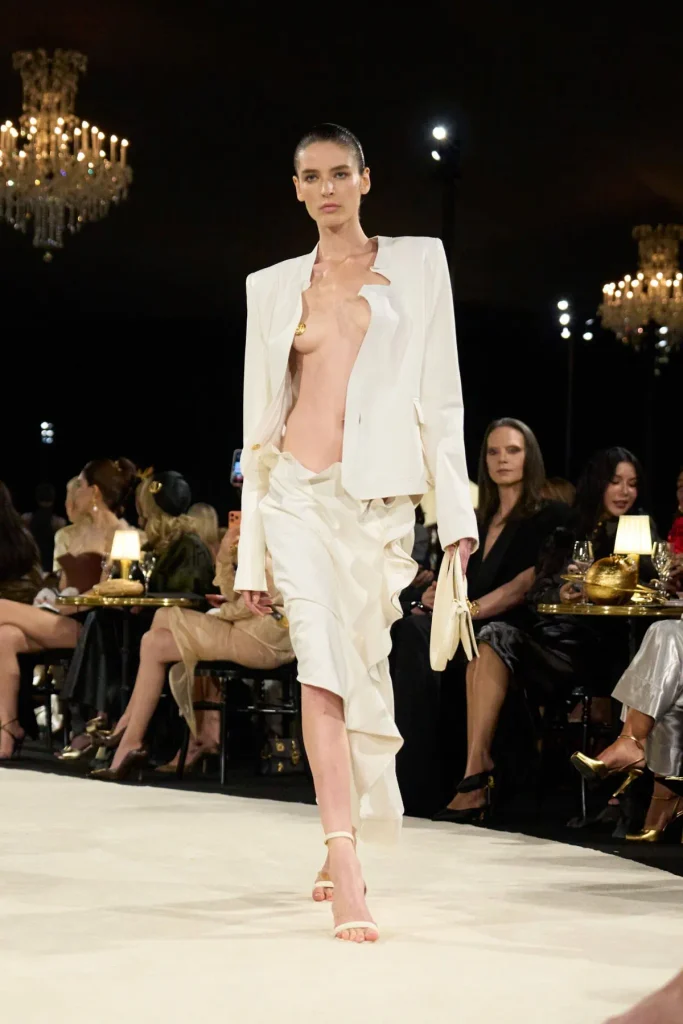
That idea carried directly into the collection. Roseberry has spent the past seven years establishing a recognisable Schiaparelli vocabulary, but for SS27 he seemed less interested in adding more codes than in figuring out which ones were essential. Dresses were broken down into skirts and tops, dramatic necklines became individual pieces, and silhouettes were designed to be combined according to the wearer’s mood. It is a distinctly American approach to dressing — practical, flexible and centred around personal choice — which also connects naturally to Roseberry’s Texas background. The result was not minimalism in the traditional sense. The clothes were relatively simple in silhouette, but the details ensured that they never became anonymous.

Schiaparelli Spring Summer 2027 Collection
Maggie Maurer opened the show in a backwards tuxedo dress with subtle hourglass boning, immediately establishing the tension between classic tailoring and Schiaparelli’s eccentricity. Elsewhere, a plunging bodysuit and a little black dress with sculptural frills around the open back brought the drama expected from the house. Yet these looks were balanced by oversized tuxedo shirts with moulded satin bibs and a stretch laminated-jersey top that could be worn with a skirt for evening or black trousers during the day. That versatility is arguably the most significant part of the collection. Roseberry is not removing Schiaparelli’s personality; he is making it easier to incorporate into an actual wardrobe.
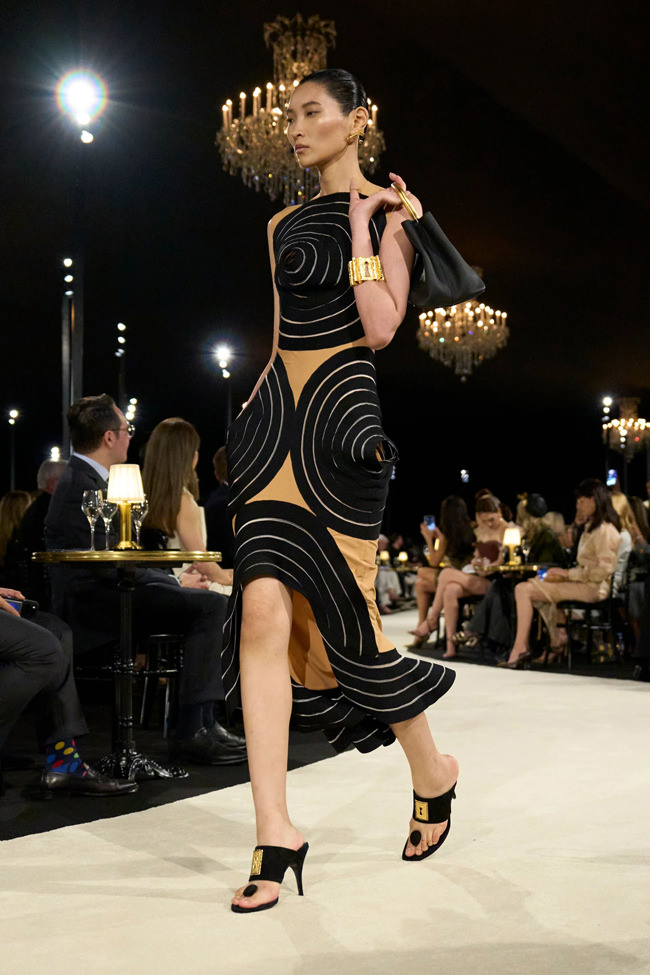
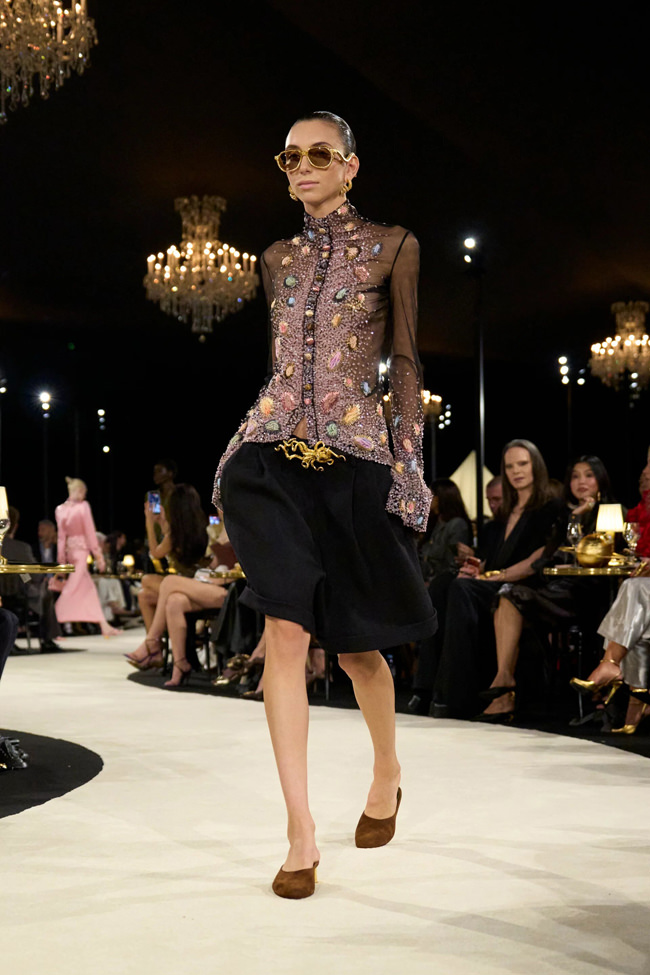
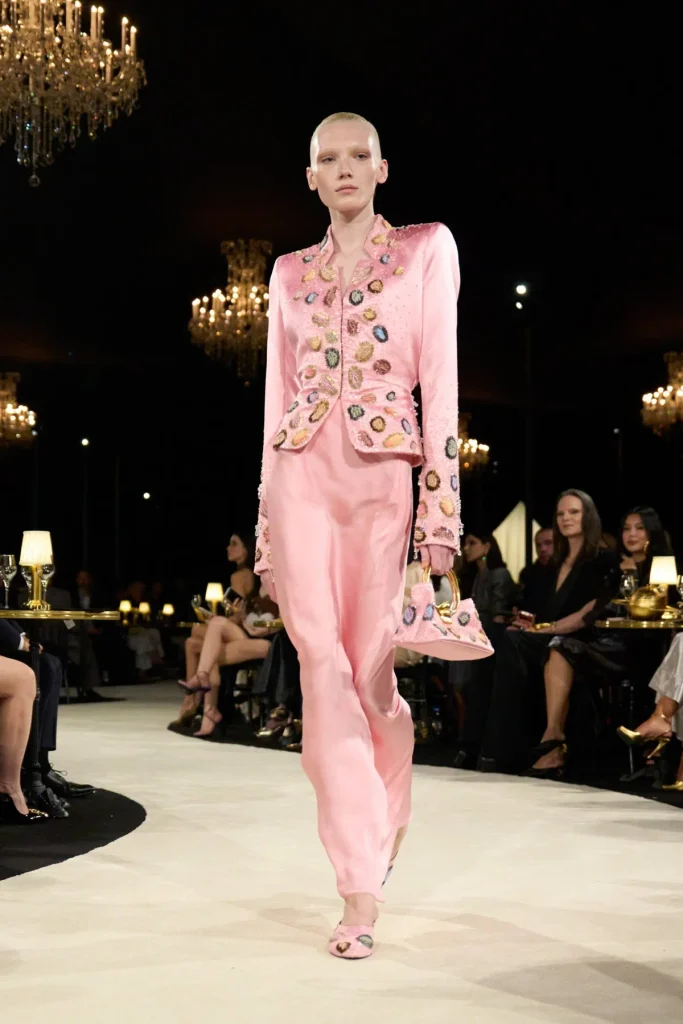
The restraint of the colour palette made those details even more noticeable. Black, bone and butter dominated, occasionally interrupted by kingfisher blue, moss green and salmon pink. The classic Schiaparelli jacket became one of the main canvases for this colour, appearing in eight variations and decorated with embroidered vegetables and other motifs drawn from Elsa Schiaparelli’s archive. Vegetable embroidery might sound playful to the point of absurdity, but that is precisely where Roseberry succeeds. He understands that Schiaparelli does not need to be covered in surrealist references to feel surrealist. Sometimes one unexpected detail against an otherwise straightforward piece is enough.
Schiaparelli Spring Summer 2027 Collection
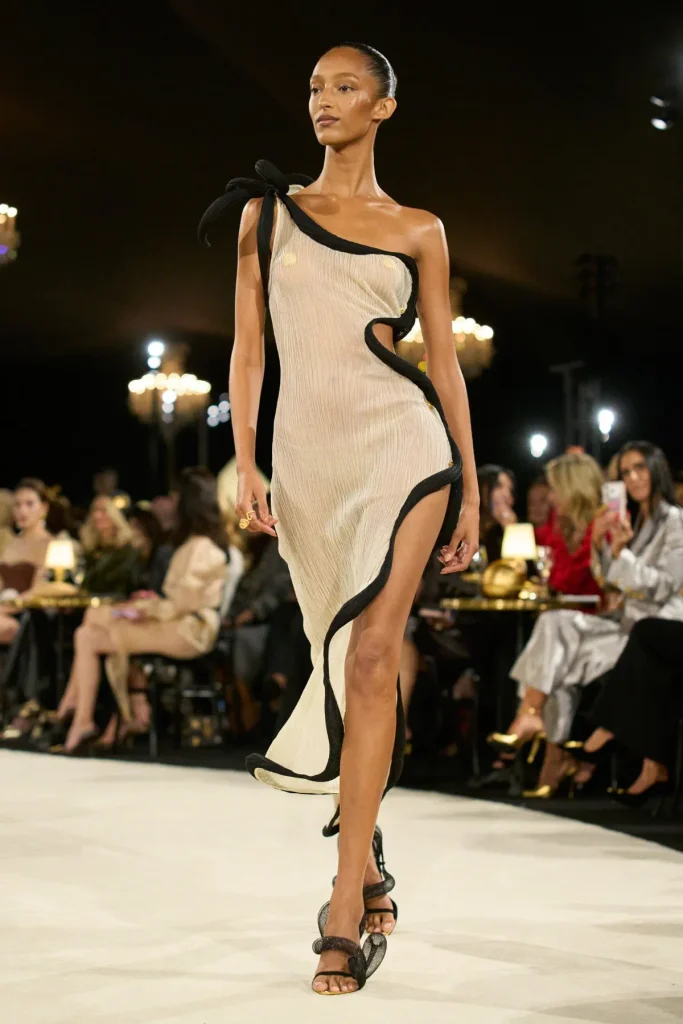
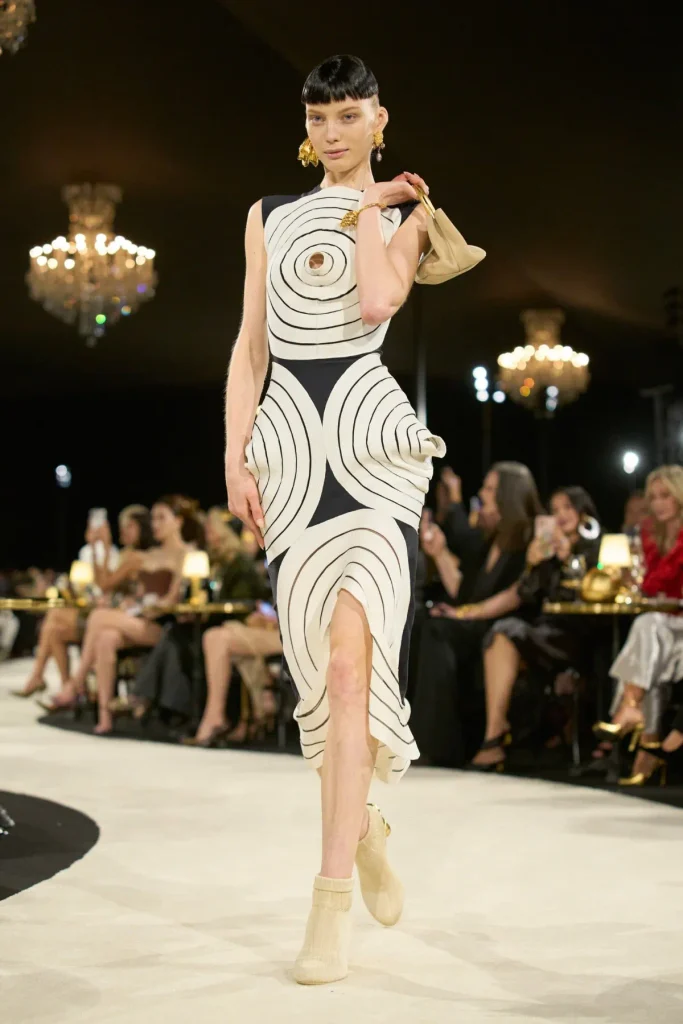
The vegetable motifs were joined by feathers, animals and the house’s familiar lips and keyhole symbols. On sheer shirts, embroidery became almost illustrative, while the lips and keyholes appeared across collars, shoes and bags. These references worked less like logos and more like little discoveries scattered throughout the collection. The same could be said of the accessories. A handbag featuring a brass mouth as its handle was unmistakably Schiaparelli, but other bags were based on more conventional hobo and pocketbook shapes. Footwear also became more practical, with lower silhouettes including a babouche, a mule with a rounded toe and a knitted ankle boot inspired by a style Elsa Schiaparelli herself wore in the late 1930s.
Knitwear was another particularly strong category. One sheer viscose knit was designed to resemble tree bark, referencing Elsa’s own experiments with unusual textiles, while broderie anglaise brought a traditionally delicate technique into the ready-to-wear wardrobe. These pieces demonstrated why Roseberry’s idea of “distillation” works better than simply making Schiaparelli more commercial. He is not stripping the house of its history; he is reducing that history to recognisable gestures and placing them in clothes that can function beyond the runway.
Schiaparelli Spring Summer 2027 Collection
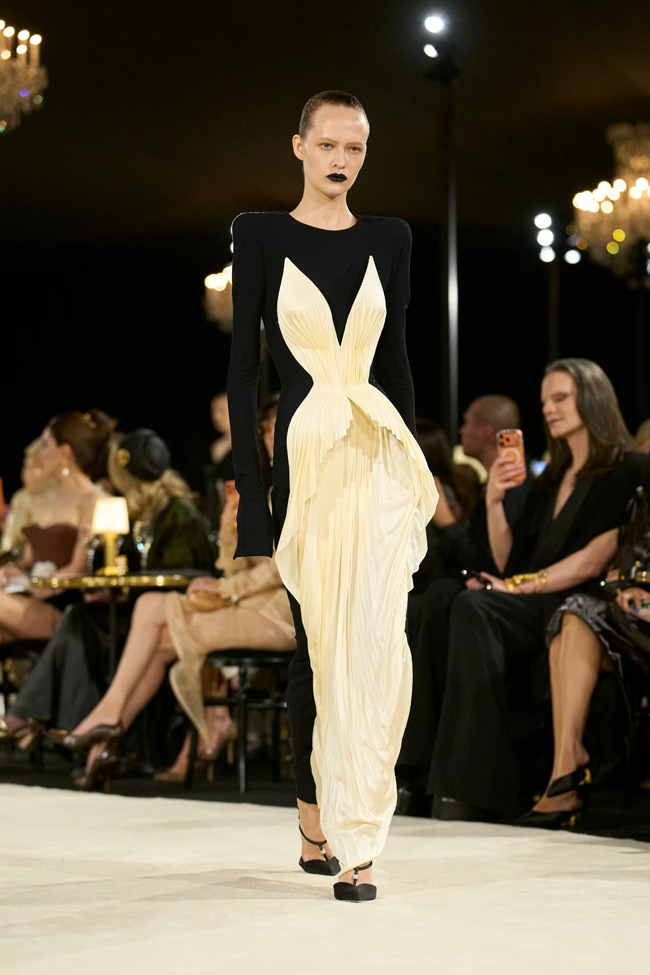
There was also a subtle continuity between the collection and Roseberry’s couture work. The little black cocktail dresses recalled the pared-back simplicity of looks from the recent “The Abyss” couture collection, while the ruffled edges and sculptural openings retained the exaggerated construction associated with Schiaparelli. Even the ruffles had a historical reference, inspired by curtains that once lined the windows of Elsa Schiaparelli’s Place Vendôme atelier. These details reward a closer look: what initially appears to be a simple black dress can reveal a piece of the house’s history through its construction.
Perhaps the biggest surprise was how little the collection seemed to need spectacle. Schiaparelli has become one of the most photographed names in contemporary couture precisely because its clothes are so immediately recognisable. But Schiaparelli Spring Summer 2027 suggests that Roseberry is interested in testing what happens when that recognisability is reduced. The answer is not a quieter Schiaparelli, exactly, but a more confident one. The house no longer needs every look to compete for attention because its codes are established enough to survive in smaller doses.
Schiaparelli Spring Summer 2027 Collection
That makes “Going Clean” feel less like a rejection of the Schiaparelli identity and more like a reset. After years of building the house into one of fashion’s most spectacular modern couture brands, Roseberry appears ready to focus on what comes between the red-carpet moments: the jacket, the knit, the little black dress, the trousers and the accessories that can actually become part of someone’s wardrobe. There is still a brass mouth where you least expect it, an animal-shaped jewel or a surrealist reference hiding in the embroidery, but now those details have room to breathe.
For Daniel Roseberry’s Schiaparelli, that may be the most interesting direction yet. The collection proves that making a house more wearable does not necessarily mean making it less distinctive. If anything, Schiaparelli SS27 suggests that the strongest identity is one that can survive even after the spectacle has been stripped away.
Leave a Reply