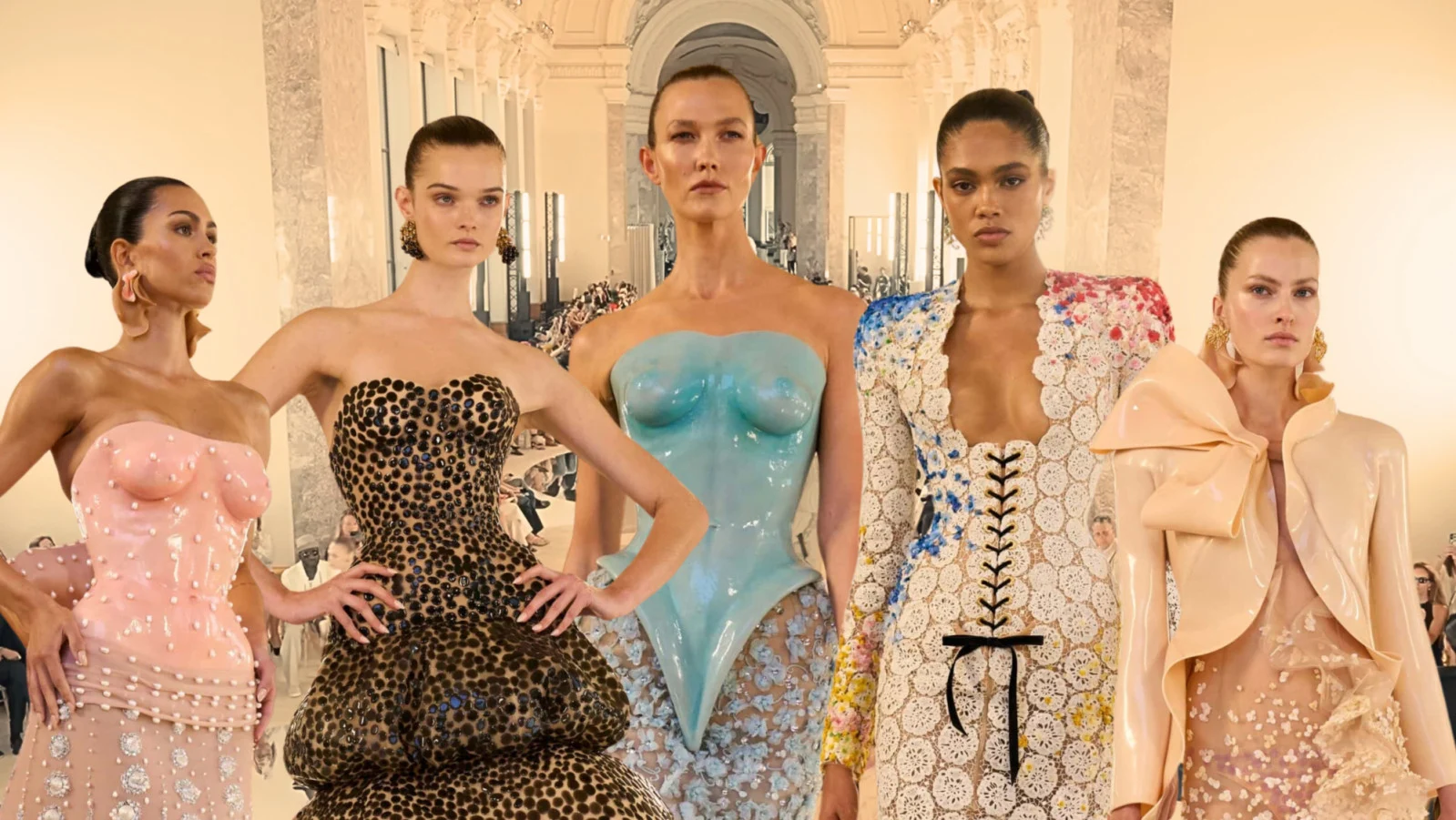
As artificial intelligence continues to reshape the creative industries, one question looms over fashion: Could AI ever design a haute couture collection? For Daniel Roseberry, the answer isn’t found in technology—it’s found in experimentation.
Opening Paris Haute Couture Week, Roseberry unveiled Schiaparelli Fall/Winter 2026 Haute Couture, titled The Call of the Void, a collection that explored uncertainty, transformation, and the collision between traditional craftsmanship and unconventional materials. Rather than resisting the digital age, Roseberry embraced it as inspiration, creating one of the season’s most daring couture collections.
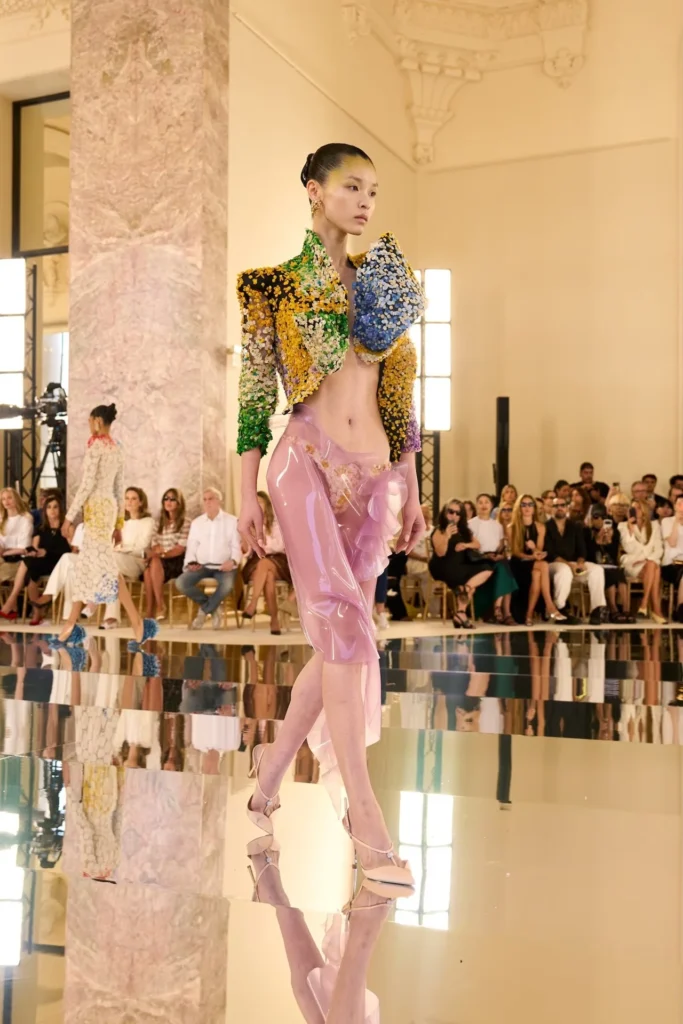
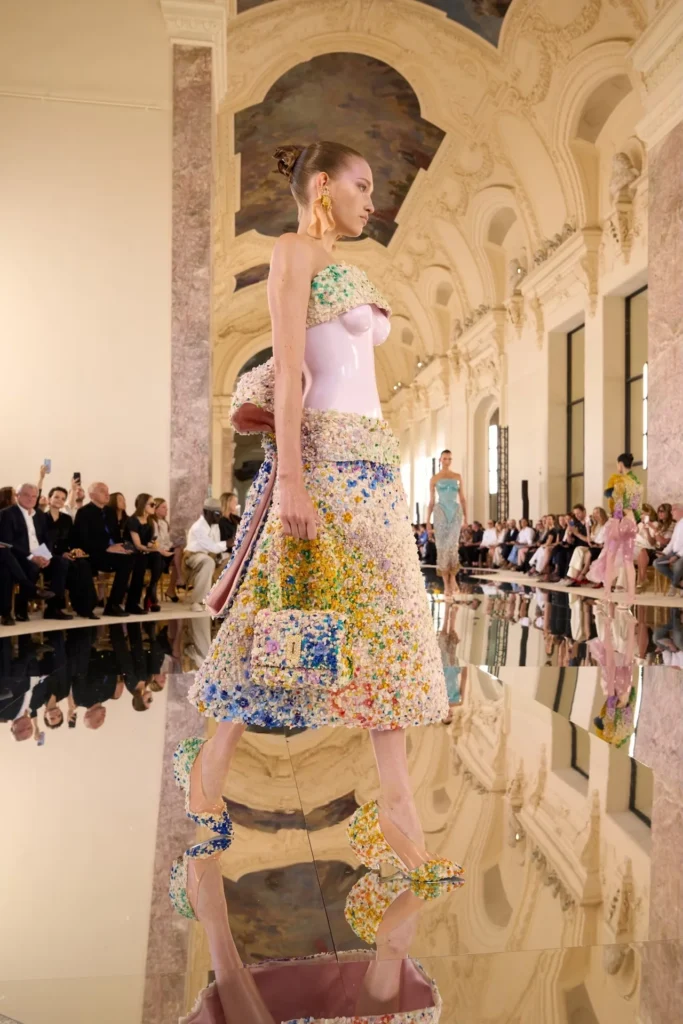
Schiaparelli Haute Couture Fall/Winter 2026 Collection
Experimentation Takes Center Stage
Unlike his previous collection, which followed a clearly defined creative vision, Roseberry approached this season with uncertainty. After experiencing creative burnout, the designer abandoned rigid planning and instead allowed experimentation to guide the collection. He described the process as “surrendering”—accepting the unknown rather than trying to control it.
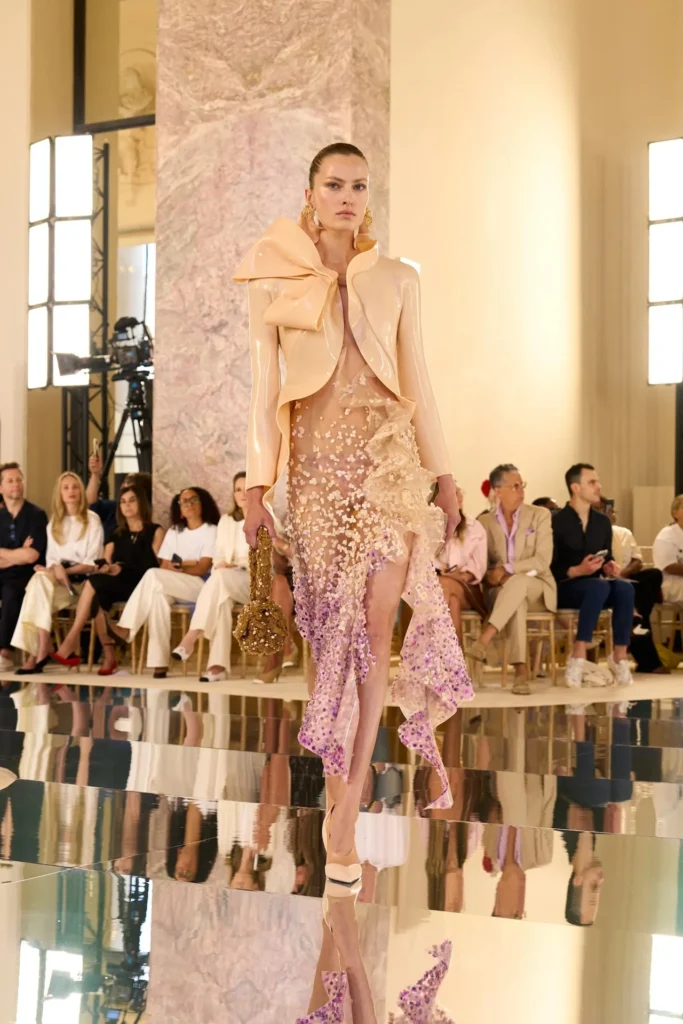
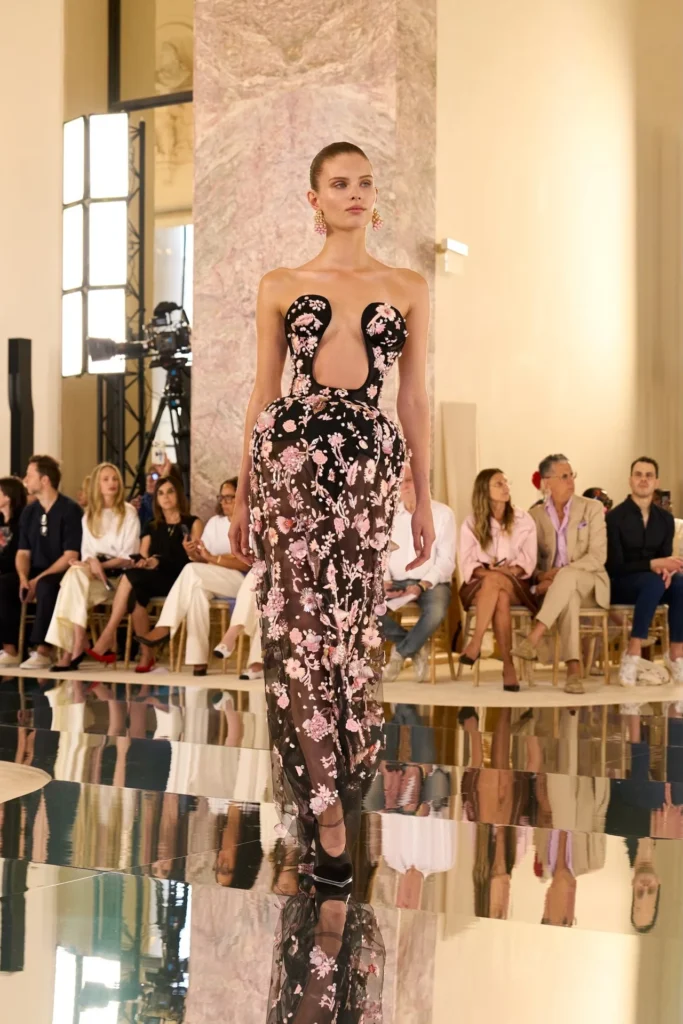
That philosophy became the foundation of The Call of the Void. Instead of relying on couture’s traditional vocabulary of silk, satin, and embroidery alone, Roseberry introduced materials rarely seen on a Paris couture runway, including latex, silicone, preserved flowers, seashells, baked fish scales, and sculptural paint-like surfaces. The result was a collection that felt simultaneously futuristic and deeply handcrafted.
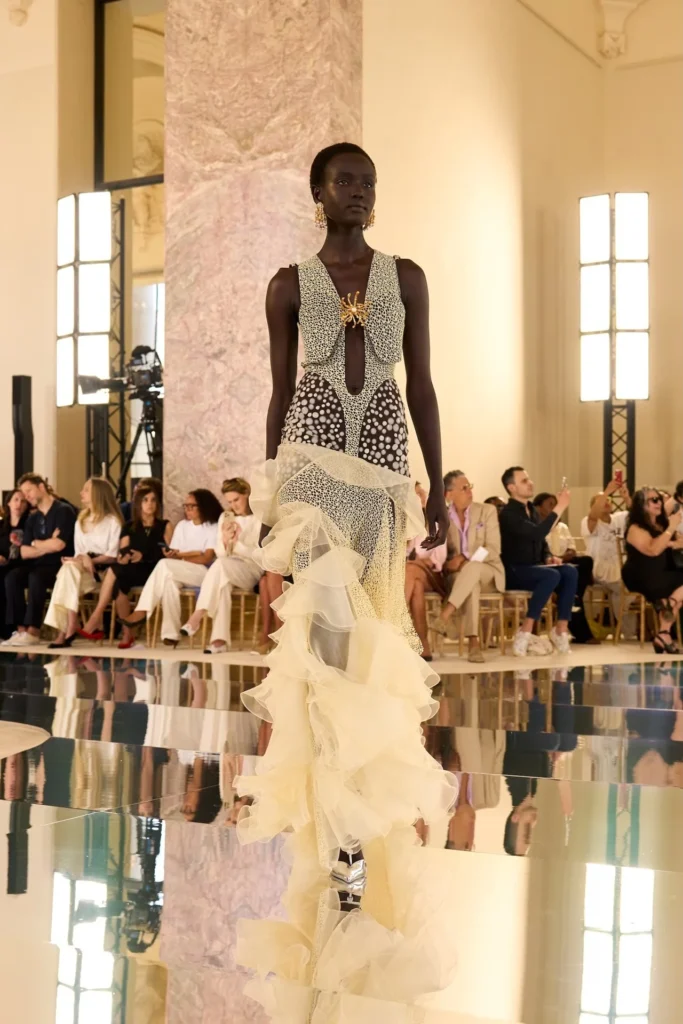
Schiaparelli Haute Couture Fall/Winter 2026 Collection
Schiaparelli Challenges the Idea of Beauty
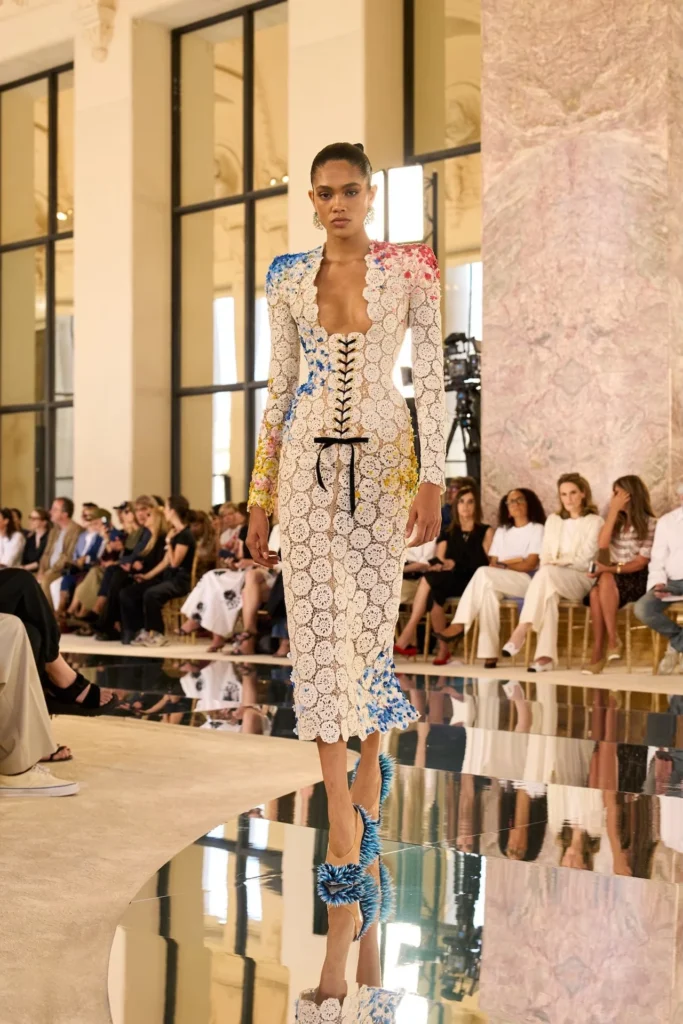
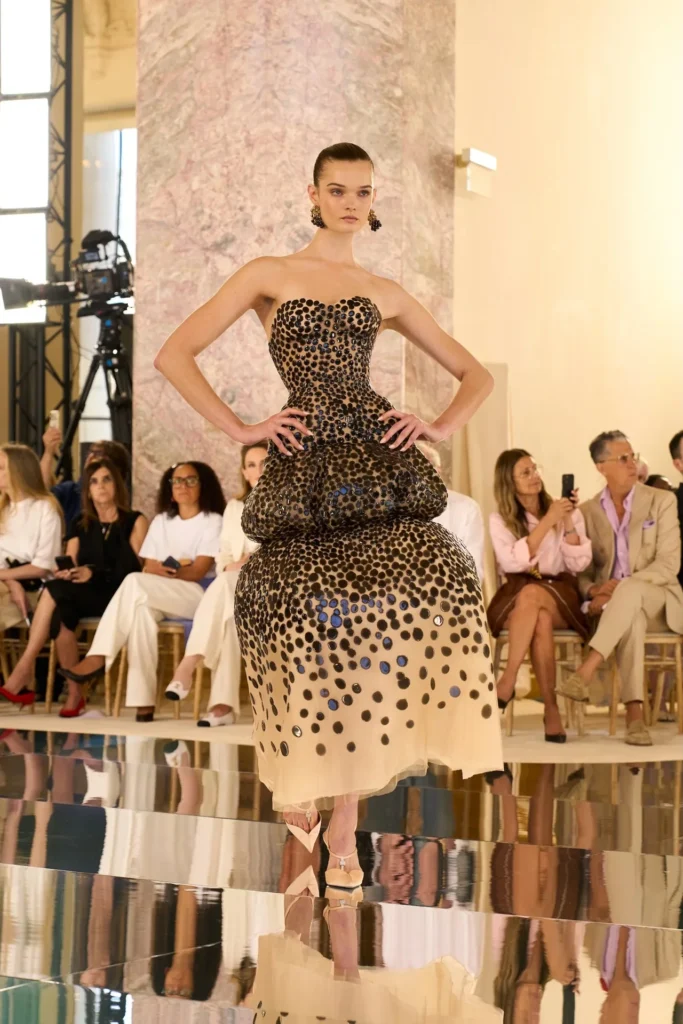
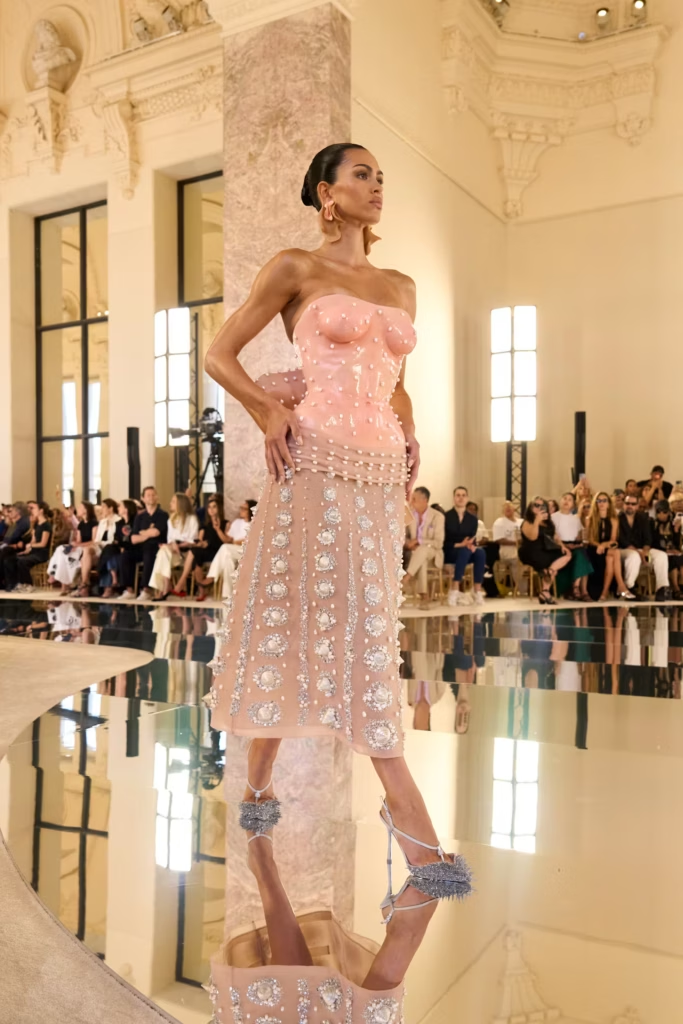
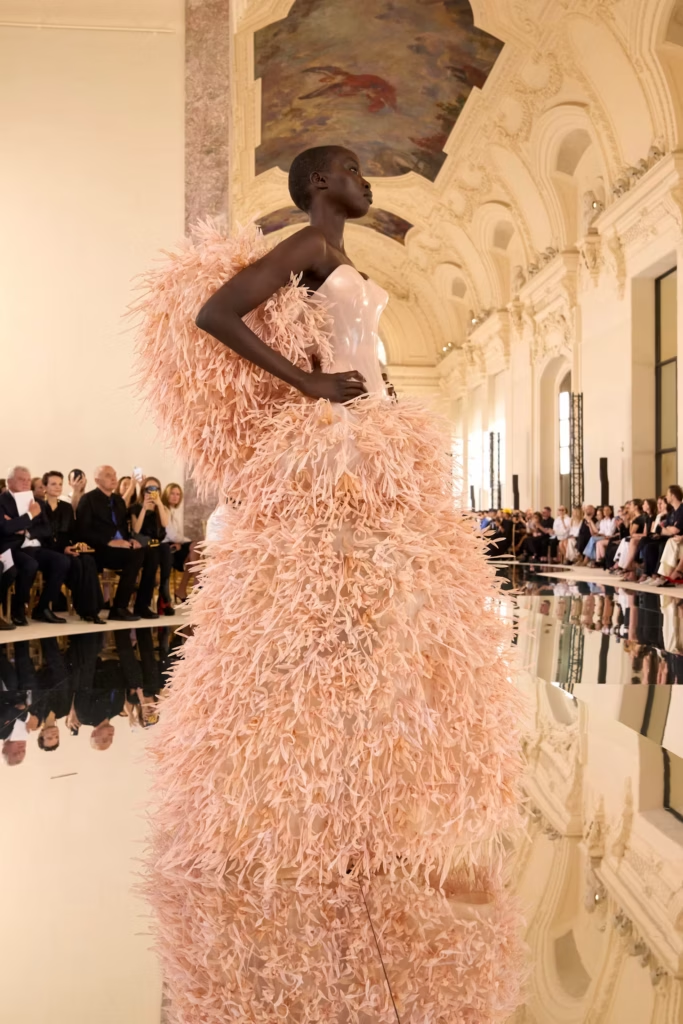
The collection pushed the human body into surreal territory. Latex jackets sprouted inflatable tentacles. Silicone corsets resembled hyper-realistic anatomy. Flesh-toned molded pieces blurred the boundary between fashion and sculpture, while glowing dresses appeared almost alive as light emerged from within their layered construction. Elsewhere, preserved flowers embroidered onto gowns bloomed across couture silhouettes, while shells and fish scales added unexpected texture and movement.
Some of the collection’s most striking looks felt beautiful and unsettling at the same time—a balance that has always defined Schiaparelli. Rather than pursuing conventional elegance, Roseberry embraced discomfort, proving that couture can still surprise audiences in an era dominated by polished digital imagery.
Schiaparelli Haute Couture Fall/Winter 2026 Collection
Staying True to Elsa Schiaparelli’s Surrealist Spirit
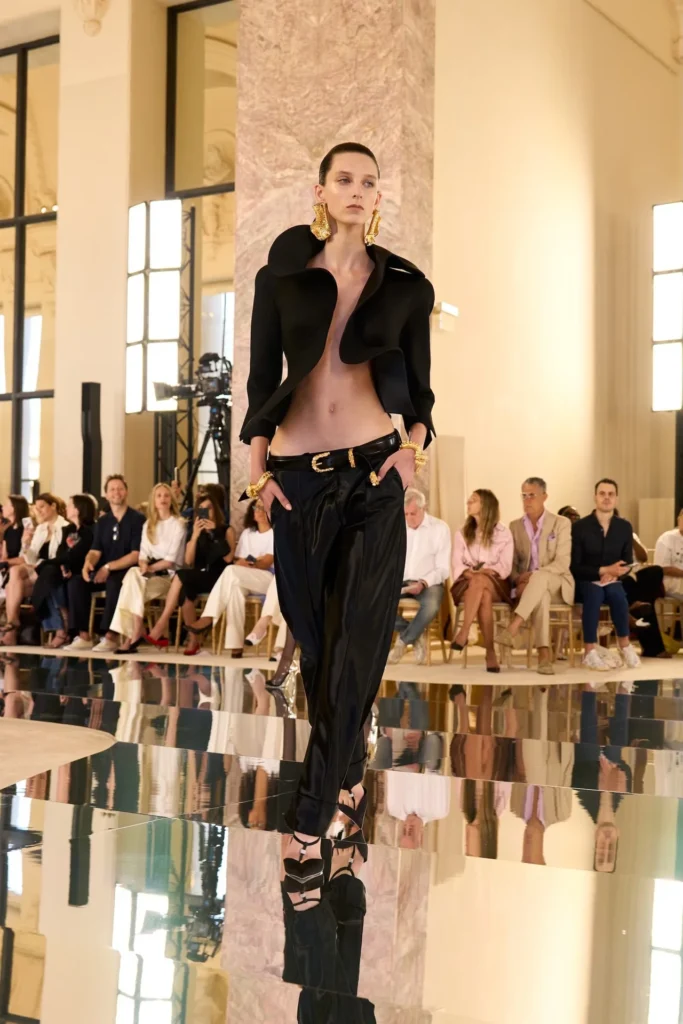
Although the materials felt futuristic, the collection remained deeply rooted in the house’s history. Elsa Schiaparelli built her legacy by challenging conventions through surrealism, collaborating with artists and creating garments that questioned what fashion could become. Roseberry continues that tradition rather than simply referencing archival designs. His sculptural silhouettes, exaggerated corsetry, and anatomical references have become modern Schiaparelli house codes, evolving season after season while remaining instantly recognizable.
This season, however, those signatures were reimagined through entirely new materials. Silicone replaced fabric. Latex replaced leather. Preserved flowers became embroidery. The silhouettes remained unmistakably Schiaparelli, but the execution felt fresh. That’s what makes this collection particularly successful—it demonstrates that a strong fashion house doesn’t simply repeat its signatures. It constantly reinvents them.
Schiaparelli Haute Couture Fall/Winter 2026 Collection
Beyond Fabric: Thinking Without Limits
One of Roseberry’s greatest strengths is that he rarely thinks about clothing in conventional terms. For him, couture is not defined by fabric but by possibility. That mindset led the team to collaborate with a Paris studio specializing in hyper-realistic silicone props for the film industry, developing entirely new techniques for manipulating silicone as though it were fabric. The atelier also experimented with sculpting baked paint, preserving real flowers in sugar water, and incorporating natural materials into couture construction.
These innovations reinforce an important point: haute couture remains one of the few spaces where experimentation can happen without commercial limitations. Rather than asking what materials should be used, Roseberry asks what materials could become couture.
Schiaparelli Haute Couture Fall/Winter 2026 Collection
The Sculptural Corset Era Continues
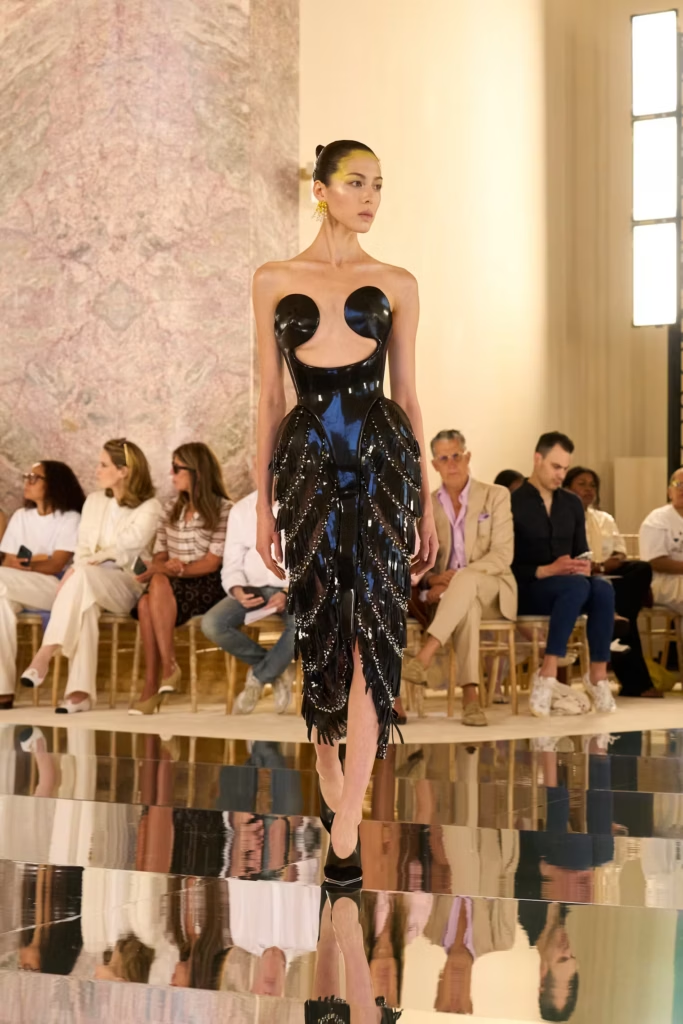
If there’s one design language that defines modern Schiaparelli, it’s sculptural corsetry. Over the past few years, Roseberry has established a distinctive aesthetic built around exaggerated silhouettes, anatomical references, and sculpted bodices. That vision has become increasingly influential, extending well beyond the couture runway.
The success of this year’s Met Gala is proof of that impact. Celebrities including Kylie Jenner and Hailey Bieber embraced Schiaparelli’s sculptural corsets and dramatic tailoring, demonstrating how Roseberry’s couture ideas continue to shape red carpet fashion. Rather than becoming repetitive, Fall/Winter 2026 expands those signatures through new materials and techniques, allowing Schiaparelli’s house codes to evolve while remaining immediately recognizable.
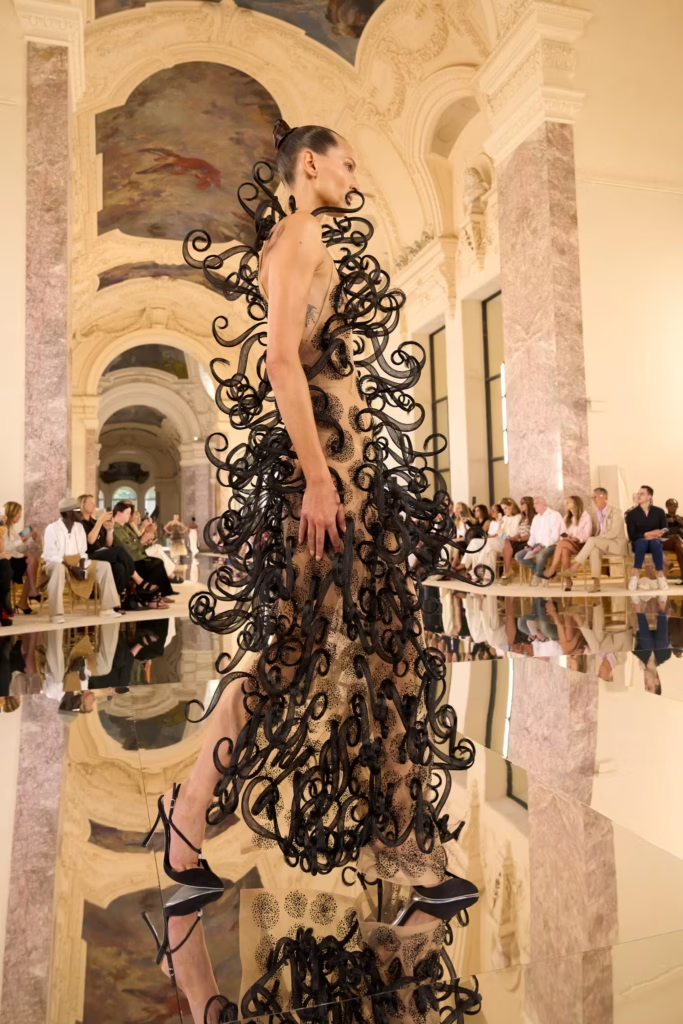
Schiaparelli Haute Couture Fall/Winter 2026 Collection
One of the Season’s Most Thought-Provoking Couture Collections
With The Call of the Void, Daniel Roseberry delivers one of the most innovative collections of the Fall/Winter 2026 couture season.
As artificial intelligence becomes increasingly embedded in the fashion industry—from concept generation and digital rendering to campaign imagery and design assistance—the debate is no longer theoretical. It has even entered popular culture, with The Devil Wears Prada 2 reportedly centering on fashion’s transition into an increasingly digital world and the tension between technological efficiency and creative artistry. As AI continues to reshape the industry, many are asking whether fashion risks losing the very qualities that make it an art form: human intuition, emotion, craftsmanship, and experimentation. Daniel Roseberry doesn’t reject technology outright. Instead, The Call of the Void becomes his response to that uncertainty. By pairing centuries-old couture techniques with unconventional materials like silicone, latex, preserved flowers, seashells, and fish scales, he demonstrates that innovation doesn’t have to come at the expense of artistry. Rather than proving what AI can do, the collection celebrates what remains uniquely human: the willingness to experiment, embrace failure, and transform imagination into something tangible.
Rather than rejecting new technology, he explores its implications while reaffirming the value of craftsmanship and artistic risk. More importantly, he continues to strengthen Schiaparelli’s modern identity through sculptural silhouettes, surreal beauty, and fearless experimentation.
The collection proves that couture’s future isn’t about competing with artificial intelligence—it’s about embracing the uniquely human ability to imagine what has never existed before.