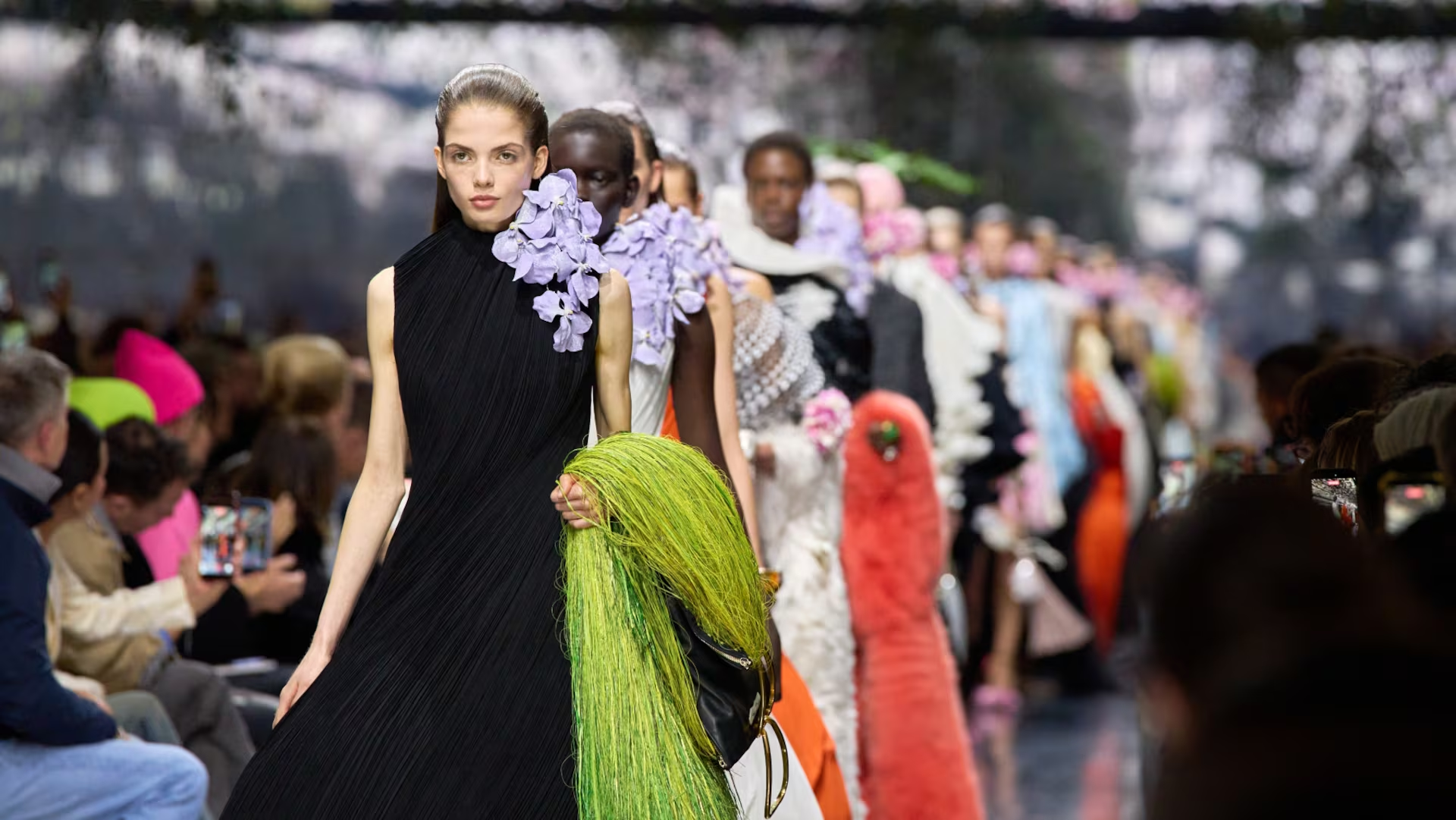
Reverence and iconoclasm: the twin forces behind every successful modern heritage reinvention. At his haute couture debut for Christian Dior, Jonathan Anderson demonstrated a masterful command of both.
Before the show, Anderson shared a formative anecdote. As a child in Ireland, he searched the Yellow Pages for the number of John Galliano, determined to ask for an internship—only to discover he had phoned a taxi service. Decades later, that childhood curiosity culminated in his first couture collection for the very house Galliano once led. In a poetic gesture of continuity, Galliano recently gifted Anderson a bouquet of cyclamen—flowers that became the symbolic thread running through this debut.
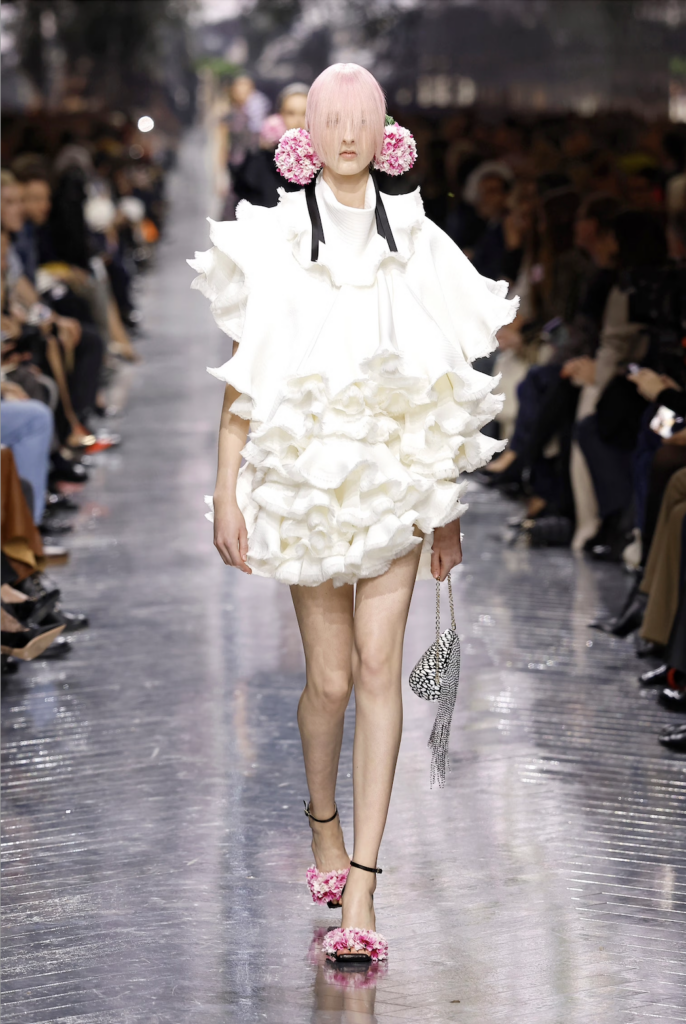
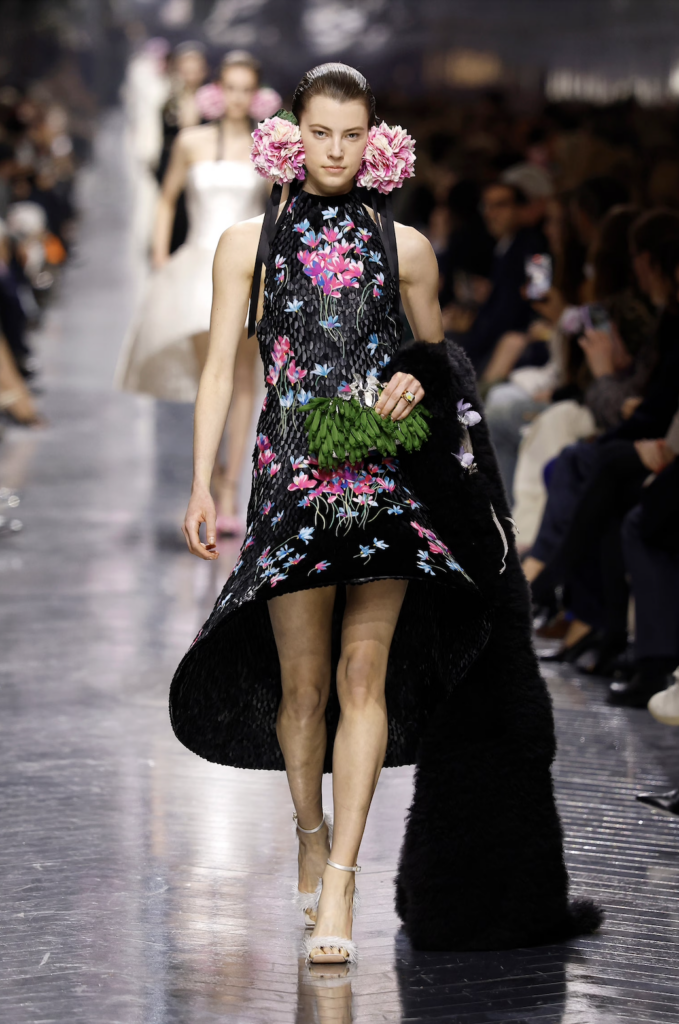
Christian Dior Spring–Summer 2026 Collection
Living Knowledge: Couture as Preservation Through Transformation
Titled not by slogan but by spirit, Dior Haute Couture Spring–Summer 2026 positioned craft as “living knowledge.” Prior to the runway, the Maison screened a short film featuring floral vignettes and anthropomorphic ceramics by British-Ghanaian artist Magdalene Odundo. Close-ups of thimbles, pins, scissors, and measuring tapes foregrounded the technical labor underpinning couture at its highest level.
Guests received invitations adorned with nosegays and chocolate thimbles, while digital invites bloomed with swirling cyclamen fields. Beyond their connection to Monsieur Dior’s lifelong passion for gardens, cyclamen carry layered meaning: associated with diffidence and favored by Leonardo da Vinci, who sketched them in manuscript margins. In Anderson’s hands, the flower became a baton of creative continuity—nature meeting artifice, the old welcoming the new.
The show notes framed couture as a laboratory rather than a relic: techniques are not preserved behind glass, but activated and evolved. To create couture, Anderson suggested, is to protect it.
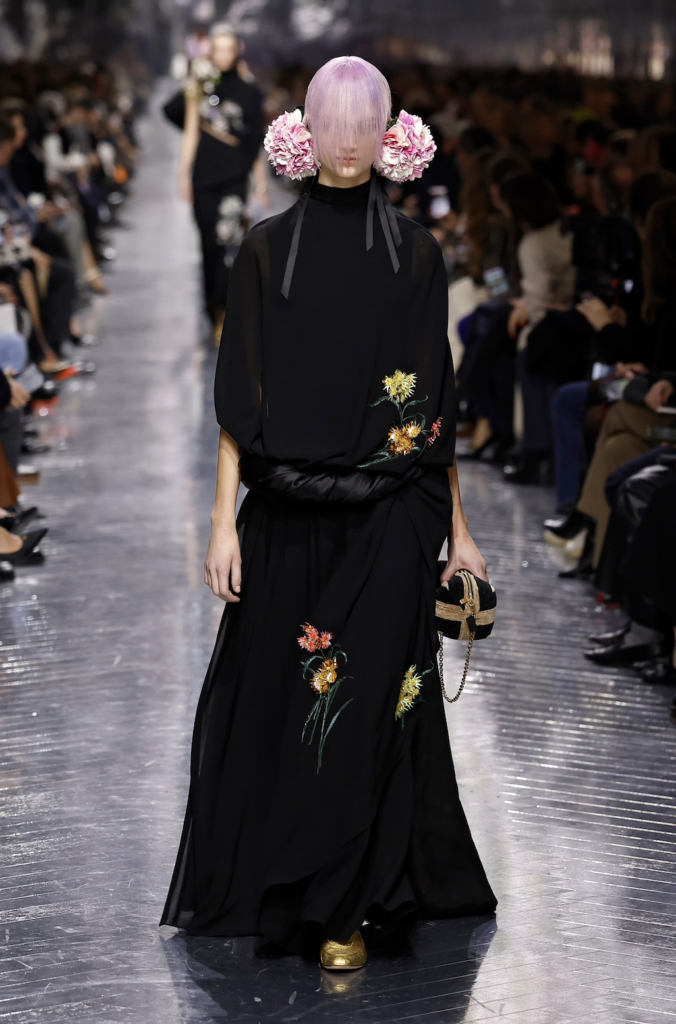
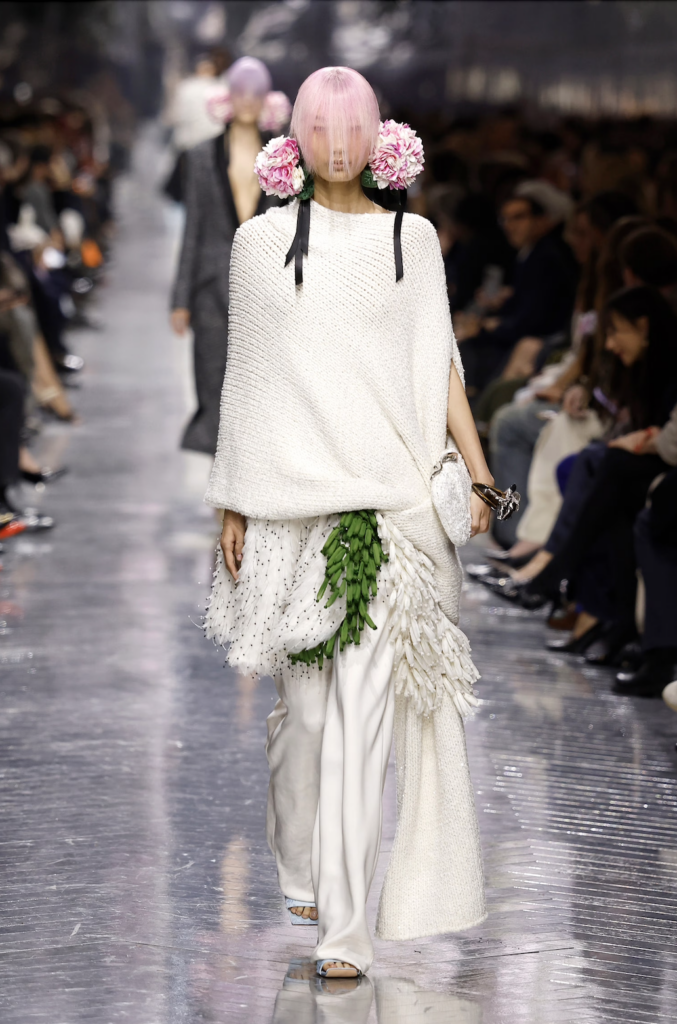
Christian Dior Spring–Summer 2026 Collection
Silhouette: Distillation and Expansion
The opening looks distilled Dior to its essence. Plissé gowns with bell-shaped crinolines nodded to the house’s New Look heritage, yet felt recalibrated—minimized, sculptural, almost alchemical. Their curved volumes echoed Odundo’s ceramic vessels, evoking alembics used in distillation. Anderson described one white gown as the first couture dress he ever made; it set the tone for a collection rooted in reduction before ornament.
The interplay between structure and weightlessness defined the silhouette. Where historical Dior gowns concealed formidable architecture beneath soft surfaces—iron fists in velvet gloves—Anderson’s forms defied gravity through cut and fabrication. Sculptural collars arced like waves; capes hovered; hems tied into bows appeared buoyant rather than heavy.
Feathers masqueraded as cloisonné enamel, reptilian scales, mother-of-pearl, or frayed silk. Only shards of organza revealed themselves as true plumage. The tension between real and artificial became a central narrative device.
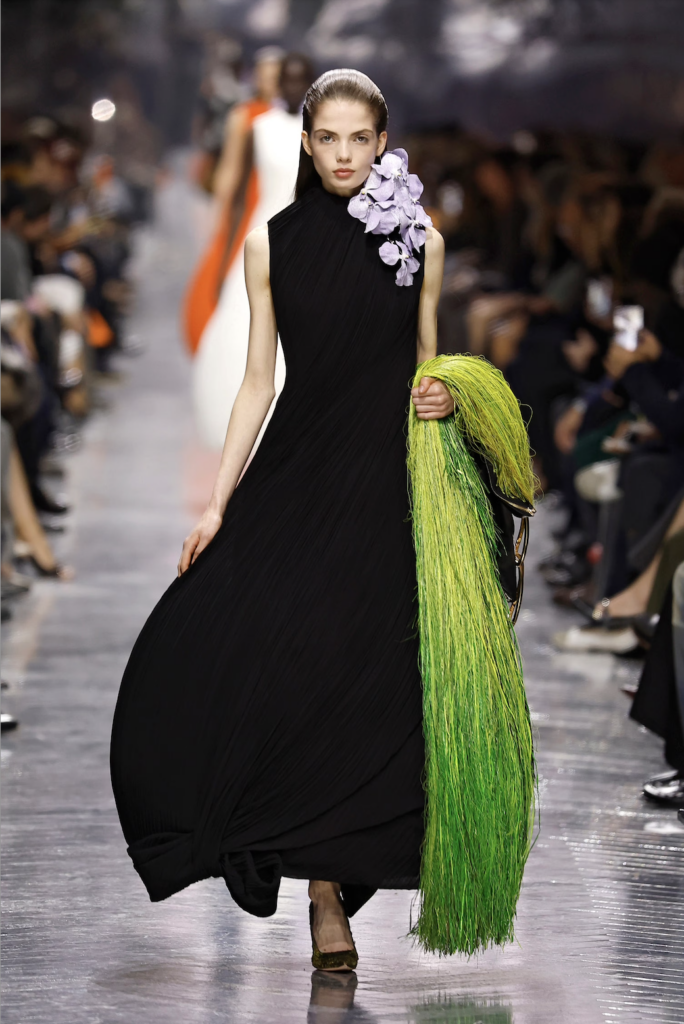
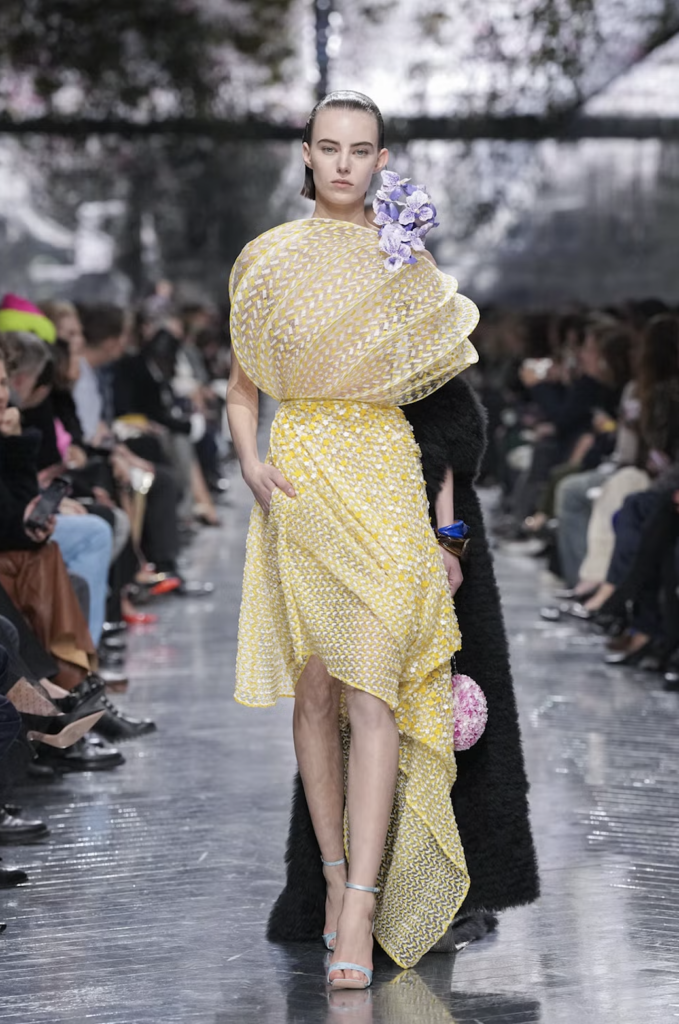
Christian Dior Spring–Summer 2026 Collection
The Garden as Cabinet of Curiosities
Anderson structured the collection as a wunderkammer—a cabinet of curiosities—where rare objects and natural wonders coexist. Models walked beneath a metallic ceiling transformed into a surreal meadow, to the strains of The Four Seasons by Antonio Vivaldi.
Floral motifs permeated the show: silk blossoms cascaded from collars, leather foliage crowned heads, and one model carried a silk-and-brass leaf parasol. Lady Dior bags appeared alongside surreal minaudières shaped like ladybugs. Grassy textures, mollusk-like spirals, and bulbous skirts reinforced the organic theme.
Jewelry further blurred temporal boundaries. Brooches reimagined 18th-century oval miniatures inspired by artists such as Rosalba Carriera and John Smart. Pieces incorporated meteorite fragments, fossils, antique cameos, and pearls. Shoes and bags were crafted from reclaimed silks dating to the court of Louis XV, ensuring each piece was literally one of a kind—history reconstituted for tomorrow.
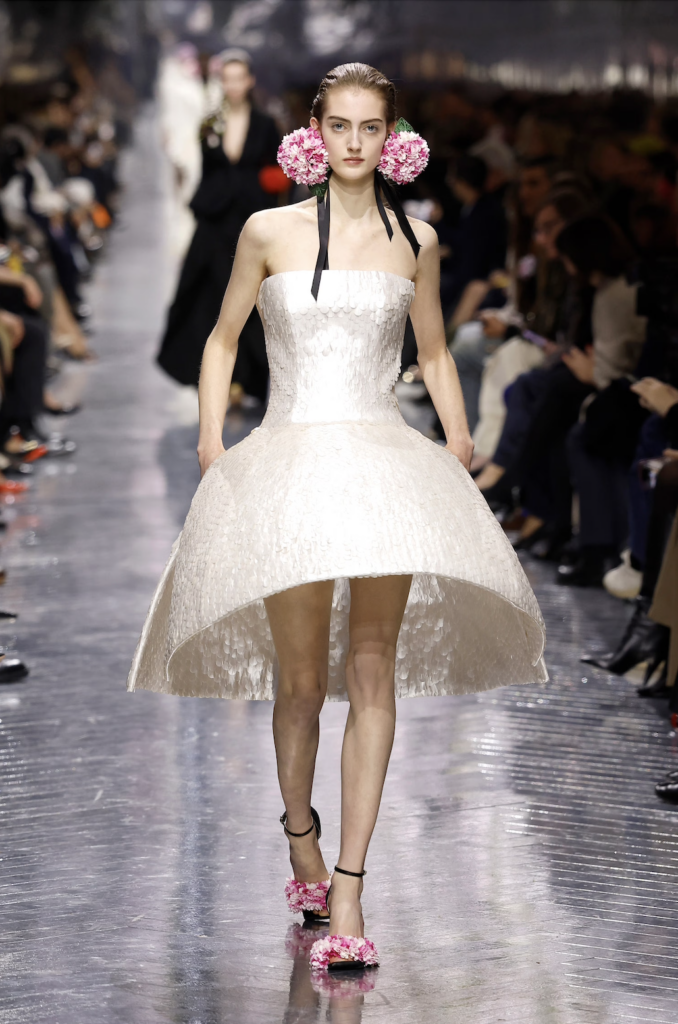
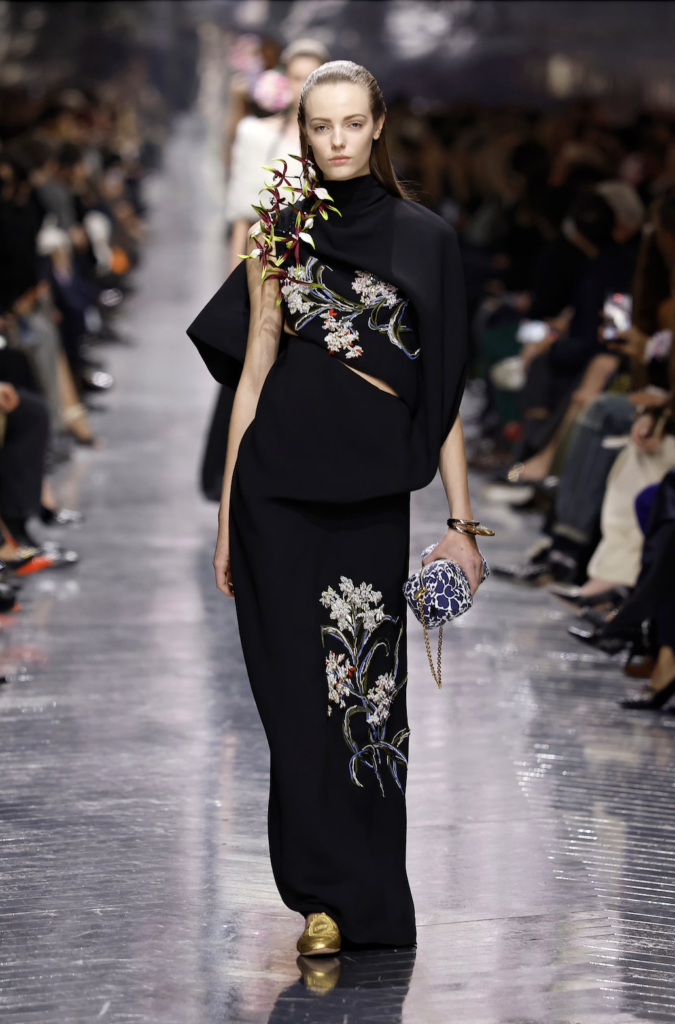
Christian Dior Spring–Summer 2026 Collection
The Bar Jacket Reimagined
Central to Anderson’s transformation was the evolution of the iconic Bar jacket. Rather than reproducing its cinched-waist nostalgia, he abstracted it into sculptural gestures—curvilinear, softened, and technically feather-light. Gold slippers referenced the square-toe silhouettes once designed for Dior by Roger Vivier, updated with a re-envisioned Dior typeface.
The result was not replication but recalibration. Dior codes—flowers, tailoring, craftsmanship—were neither discarded nor embalmed. They were metabolized.
Couture as Education and Ecosystem
Anderson extended couture beyond the runway. Select garments were installed at the Musée Rodin in dialogue with archival Dior looks and works by Odundo, underscoring couture’s role as cultural education. This gesture reframed haute couture from a private luxury for a select clientele into a public conversation about artistry and preservation.
Strategically, the debut signals a broader repositioning. Couture becomes an engine for the entire Dior ecosystem—ready-to-wear, accessories, campaigns—filtering distilled ideas outward. Indeed, elements of Anderson’s inaugural couture silhouette have already echoed into ready-to-wear, suggesting a porous creative pipeline.
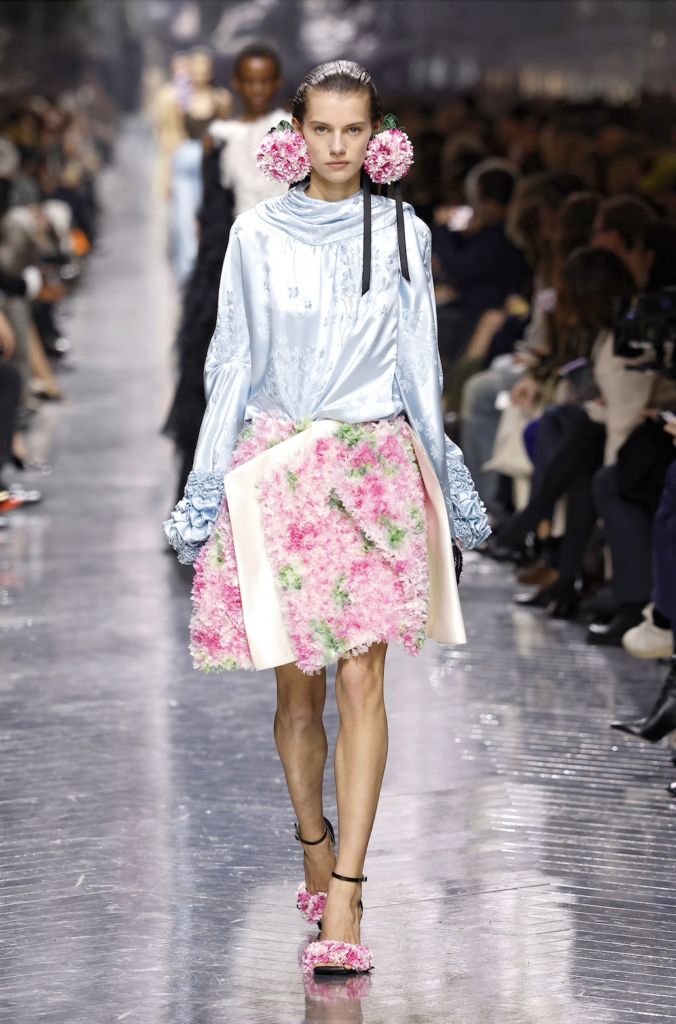
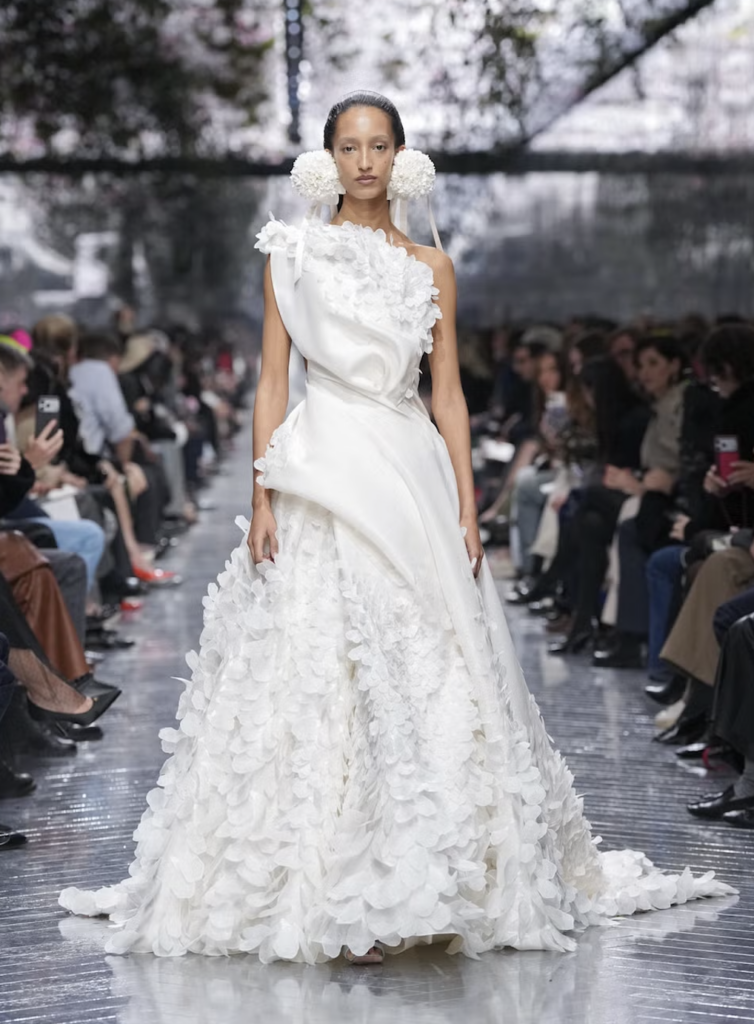
Christian Dior Spring–Summer 2026 Collection
Reverence Meets Rebellion
What makes this debut compelling is its balance. Anderson reveres Dior’s heritage—gardens, tailoring, Enlightenment ideals—yet resists museumification. His iconoclasm lies in recontextualization: meteorites embedded in brooches, ceramic forms translated into gowns, feathers disguised as enamel.
The tension between authenticity and artifice—real fragments of history embedded in surreal silhouettes—captures couture’s paradox. It is both ancient craft and radical experimentation.
Ultimately, Jonathan Anderson’s first haute couture collection for Christian Dior feels less like a chapter break and more like a recalibration. The ideas ricocheted off mirrored walls; the ambition was unmistakable. Couture here is not nostalgia. It is a living system—evolving, adapting, enduring.
And in that delicate balance of reverence and rebellion, Dior appears newly energized.