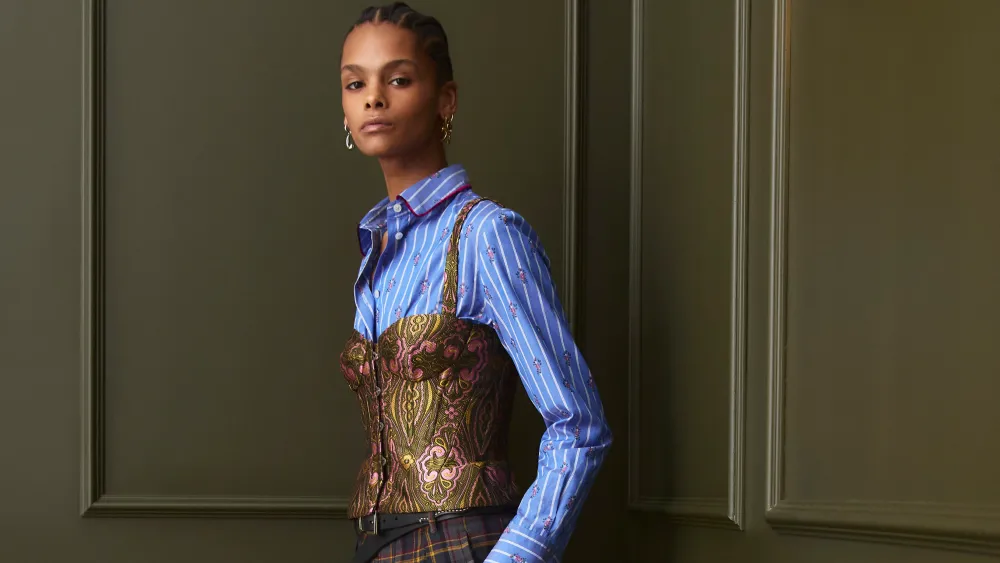
Etro’s Pre-Fall 2026 collection at Milan Fashion Week reaffirms what the house has always understood better than most: that textiles are not simply materials, but vessels of culture, memory, and movement. Under Marco De Vincenzo, Etro’s storied codes are neither frozen nor fetishized. Instead, they are treated as living matter—flexible enough to absorb new geographies, moods, and meanings.
De Vincenzo’s approach is rooted in the brand’s origin story. When Gimmo Etro returned from his travels through India and Asia in the late 1960s, he brought back more than fabrics; he carried with him a worldview shaped by pattern, symbolism, and cross-cultural exchange. That philosophy—of the world as something to be worn—continues to guide Etro today, and it finds particularly clear expression in this Pre-Fall collection.
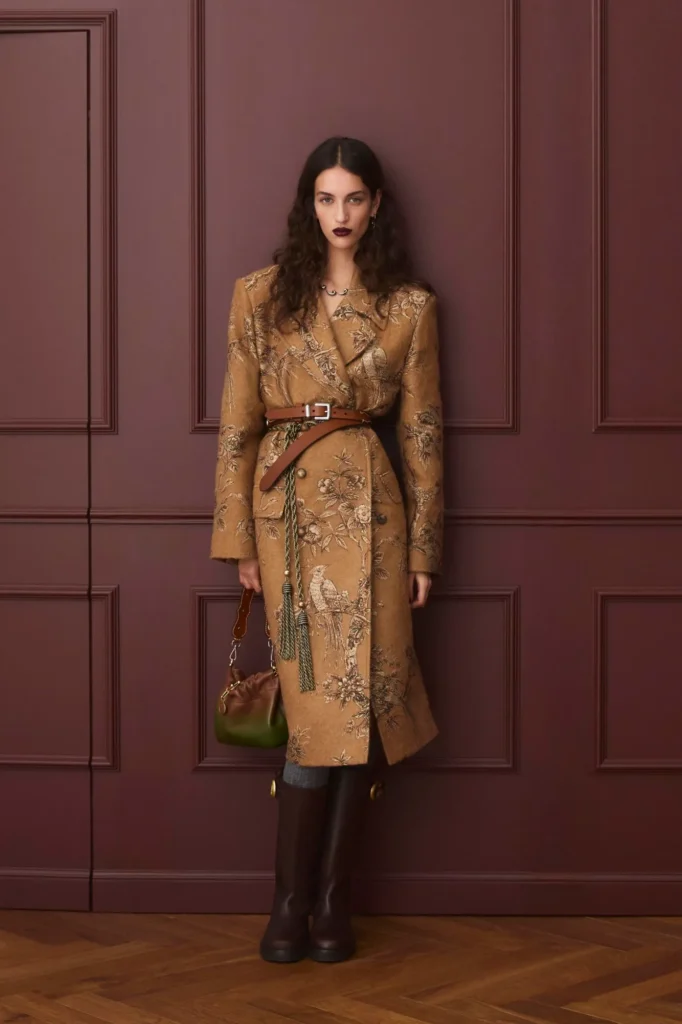
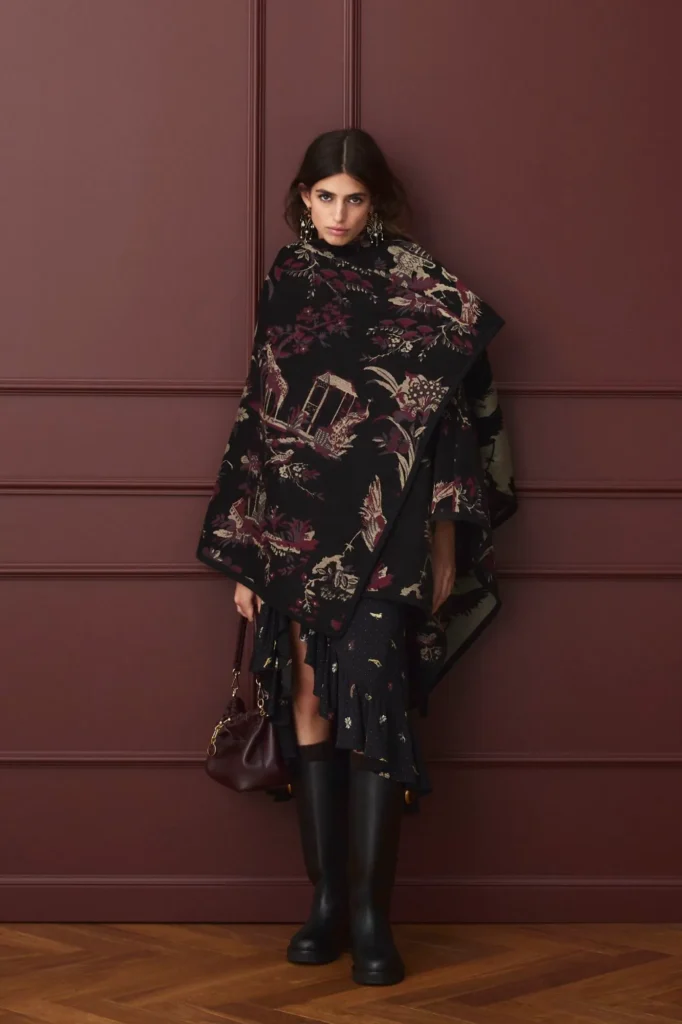
Etro Pre-Fall 2026 Collection
Paisley, reengineered
Rather than leaning into paisley as decorative shorthand, De Vincenzo sharpens it. The motif reappears not as nostalgia, but as structure—layered, distorted, and recontextualized. One of the collection’s most striking gestures is the placement of sculpted bustiers over classic shirting, where paisley becomes architectural rather than ornamental. The effect is distinctly modern: heritage prints meeting controlled, almost industrial silhouettes, producing a new language of Italian elegance that feels both intellectual and wearable.
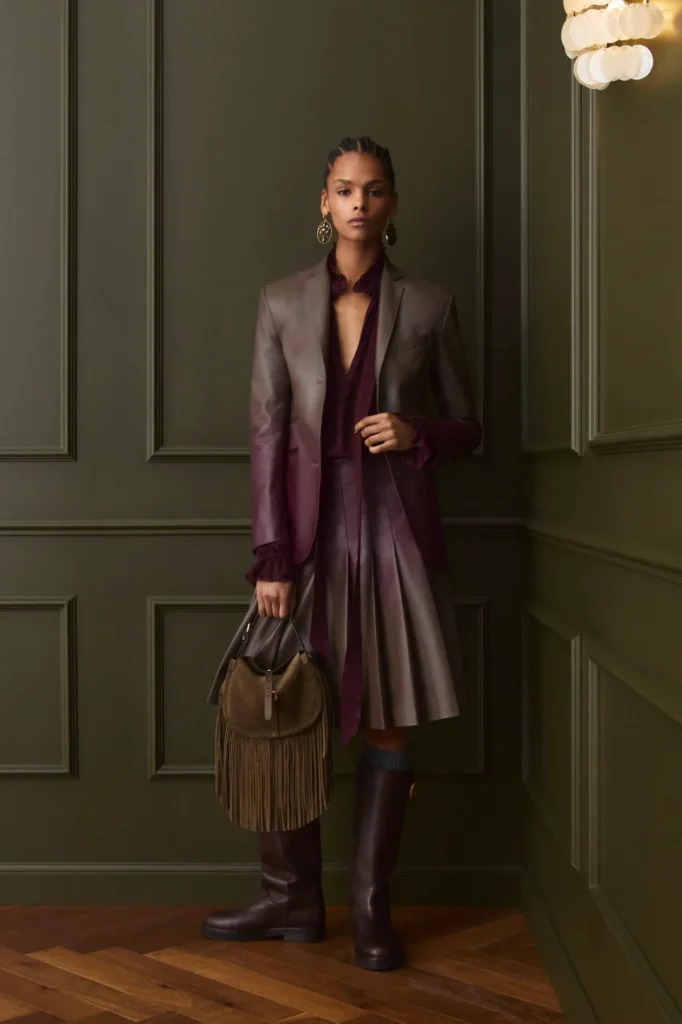
This idea of “new tradition”—that legacy only gains value through reinvention—runs throughout the collection. Medieval romanticism brushes up against bohemian excess, translated into draped skirts that echo courtly dress, velvet coats with a lived-in patina, and shirt-dresses imbued with a sense of itinerant ease. Each look feels like a conversation across centuries, mediated through fabric.
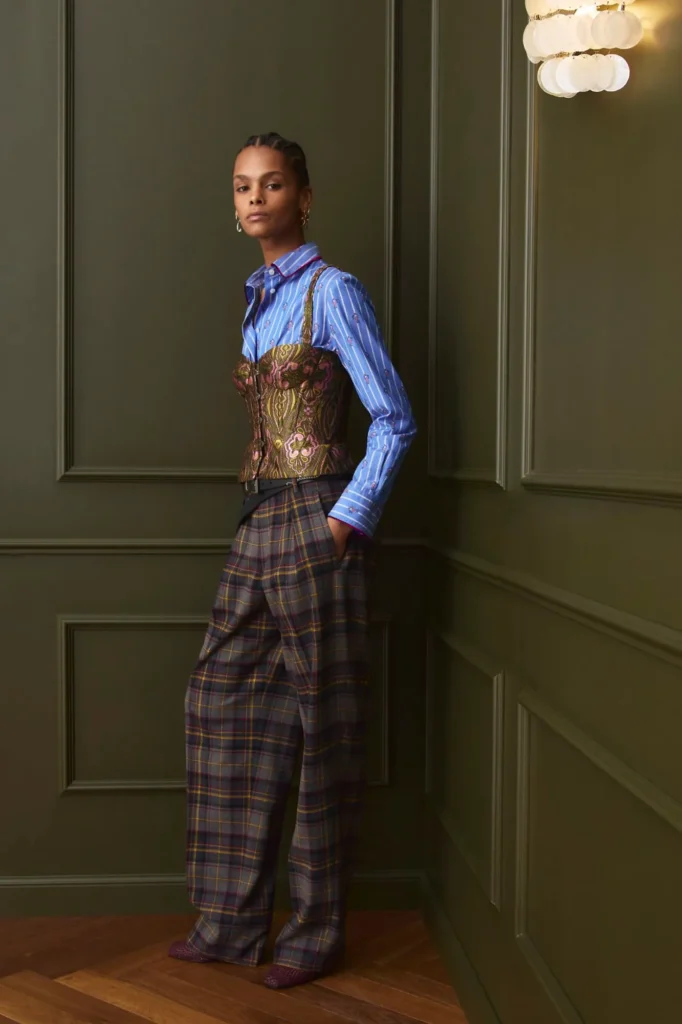
Etro Pre-Fall 2026 Collection
The home as a global concept
Pre-collections have often been where De Vincenzo finds his most convincing balance between Etro’s exuberant house codes and his own authorial voice, and Pre-Fall 2026 is a strong case in point. The underlying message is subtle but clear: for the Etro woman, home is not a fixed address—it exists everywhere.
The opening looks lean into this idea through a daywear-focused narrative inspired by the Shetland Islands and the intimacy of interiors. Dense, tapestry-like patterns evoke antique wallpapers, layered with tartans, plaids, and paisleys that blur the line between clothing and décor. At times, the camouflage is almost literal—velvet corsets and trousers that look as if they’ve been cut from plush sofas—while other references are more atmospheric, like leather pieces finished in dégradé hues reminiscent of the Northern Lights.
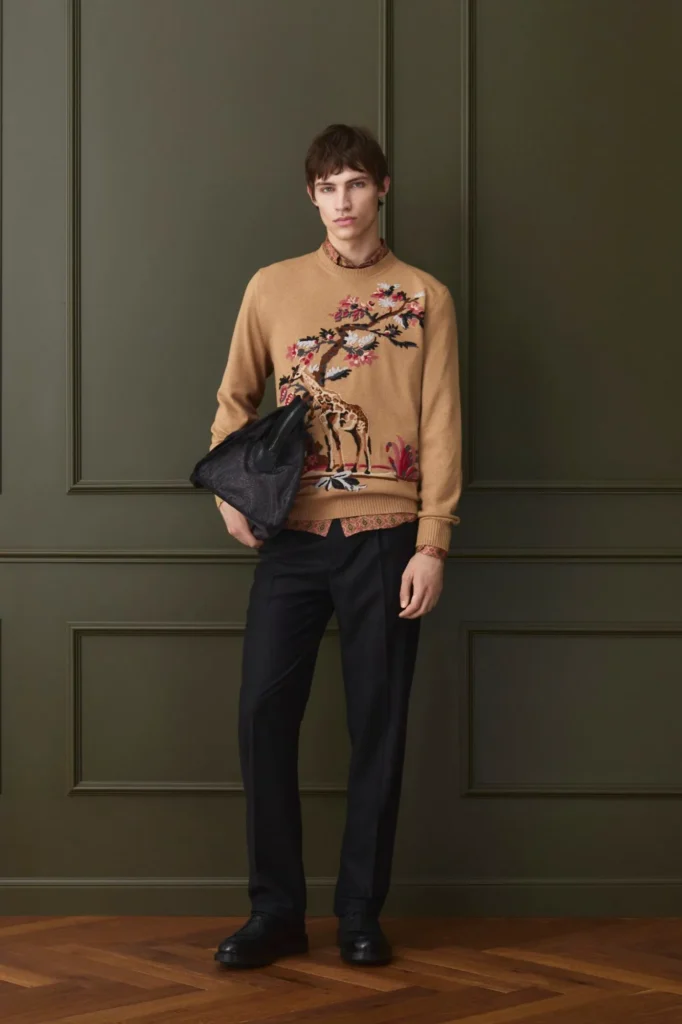
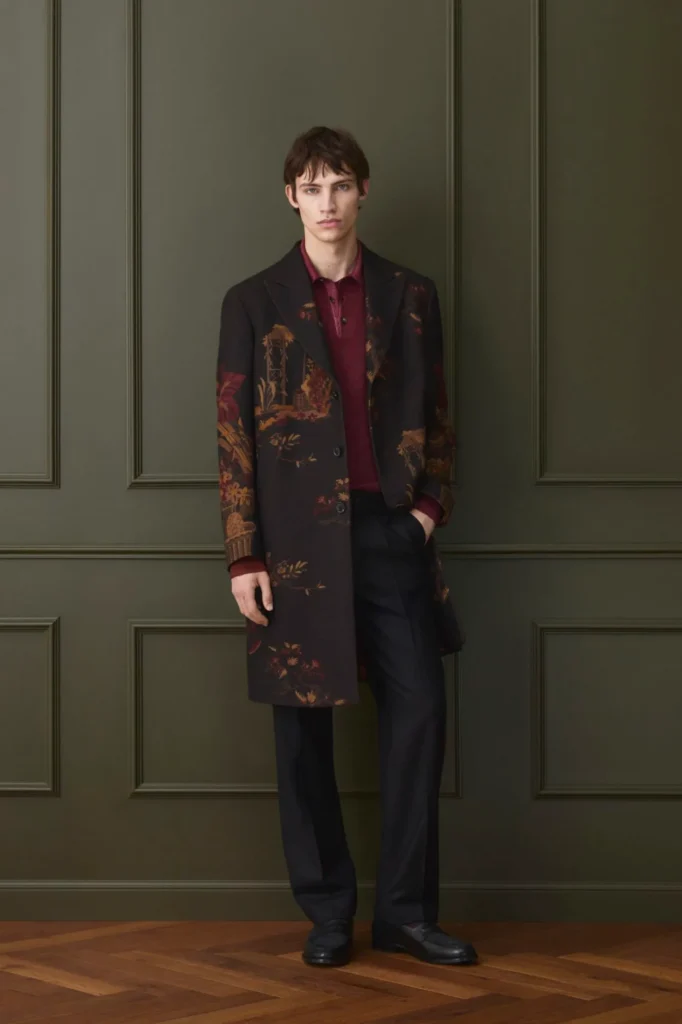
As the collection unfolds, the geography expands eastward. Far Eastern influences and soft orientalism emerge most clearly in outerwear: substantial jacquard coats, heavily printed shearling jackets, embroidered layers, and kimono-inspired silhouettes. These pieces anchor the collection’s sense of travel, both physical and imaginative.
Etro Pre-Fall 2026 Collection
Fabric as narrative engine
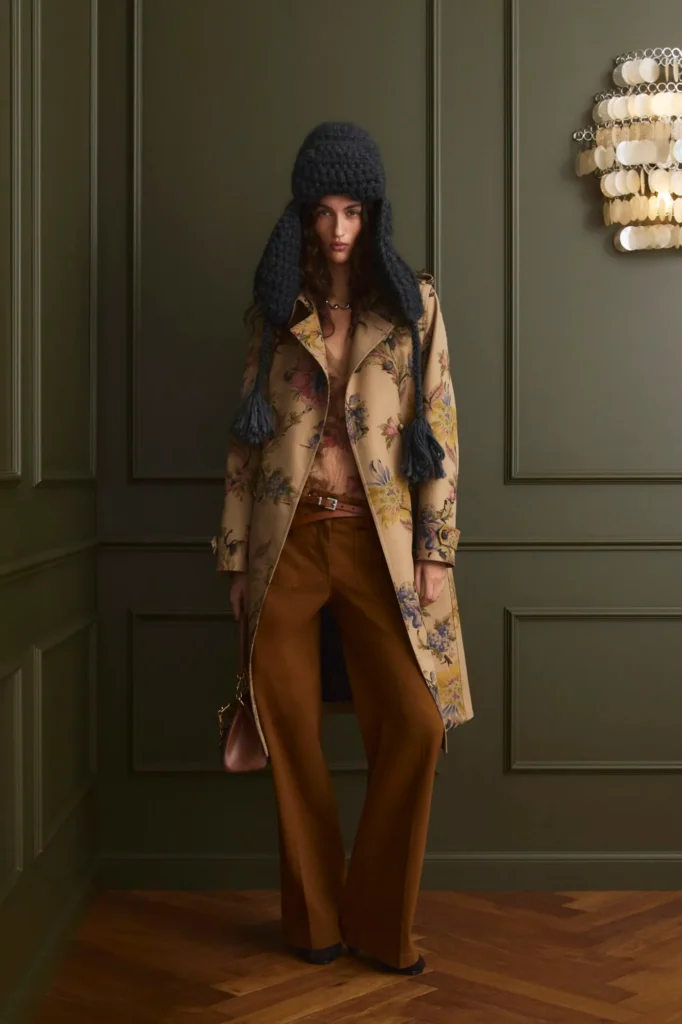
Textile experimentation remains the emotional and conceptual core of Etro Pre-Fall 2026. Jacquards take on the density of tapestries; silk twills glide beneath sand-washed cottons; wool blends are threaded with metallic fibers that glint like antique embroidery. The constant interplay between matte and shine, heaviness and air, creates a tactile rhythm that moves with the body, reinforcing Etro’s identity as a house where fabric tells the story first.
Knitted pieces with frayed edges introduce a deliberately deconstructed note, offering blanket-like warmth that contrasts with the fluidity of billowing printed dresses and body-skimming evening looks that close the lineup. It’s a push and pull between protection and exposure, comfort and expression.
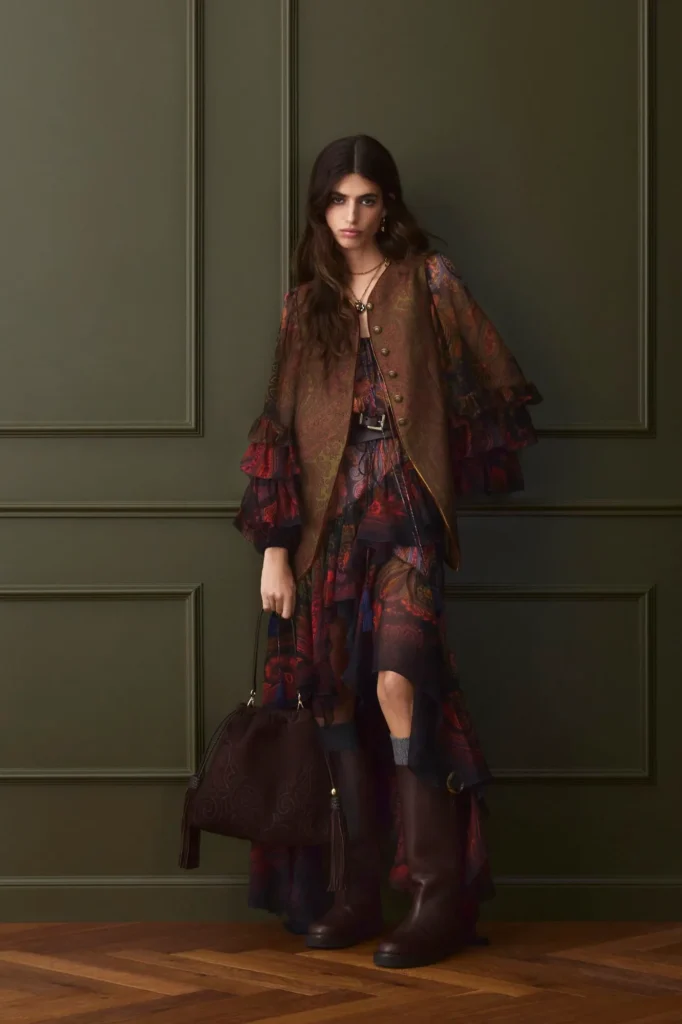
Etro Pre-Fall 2026 Collection
Staying in one’s own territory
De Vincenzo has been candid about resisting the pressure to dilute Etro’s eccentricity in the name of contemporaneity. And Pre-Fall 2026 makes a persuasive argument for that stance. In a fashion landscape often dominated by restraint and minimalism, Etro’s commitment to color, pattern, and maximalist texture feels less like escapism and more like conviction.
This collection doesn’t chase relevance; it trusts its audience. By staying rooted in its own territory—textile-driven, culturally layered, unapologetically decorative—Etro continues to offer something increasingly rare: authenticity that doesn’t need translation.
Pre-Fall 2026 is not just a seasonal wardrobe. It is an immersive chapter in Etro’s evolving mythology, proving that when heritage is treated as a living archive, it doesn’t weigh a brand down—it gives it somewhere to go.