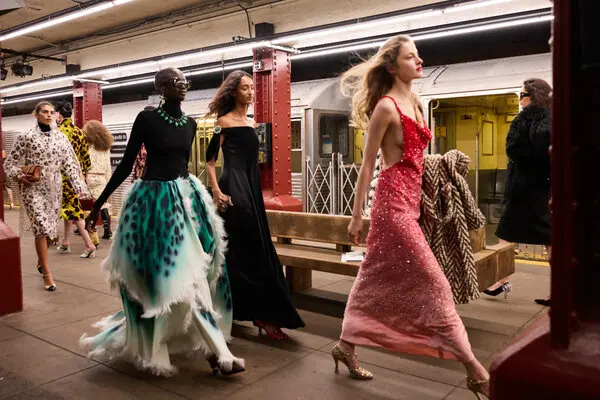
For his first Métiers d’art collection at Chanel, Matthieu Blazy didn’t choose a palace, a museum, or a postcard-perfect landmark. Instead, he took the house underground — to a disused New York subway platform — and transformed one of the city’s most ordinary spaces into a stage for extraordinary craft. The result was not just a show, but a declaration: Chanel under Blazy is entering a phase defined by confidence, clarity, and creative momentum.
New York might seem like an unlikely setting for a French couture house, yet it carries deep symbolic weight for Chanel. Gabrielle Chanel first encountered America in the early 1930s, absorbing its pragmatism, speed, and lack of reverence for hierarchy. That sensibility — direct, unsentimental, and business-minded — echoed throughout Blazy’s presentation. The subway, a space where every social class intersects, became a metaphor for the kind of Chanel he is proposing: elevated, yes, but never sealed off from real life.
Métiers d’art collection
A Chanel woman in motion
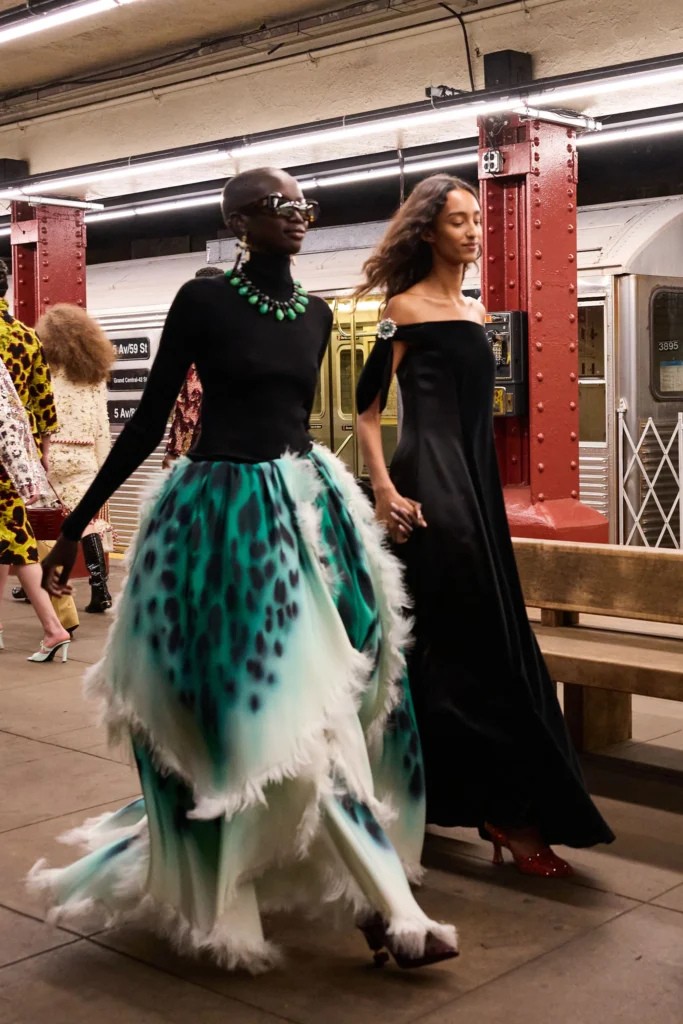
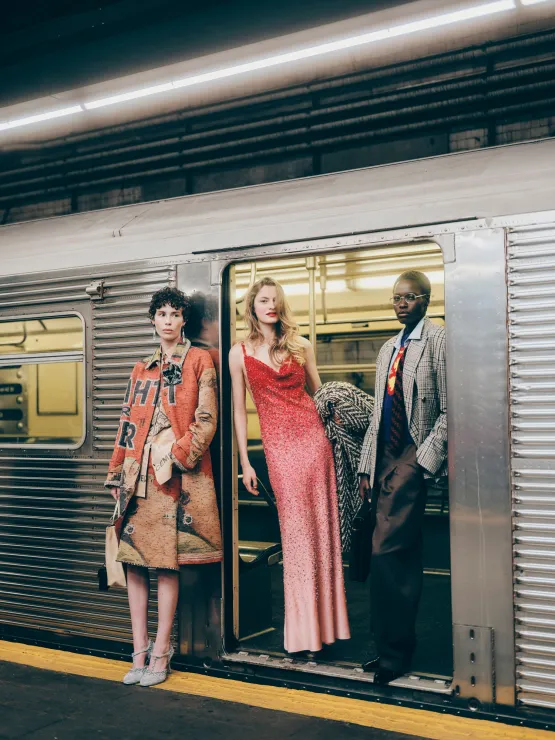
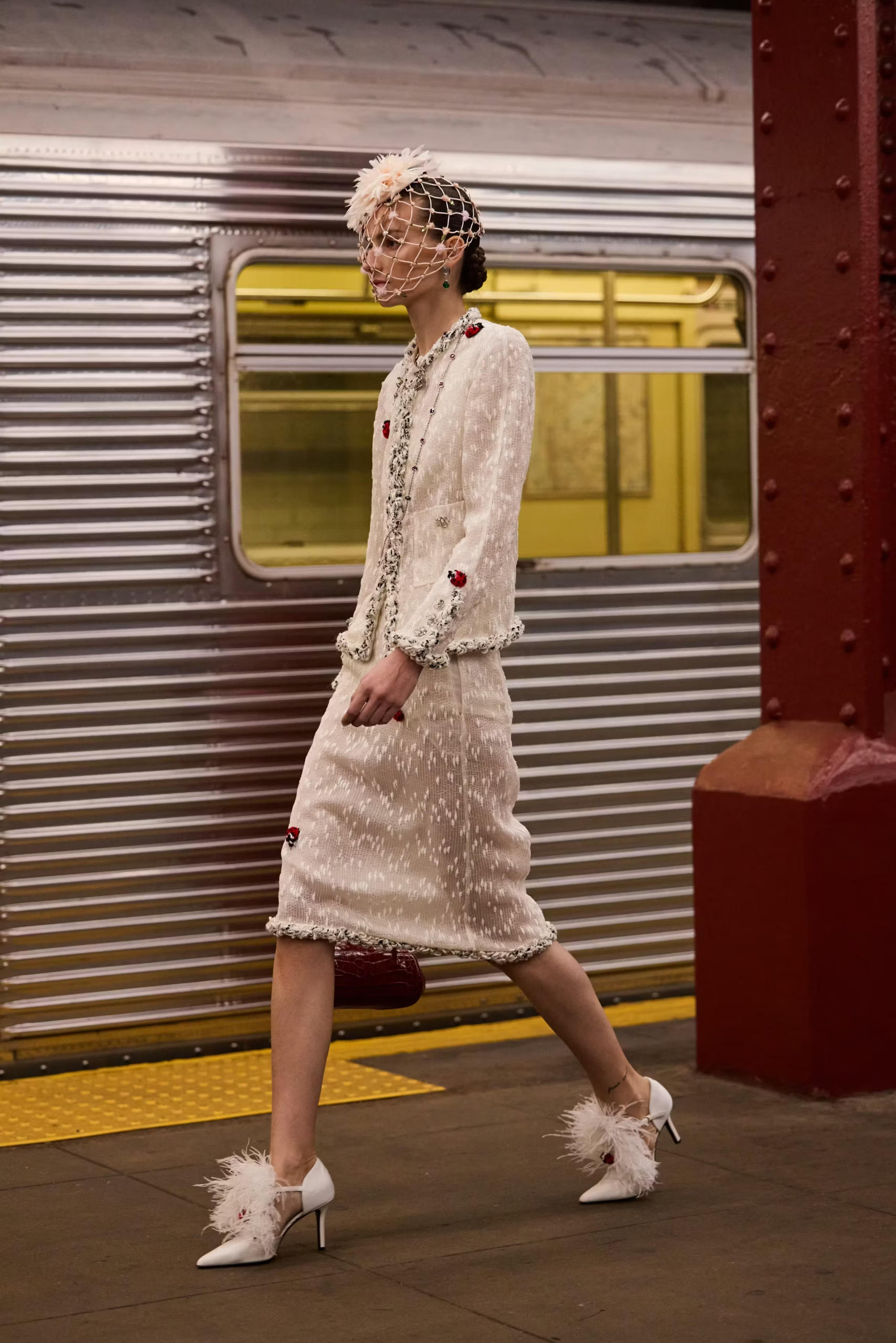
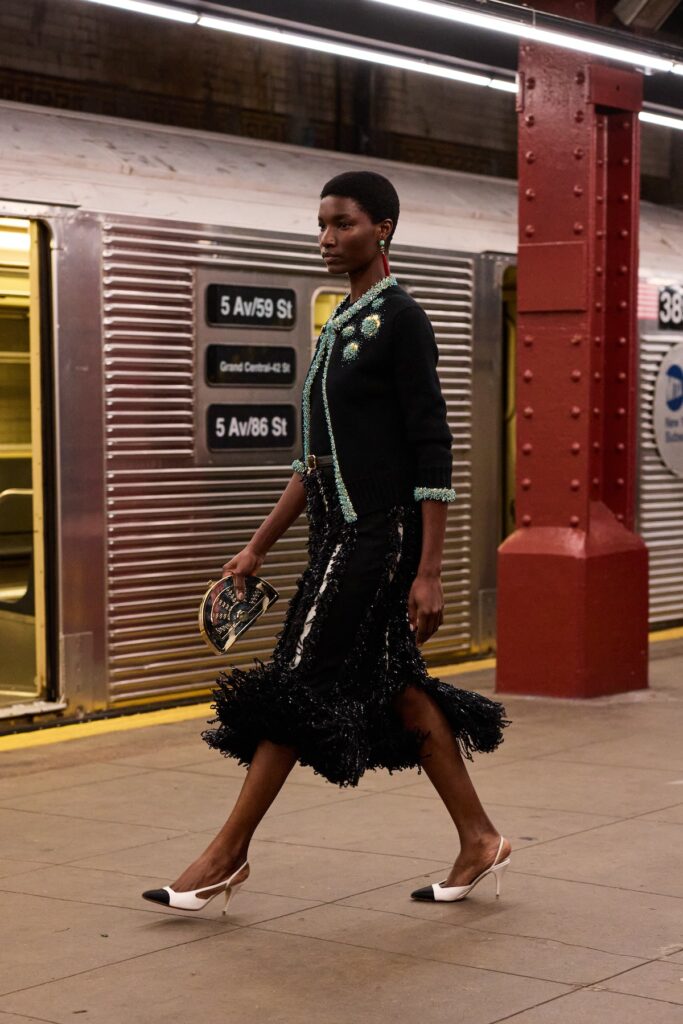
Blazy’s cast of women moved through the platform as if caught mid-journey. Coats were slung casually over arms, sweaters knotted at the waist, handbags tucked under elbows — gestures that felt instinctive rather than styled. The clothes themselves walked a careful line between familiarity and reinvention. Tailored suits nodded to Chanel’s heritage while shifting proportions and textures brought them decisively into the present. Denim appeared both literal and illusionistic, sometimes real, sometimes painstakingly embroidered to look so.
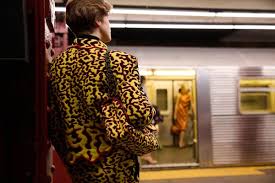
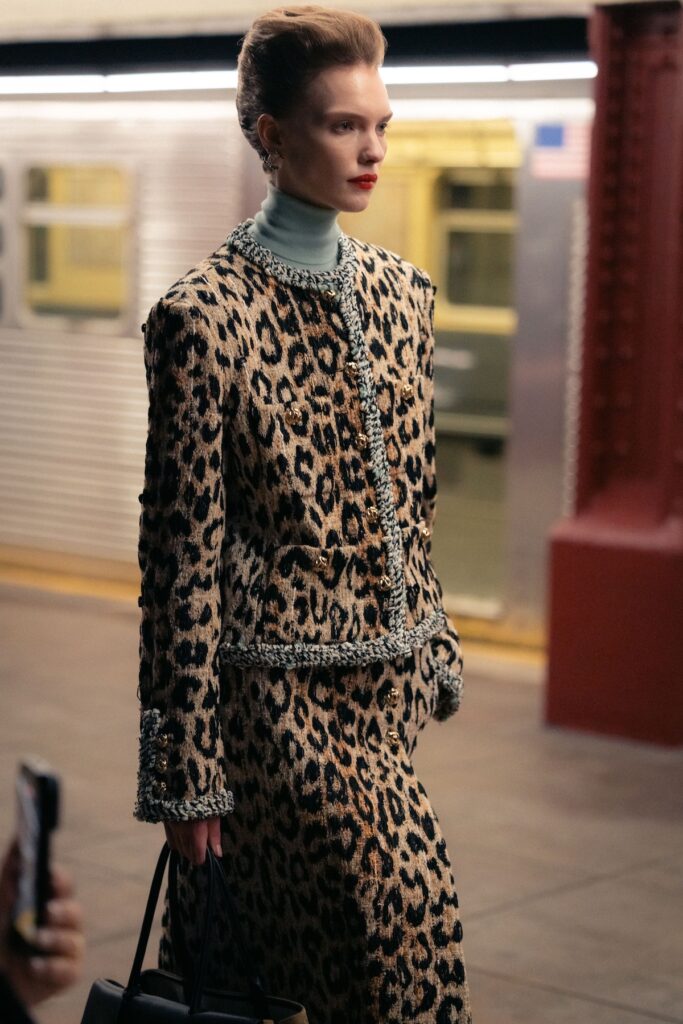
Animal motifs — long embedded in the house’s history — re-emerged with fresh energy. Leopard patterns surfaced in unexpected treatments, pushing beyond nostalgia into something bolder and more urban. Eveningwear followed a similar logic: gowns referencing the elegance of 1930s Hollywood were sharpened with modern edge, their glamour amplified rather than softened by the industrial setting.
Métiers d’art collection
Craft, chaos, and choreography
As with all Métiers d’art collections, craftsmanship was the show’s backbone. Tweeds were reworked through macramé, beadwork, and crochet, transforming the iconic Chanel suit into something tactile and experimental. Materials mimicked molten surfaces, floral reliefs, or architectural structures, each look a testament to the savoir-faire of the house’s specialist ateliers.
Yet what made the show compelling was not just technique, but atmosphere. Models drifted, paused, interacted — flipping through specially printed newspapers, miming phone calls, loitering by subway cars. The choreography recalled the theatrical spectacles of the Karl Lagerfeld era, but without imitation. Under Blazy, the drama felt less monumental and more human, less fantasy and more lived-in fiction.
Métiers d’art collection
A vision that speaks through clothes
What sets Blazy apart is his restraint. His work does not rely on slogans or overt statements. Instead, ideas are embedded in silhouette, styling, and material choice. In this sense, his approach feels refreshingly different from other contemporary creative directions in luxury fashion, where concept often outweighs construction.
Blazy’s Chanel does not explain itself — it shows. Democracy, individuality, and elegance coexist without didacticism. Each model felt like her own character, not a vehicle for a message. This ability to evolve the house without flattening it is what makes his tenure feel so promising. He isn’t dismantling Chanel’s codes; he’s expanding their vocabulary.
Métiers d’art collection
Still Chanel — but newly alive
Two shows in, Blazy has already established something rare: a Chanel that feels both deeply authentic and newly energized. The house’s signatures remain intact — the tailoring, the femininity, the polish — yet they are recontextualized through movement, modernity, and urban realism.
If this collection is any indication, Blazy’s leadership marks more than a smooth transition. It signals a creative recalibration — one where Chanel remains iconic, but no longer static. Not louder, not trend-chasing, but sharper, braver, and undeniably relevant.
And if Chanel’s future looks anything like that subway platform — crowded, dynamic, and full of character — then Matthieu Blazy isn’t just honoring the house’s past. He’s setting it firmly in motion.