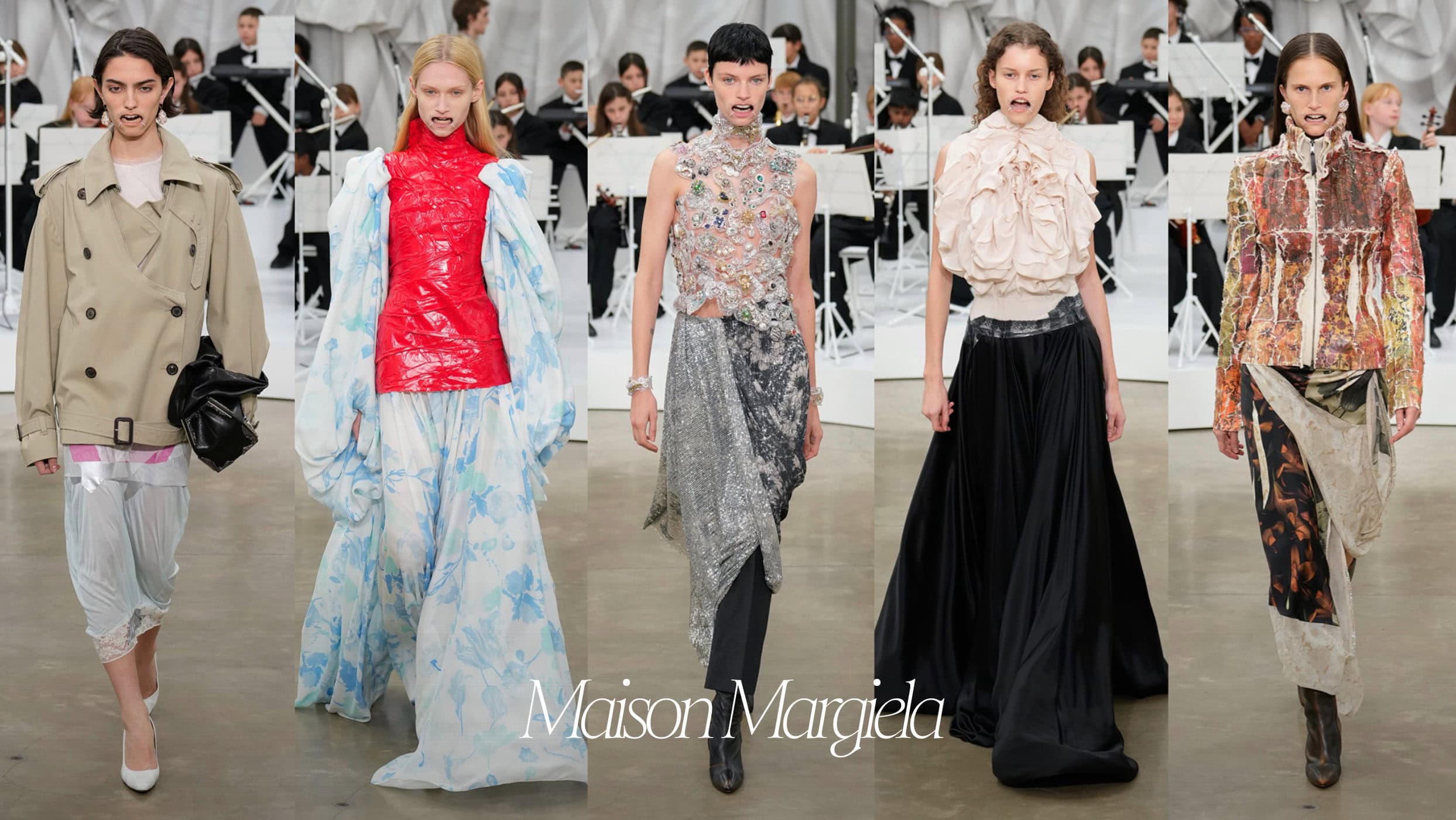
Among the slew of creative debuts in Paris this season, few carried as much anticipation as Glenn Martens’ ready-to-wear debut for Maison Margiela Spring 2026. After his hauntingly beautiful Artisanal show in July — which tilted the house toward dark romanticism and DIY elegance — the question was whether Martens would lean into commercial wearability or continue pushing Margiela’s experimental frontier.
As it turns out, he managed both.
The show opened with a playful subversion of grandeur: an orchestra of 61 children in oversized tuxedos, their sweetly off-key renditions of Strauss and Tchaikovsky filling the room with imperfect joy. It was a clever callback to Martin Margiela’s 1990 playground show, where neighborhood children mingled with models — and a nod to imperfection as poetry, a core Margiela belief. The wrong notes struck all the right ones.
Then came the models, their mouths clamped with metal Four-Stitch mouthpieces, both eerie and symbolic — a physical manifestation of Margiela’s obsession with anonymity and uniformity. It was unsettling, yes, but conceptually rigorous: the erasure of identity as an act of commentary, not cruelty.
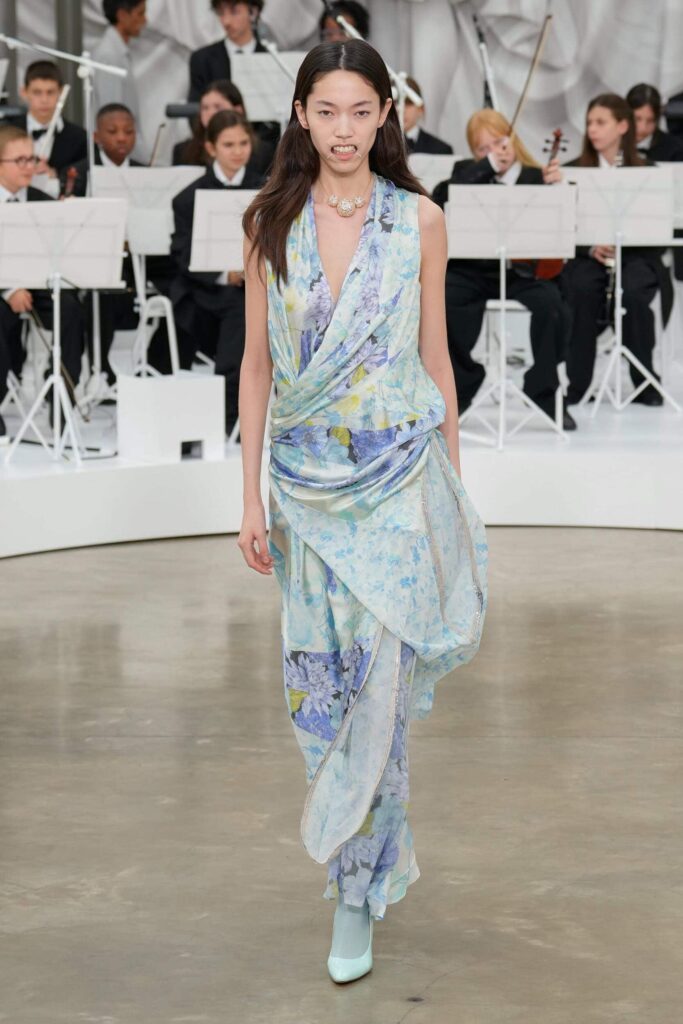
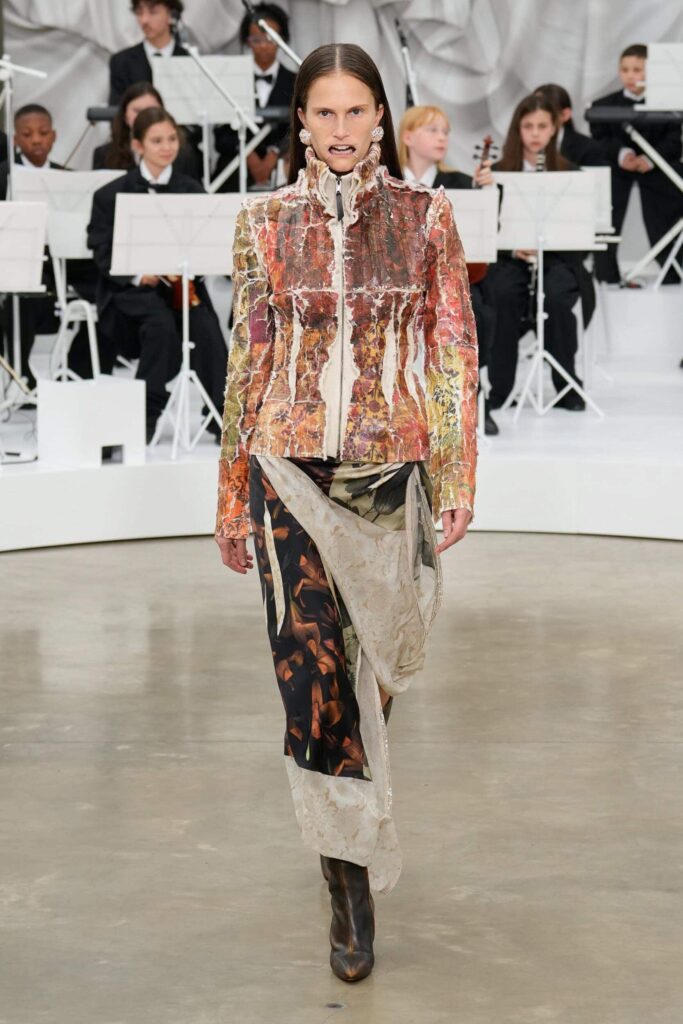
Maison Margiela Spring 2026 Collection
What followed was a study in restraint. Martens, known for his structural audacity at Diesel and Y/Project, turned inward here, crafting a collection that was less about shock and more about architecture. Long leather dusters, tape-bonded slip dresses, and sculpted denim separates dominated the runway. Shoulders dropped and torsos elongated; blazers morphed into fluid hybrids of waistcoat and coat; transparent overlays ghosted the body like afterimages.
Every stitch felt deliberate — as if Martens were dissecting Margiela’s legacy to reveal its anatomy.
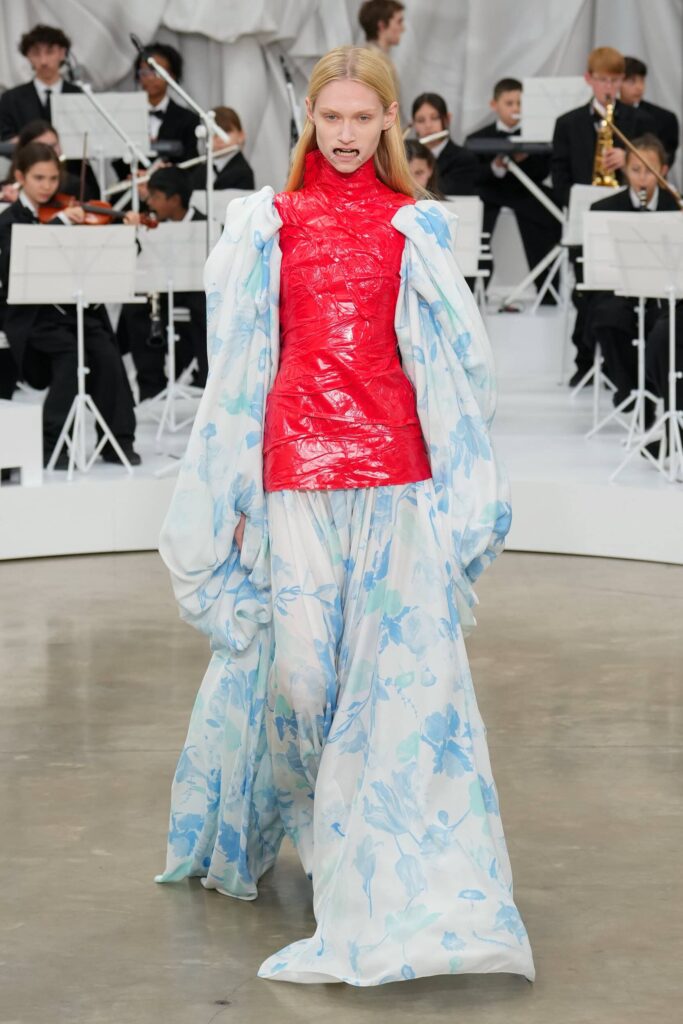
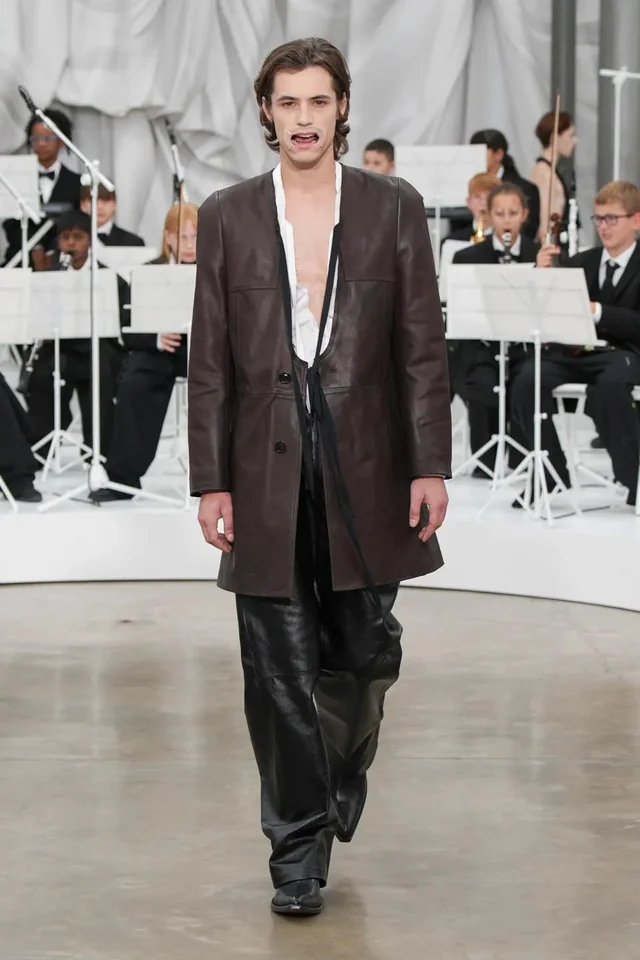
Maison Margiela Spring 2026 Collection
The collection’s palette moved from industrial neutrals to soft abstract florals, a slow bloom that hinted at optimism without losing the cerebral edge. Imperfection, after all, was not just aesthetic here — it was ethos. Adhesive tape, recycled denim, and unrefined textures reminded us that beauty often emerges from what’s broken, forgotten, or unfinished.
Martens’ approach could be read as a quiet revolution. Where John Galliano transformed Margiela into theatre — emotional, operatic, and surreal — Martens translated that spectacle into structure. The drama migrated inward: seams replaced soliloquies; silhouettes replaced stories. It was less about performance, more about precision.
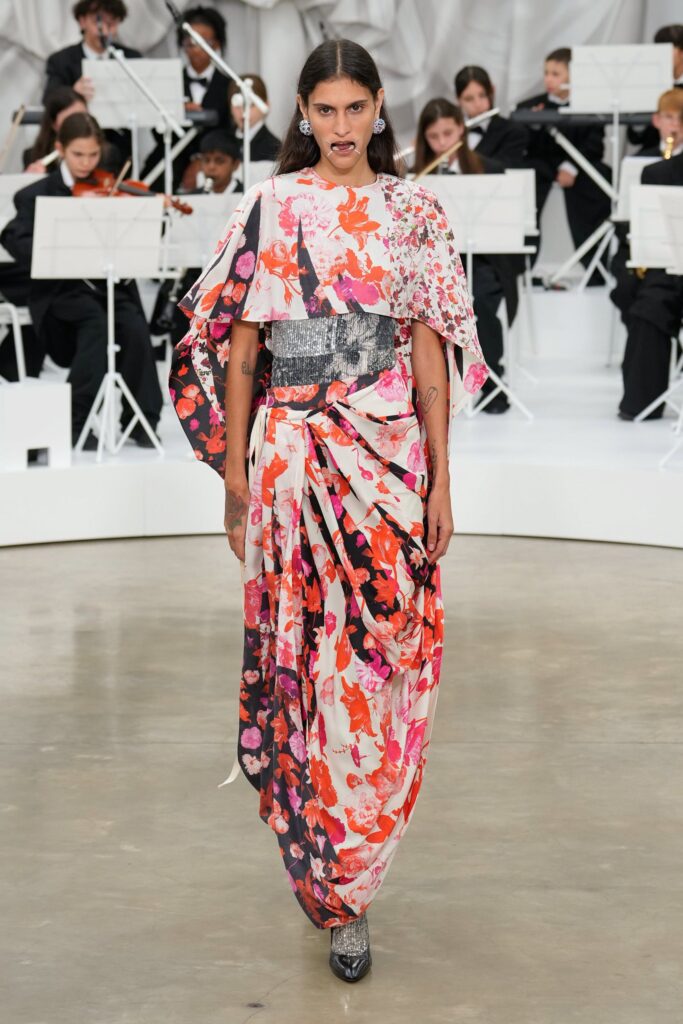
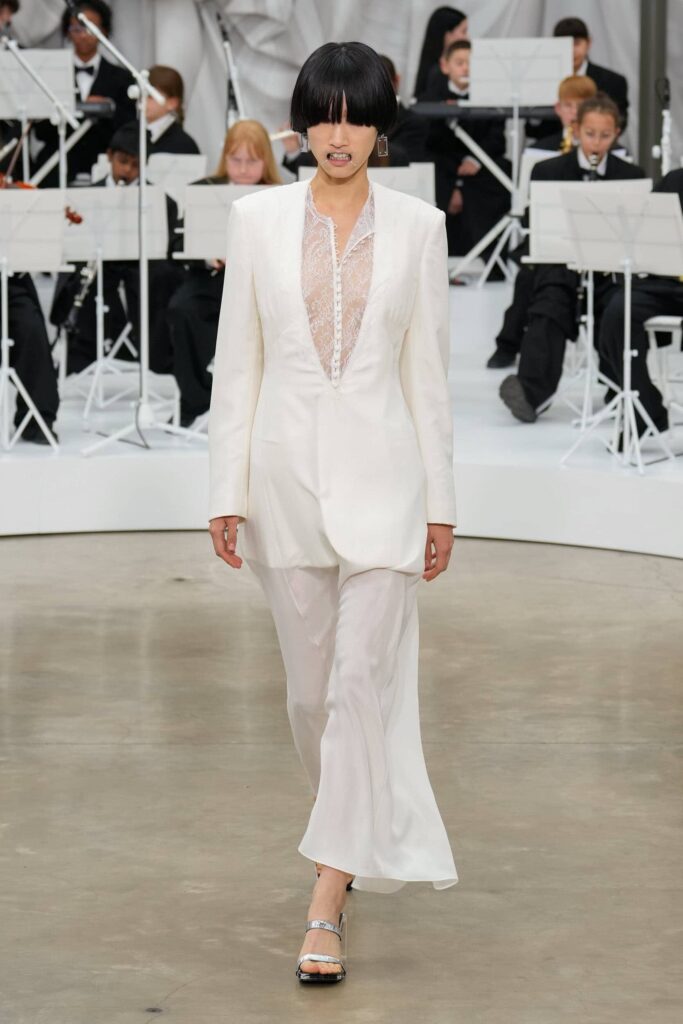
Maison Margiela Spring 2026 Collection
His Margiela doesn’t scream; it resonates.
The show also gestured toward a cultural shift. In an era of fashion maximalism — all glitter, virality, and digital noise — Martens’ restraint felt almost rebellious. It was a statement of confidence: that craftsmanship, not chaos, can command attention.
And yet, this was not nostalgia. Martens’ Margiela is neither Galliano’s dream nor Martin’s ghost — it’s something new entirely: lucid, self-aware, and deeply tactile. It honors the house’s philosophy that imperfection reveals truth but filters it through modern composure.
As the final look disappeared and the children’s orchestra struck their last crooked note, the message was clear: Margiela’s soul remains intact, but its pulse has changed. Martens isn’t burning the house down; he’s rebuilding it from the inside out — one deconstructed seam at a time.