After a three-year hiatus, Stella Jean returned to Milan Fashion Week with a runway show that was less about spectacle and more about substance. Titled Where Women Move Mountains, the collection was both a love letter to artisanship and a manifesto for its recognition as art.
Jean, the Haitian-Italian designer whose work has always bridged cultures, opened the show with a look that set the tone: a corset wrap inspired by Bhutan’s kira textile paired with a sharply tailored beige suit. It was an elegant collision of worlds—Italian refinement grounded in Bhutanese craft—and a reminder of Jean’s ability to merge heritage with contemporary codes.
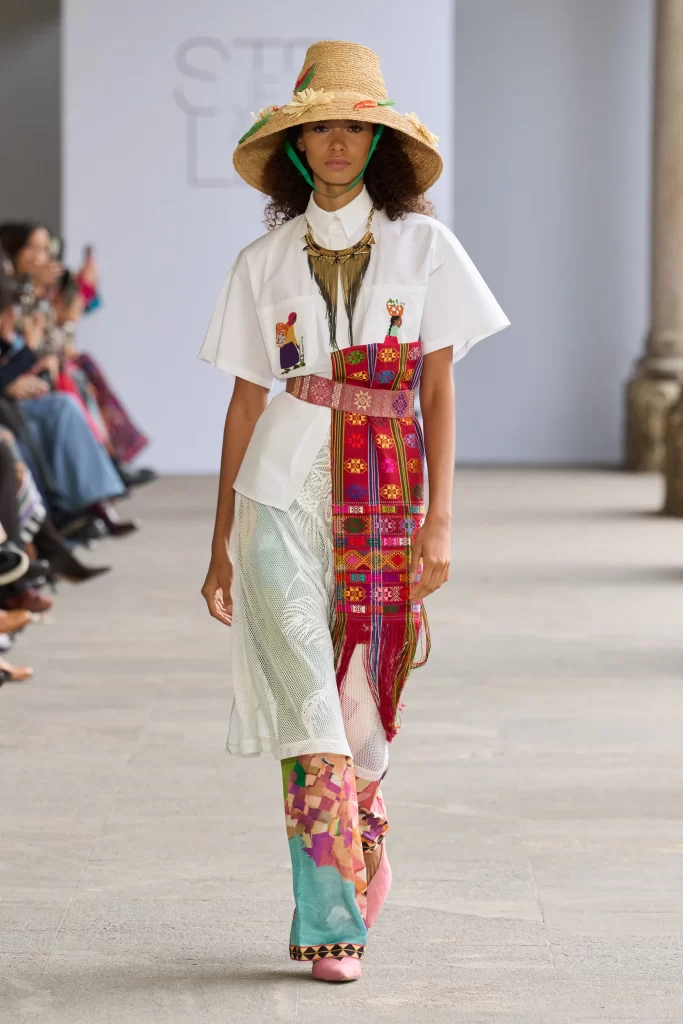
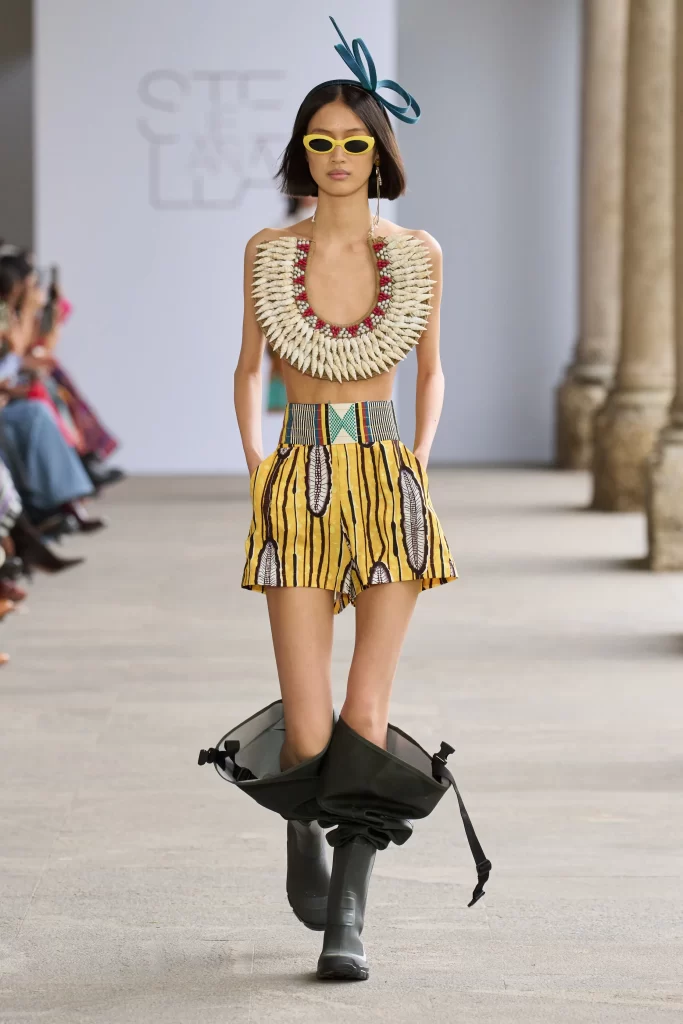
Stella Jean Spring 2026
This season marked a historic first: Bhutanese artisans, many traveling outside their homeland for the first time, co-created the collection as part of Jean’s ongoing #ForWomenForNations initiative. Their textiles carried the spirit of the Himalayas into Milan—nettles hand-harvested, spun, and embroidered with fauna, flora, and ancestral stories. Some pieces, the artisans explained backstage, took up to a year to make. The results were extraordinary: balloon skirts layered with naïve mountain paintings, bustier dresses topped with toego-inspired jackets, and A-line frocks alive with geometric motifs.
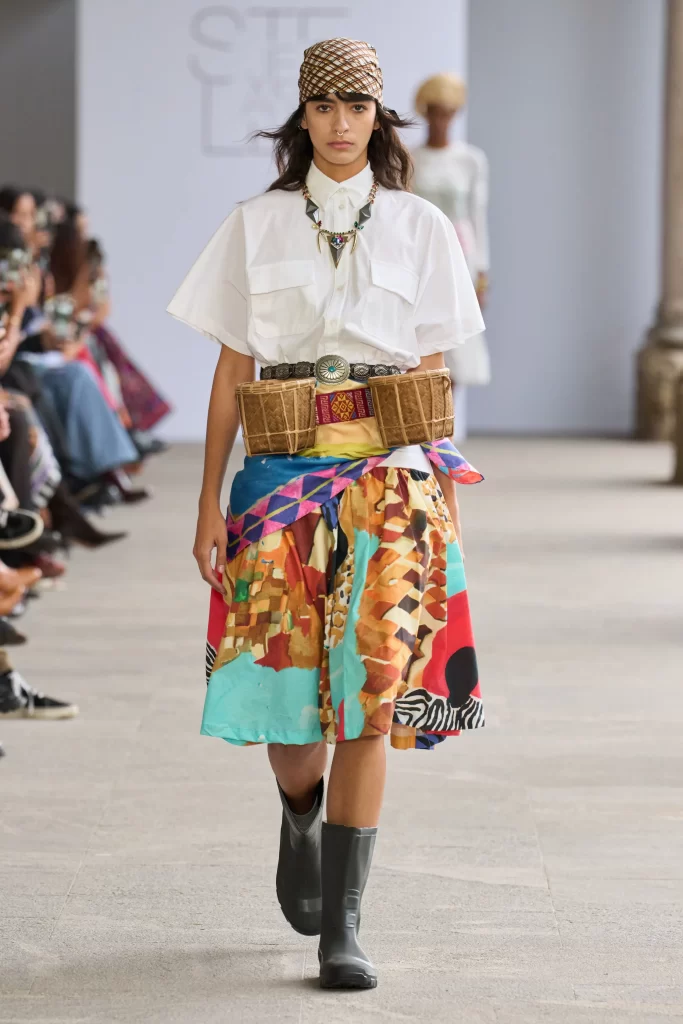
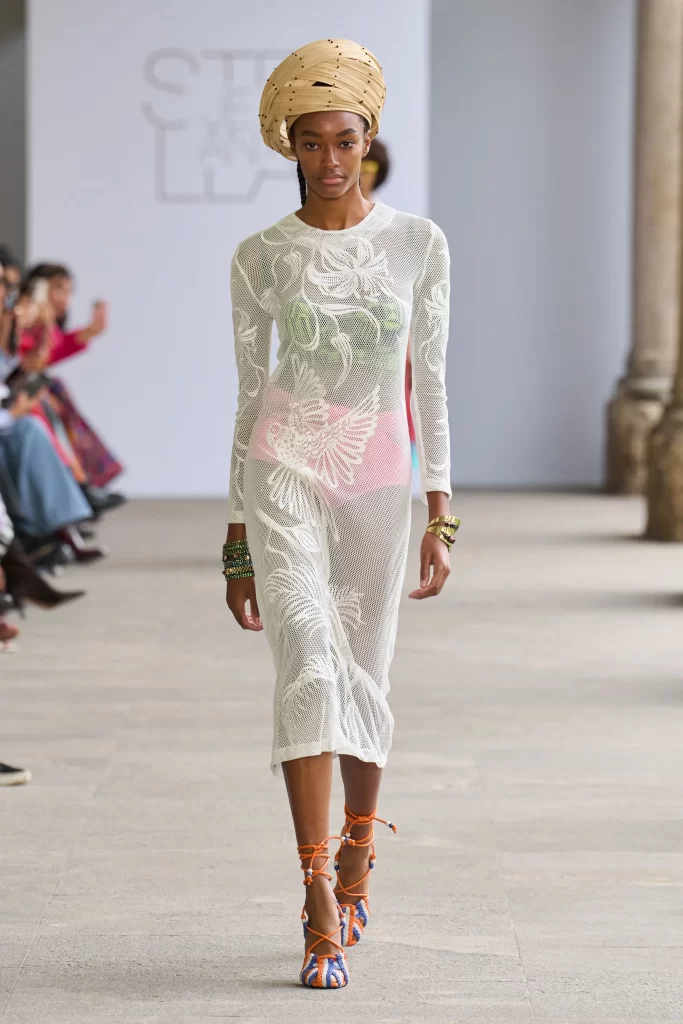
Stella Jean Spring 2026
The palette was just as thoughtful. Earth tones of sand and moss green met the richness of clay reds and Bhutanese crimson lac-dye. Against them, airy cottons, raffia, and regenerated fabrics gave the silhouettes a sense of freedom—fitting for a collection dedicated to women who quite literally move mountains.
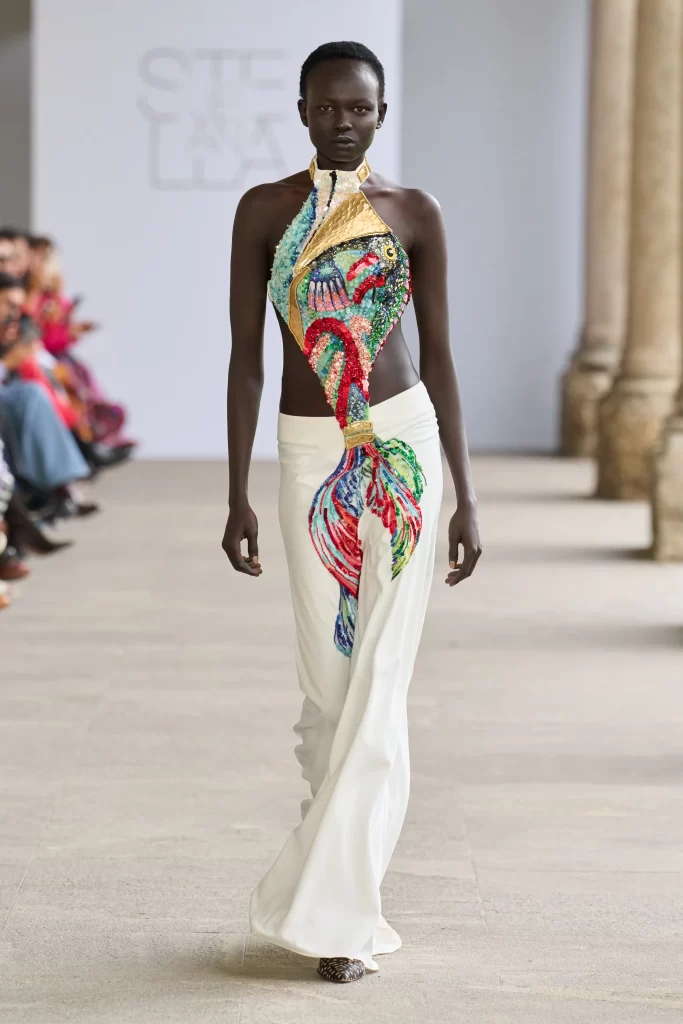
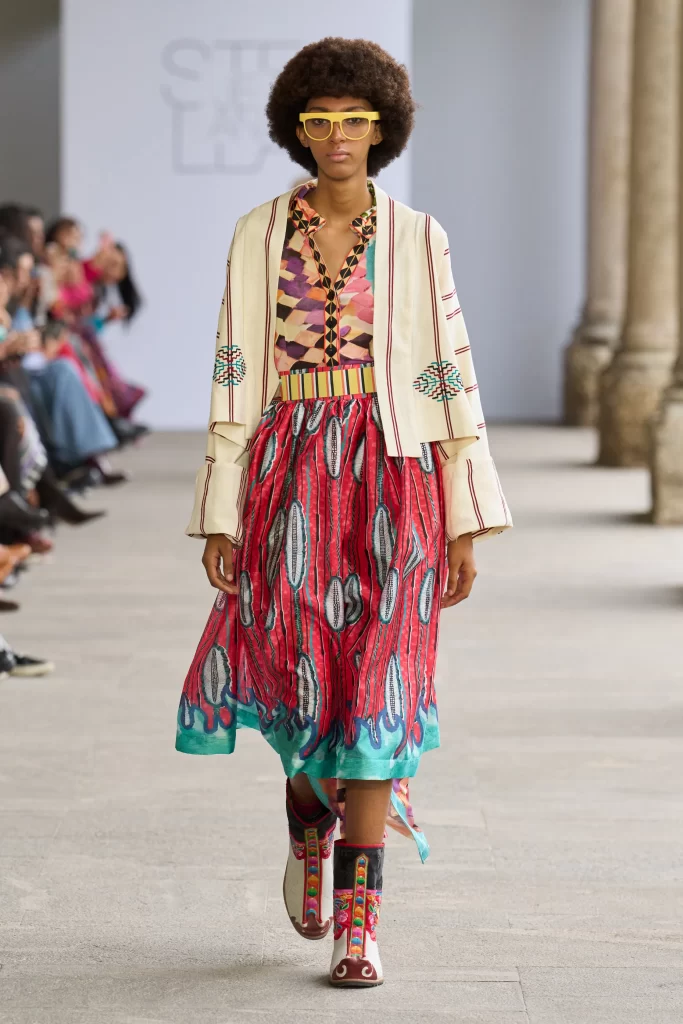
Stella Jean Spring 2026
But Jean’s runway was more than just visual poetry. It was a political platform. “Artisanship is art, and it should be treated as such,” she said, pushing for legislative recognition and reduced VAT on artisanal fashion in Italy. Her message was clear: this is not charity, this is value. Each garment was proof that preserving endangered craft is not a nostalgic exercise, but a future-facing one that creates real economic and cultural impact.
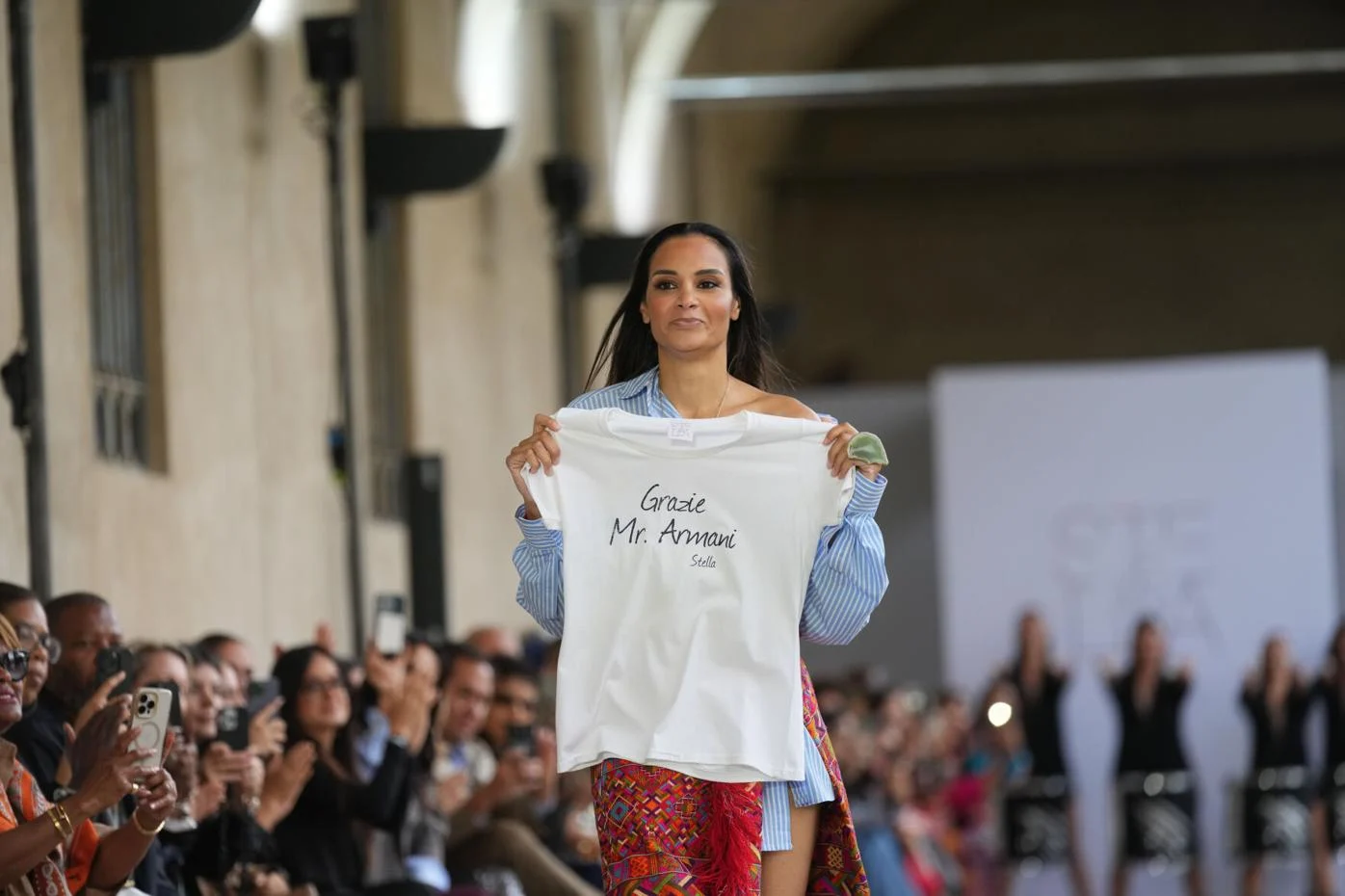
The finale was deeply moving. Jean took her bow wearing a white T-shirt that read “Grazie Mr. Armani”, a heartfelt tribute to the late Giorgio Armani, who had mentored her back in 2013. It was a closing gesture that tied her personal journey to the legacy of Italian fashion itself—reminding us that mentorship, solidarity, and gratitude are as essential to fashion as artistry and innovation.
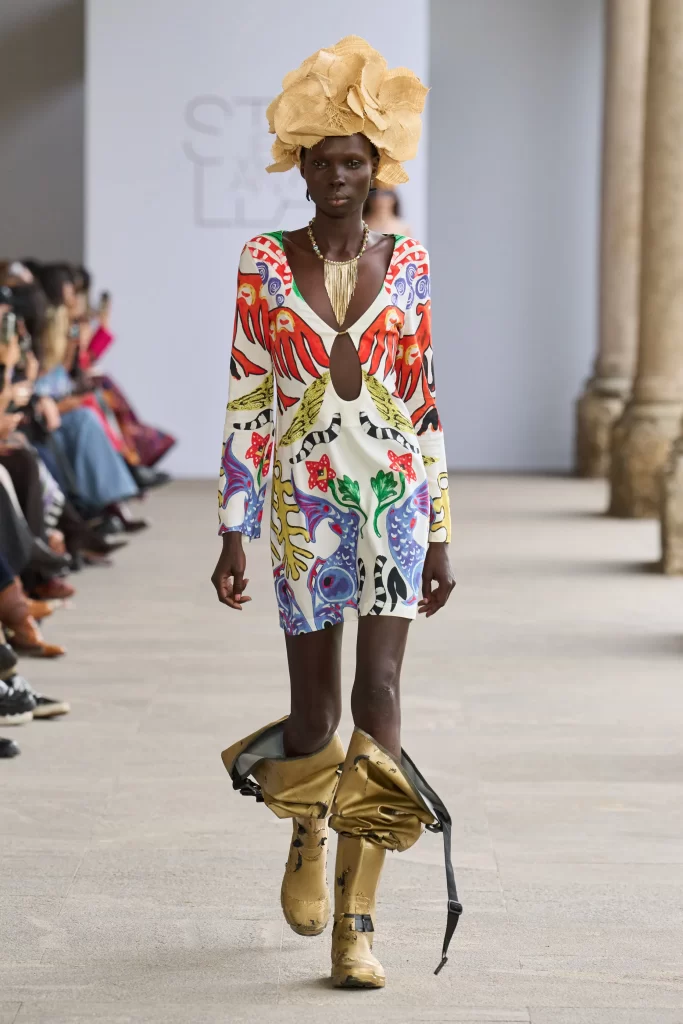
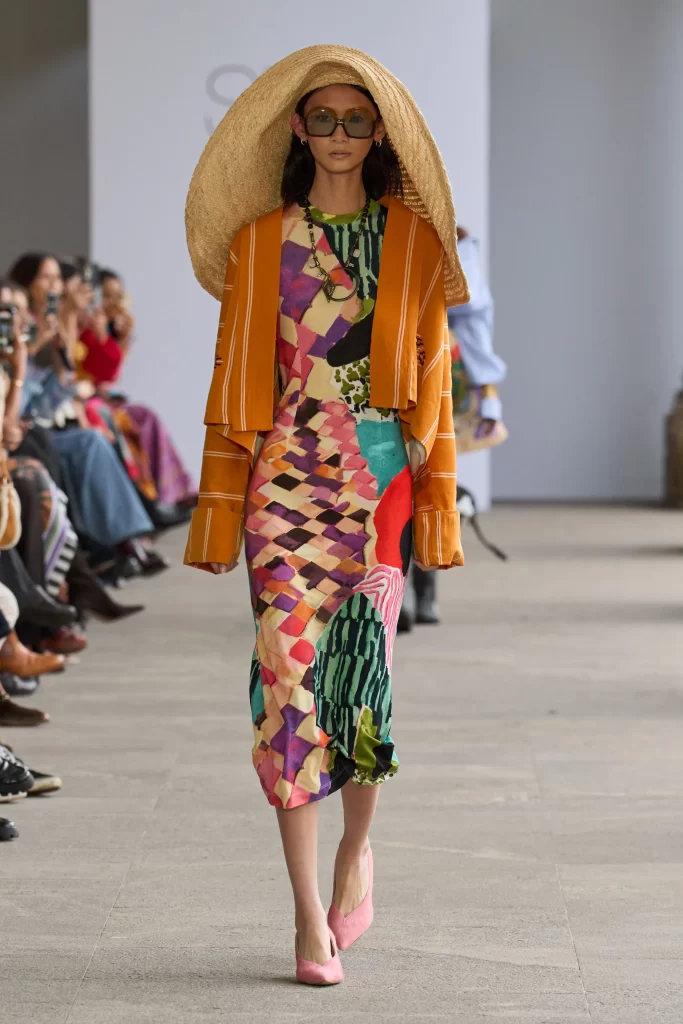
Stella Jean Spring 2026
With Spring 2026, Stella Jean reaffirmed why her voice matters: she doesn’t just design clothes, she builds bridges—between continents, between traditions, between fashion and policy. In her hands, the runway becomes a map of métissage, a borderless exploration of identity, craft, and community.
And after three years away, her message could not feel more urgent—or more inspiring.