With his highly anticipated debut at Maison Margiela Artisanal Fall/Winter 2025, Glenn Martens proved that his appointment as creative director wasn’t just a clever match—it was destiny fulfilled. His first haute couture outing for the house marked an exhilarating collision between past and future, anatomy and artistry, irreverence and rigor. And with it, Martens redefined what couture can be in the age of upcycling, Gothic nostalgia, and cultural entropy.
Glenn Martens Debuts at Maison Margiela
The Torch Passes: Martens in Dialogue With Margiela and Galliano
Few designers would dare follow in the footsteps of John Galliano, let alone Martin Margiela, whose ghost still haunts fashion’s experimental core. But Martens—himself Belgian, an Antwerp graduate, and a longtime upcycling pioneer—stepped into the role with fearlessness and deep reverence. He staged his debut at Margiela’s original 19th arrondissement venue, linking himself symbolically and stylistically with the house’s origins.
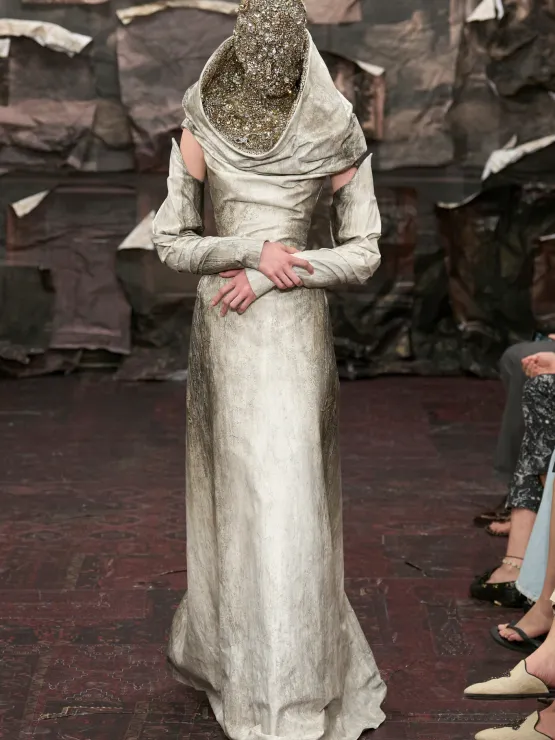
From the moment the first models crept through dimly lit chambers layered with peeling wallpaper and post-apocalyptic textures, it was clear: this was not a revival—it was a reincarnation. Martens brought with him the radical experimentation honed at Y/Project and Diesel, but filtered it through Margiela’s signature surrealism, anonymity, and craft.
Glenn Martens Debuts at Maison Margiela
A Symphony of Decay and Glamour
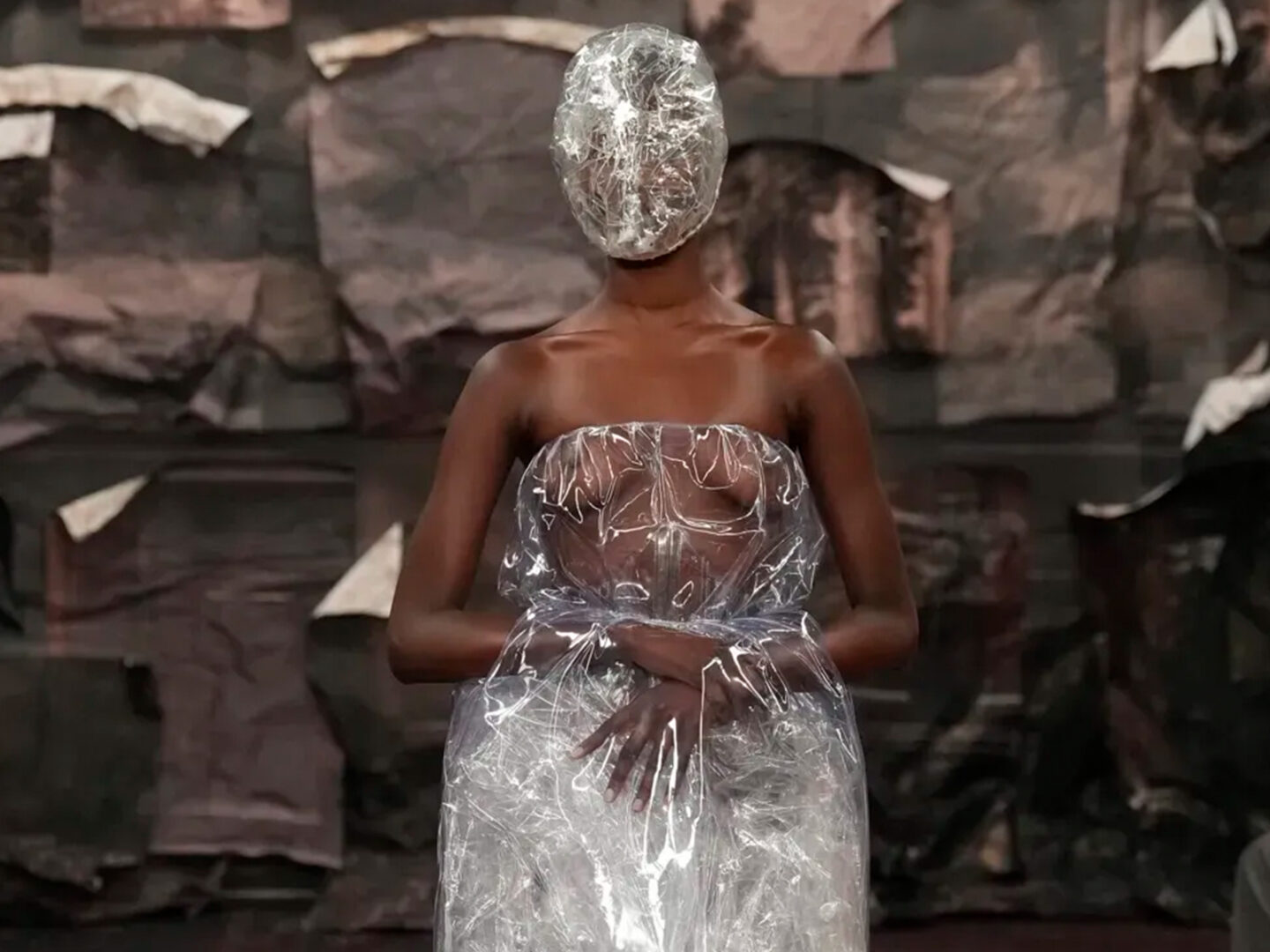
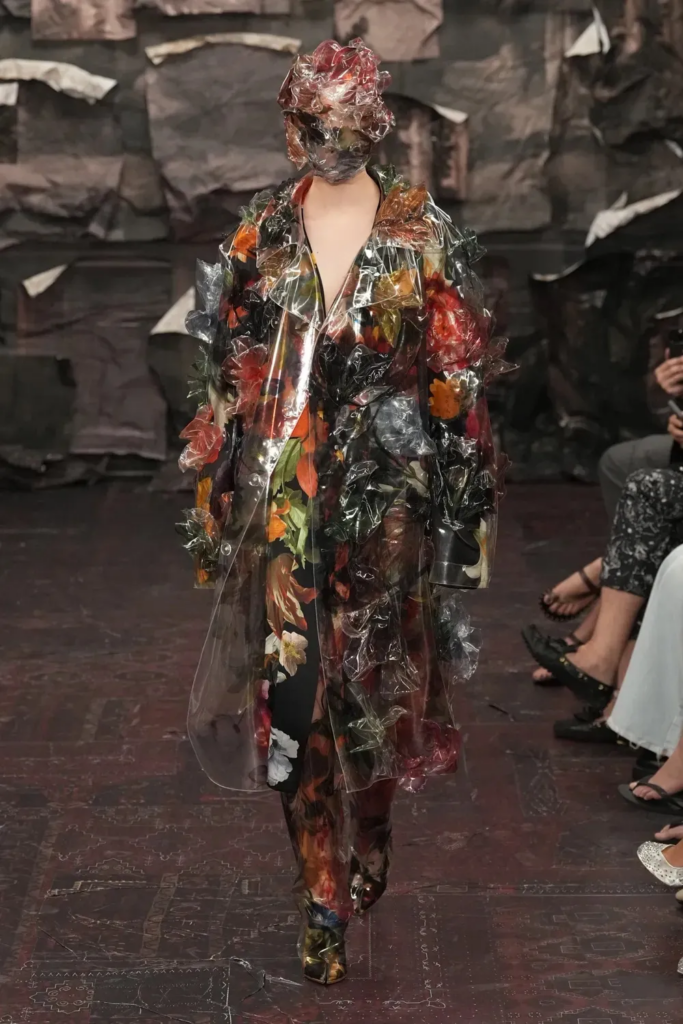
This season’s collection—crafted in “chapters”—told a story rooted in 17th-century Flemish opulence, Gothic mysticism, and the house’s own archive. The opening looks were encased in clear plastic, referencing both Margiela’s early dry-cleaning collection and the fragility of blown glass. These garments were spectral yet sculptural, creating a tension between preservation and decay.
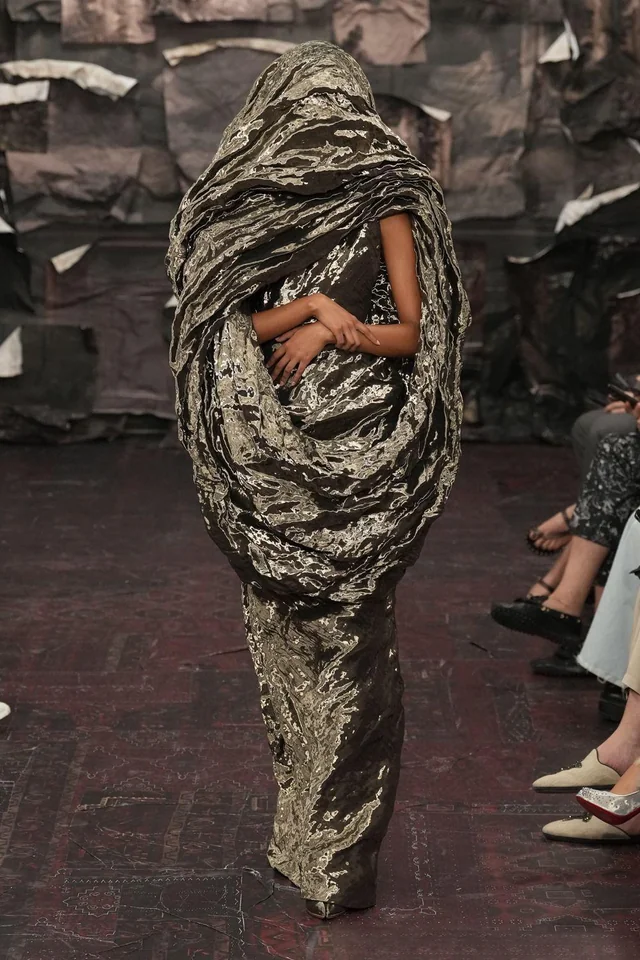
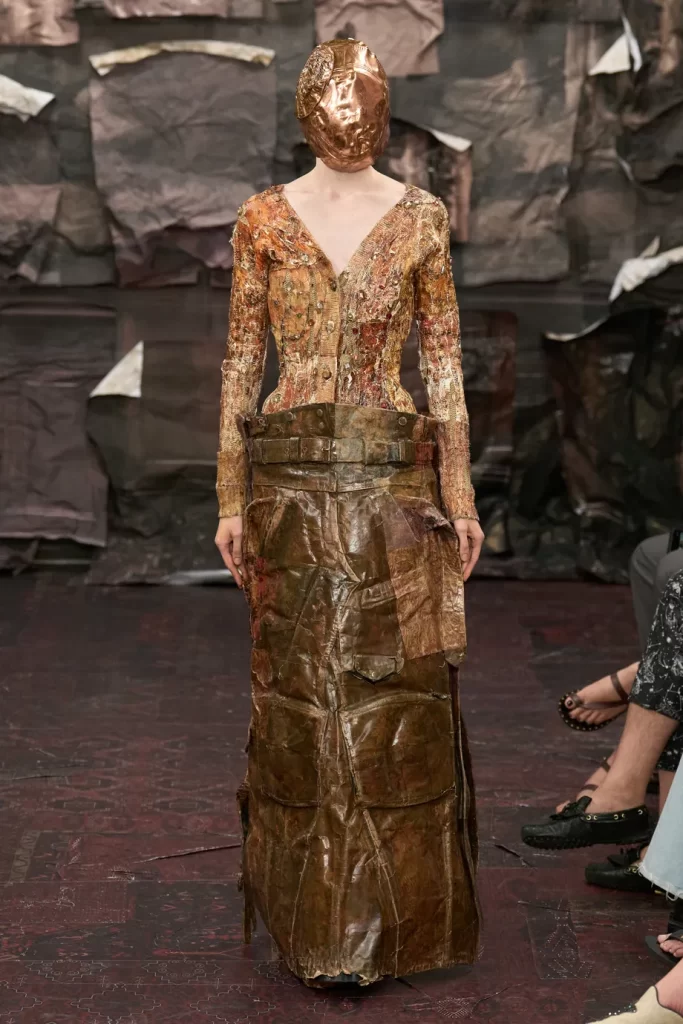
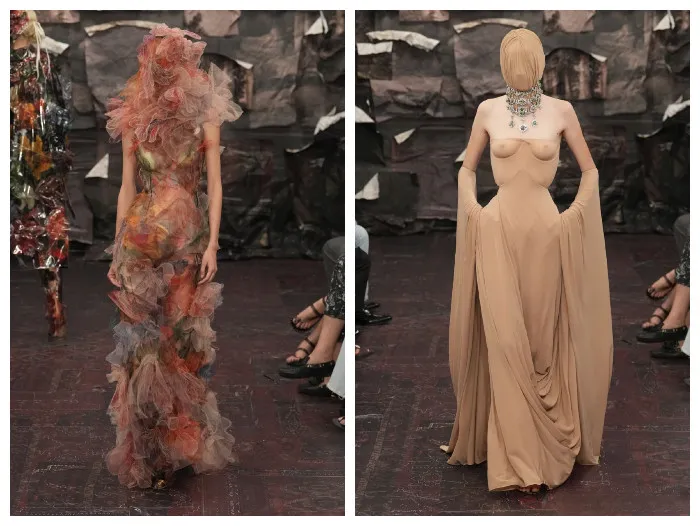
Martens leaned heavily into upcycled materials—paper, tin, wallpaper print, photocopied textures, vintage jewelry—elevating them into garments that felt like ghosts wrapped in grandeur. A third of the collection was composed of reclaimed fabrics, reinforcing Margiela’s legacy of sustainable experimentation.
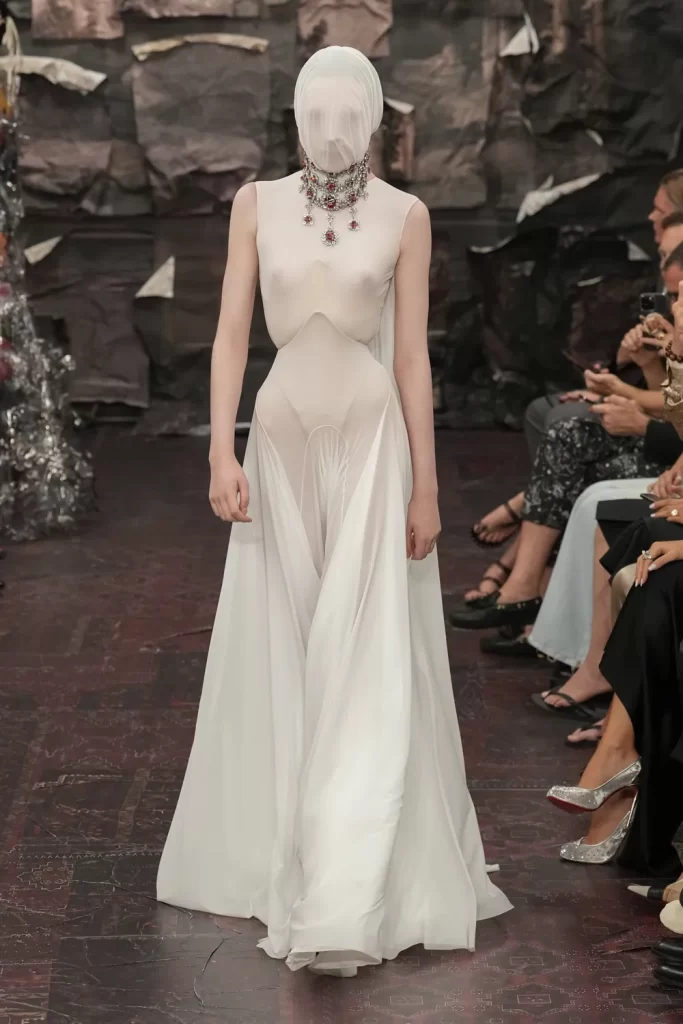
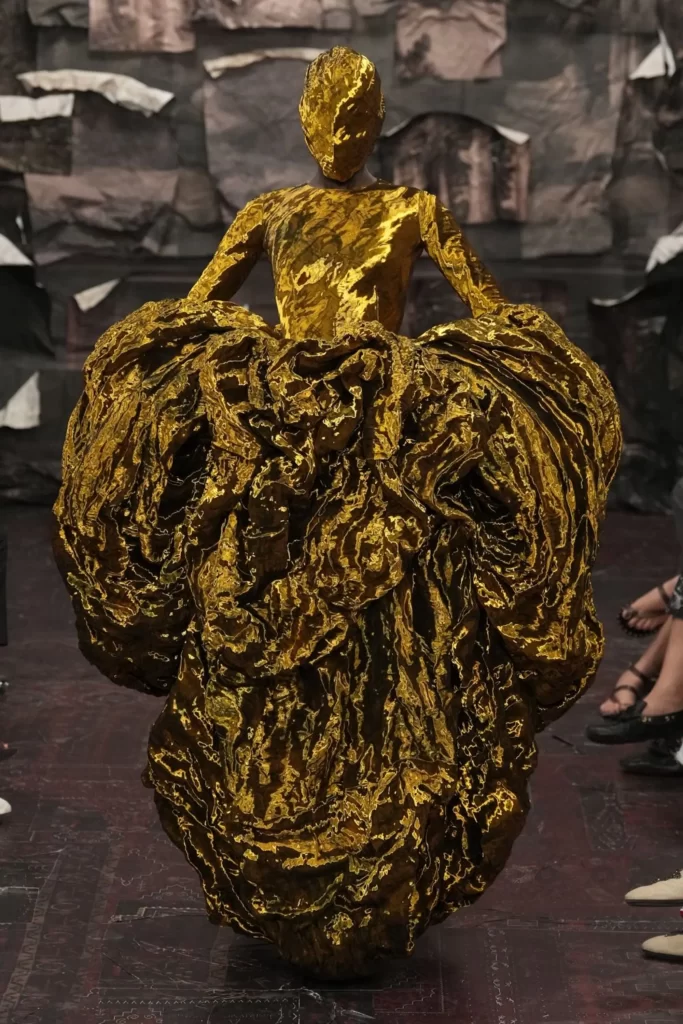
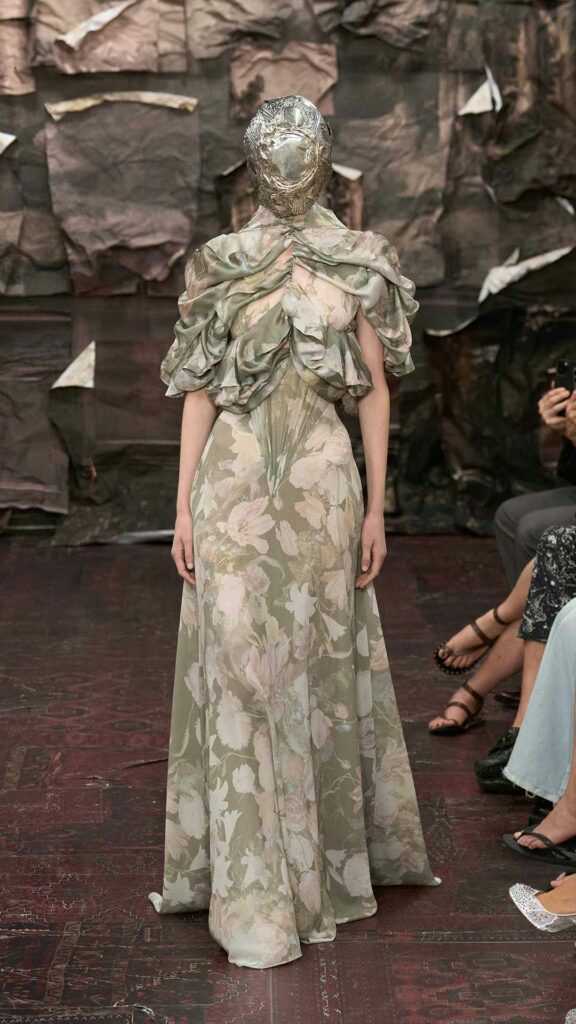
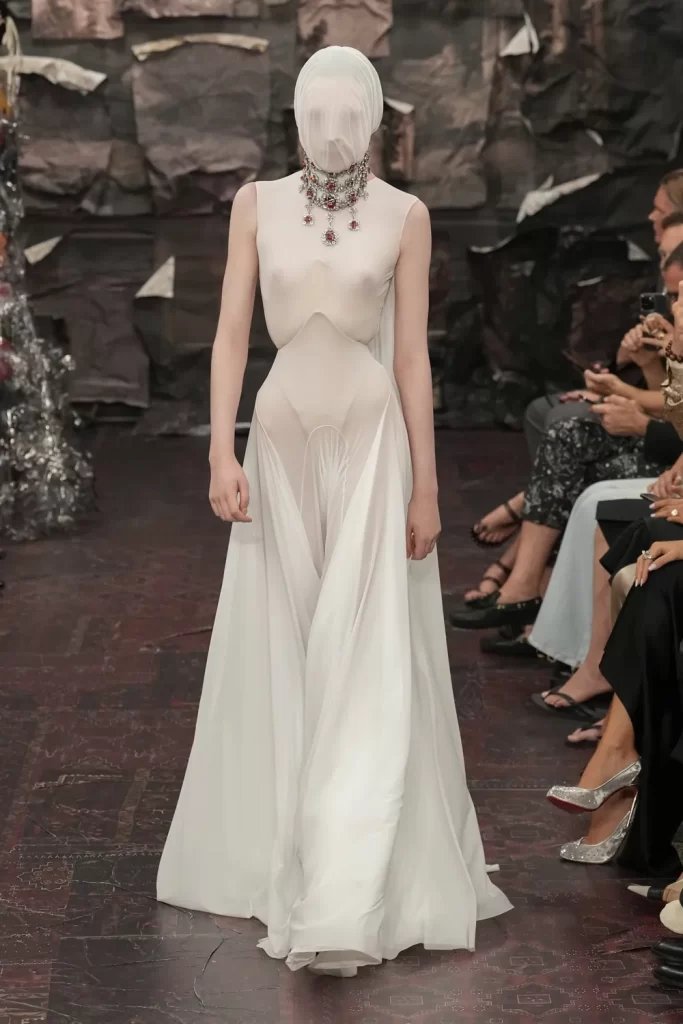
Draped metallic velvet flowed like liquid sculpture. Feathered tulle, embossed leather, and lace cutouts mimicked the intricate surfaces of Flemish still-life paintings. A particularly haunting moment arrived with three ghostly jersey gowns, caped and corseted beneath with jutting hip structures—a nod to Galliano’s theatrical silhouette legacy.
Glenn Martens Debuts at Maison Margiela
Couture for Now: Surrealism, Sensuality, and Social Commentary
Martens’s mastery lies in his ability to bridge contradiction. This was couture that was both intellectual and visceral, filled with nods to history while speaking urgently to the now. Smashing Pumpkins tracks echoed through the multiroom space as models—some draped in face coverings bedazzled with gemstones—glided by in ensembles that fused hoodies, corsets, biker jackets, and denim manipulated into ballgowns.
One showstopping look featured crinkled duchesse satin woven with metal thread, forming a heart-shaped skirt and corset, complete with matching face veil. The models wearing these masks reportedly couldn’t see—but said they felt magnificent. That paradox—obscured visibility and full self-expression—summed up Martens’s collection beautifully.
Elsewhere, the designer leaned into his Flemish roots, printing garments with painterly motifs drawn from Old Masters, filtered through his dark, sensual, and often eerie aesthetic. A green waxed gown with a black beaded face cover evoked the feeling of a future haunted by its past.
Glenn Martens Debuts at Maison Margiela
A Designer Who Belongs
At 42, Martens has emerged as one of fashion’s most essential voices—an innovator unafraid to challenge beauty norms, defy expectations, and reframe tradition. As Renzo Rosso, founder of OTB (Margiela’s parent company), put it, “Glenn made couture for today.” But more than that, he made couture that matters—emotionally, politically, artistically.
The venue, the textures, the patchworked surfaces, and the emotionally fraught styling all served to remind us: fashion isn’t just about clothes—it’s about memory, mortality, and imagination. In an industry addicted to digital novelty and surface trends, Martens offered something deeper: a Gothic dreamscape that felt as timeless as it was radical.
In a post-show moment, actress Tessa Thompson beamed, “I was promised big gowns”—and she got them. But more than that, we all got a story, one stitched from discarded fragments of the past and molded into forms that feel new, strange, and beautiful.
With this astonishing debut, Glenn Martens did more than fill big shoes—he forged his own path within Margiela’s legendary halls. If this collection is any indication, the house’s artisanal future is in safe, visionary hands.
Glenn Martens Debuts at Maison Margiela