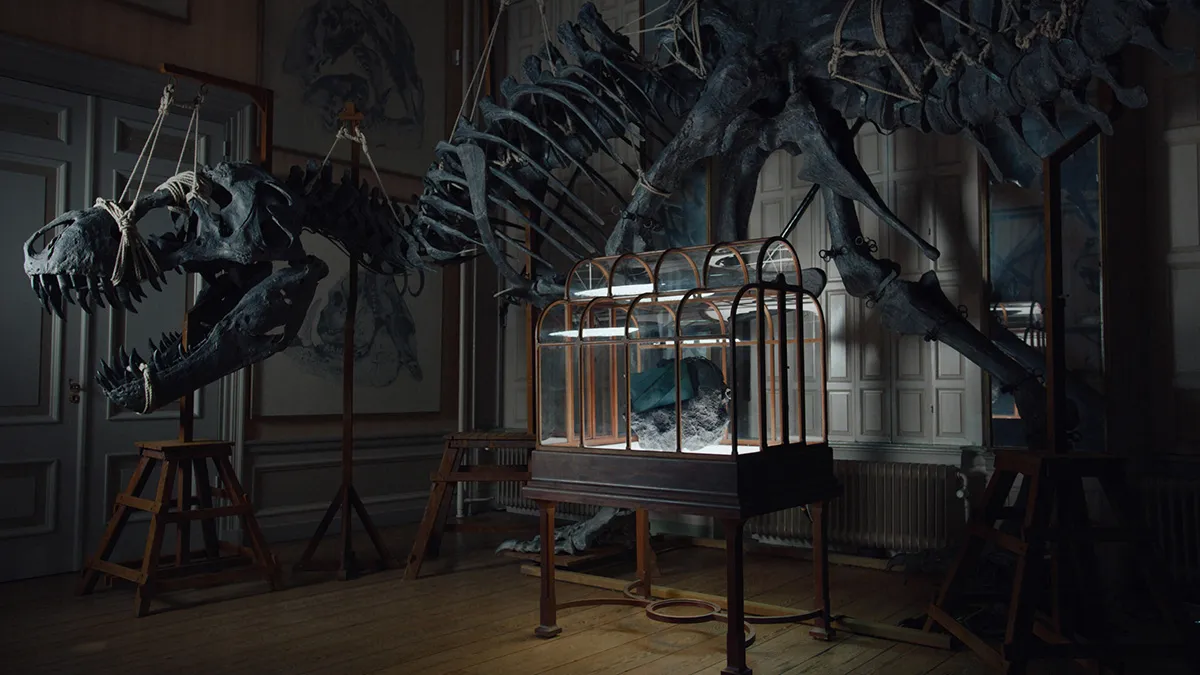
This week in Amsterdam, researchers and designers unveiled what is being called the world’s first lab-grown T-Rex leather handbag—a deep teal, crocodile-like structured bag engineered using reconstructed Tyrannosaurus rex collagen sequences. Yes, dinosaur DNA just entered luxury fashion.
And honestly? It feels less like a gimmick and more like a glimpse into where the industry is heading.
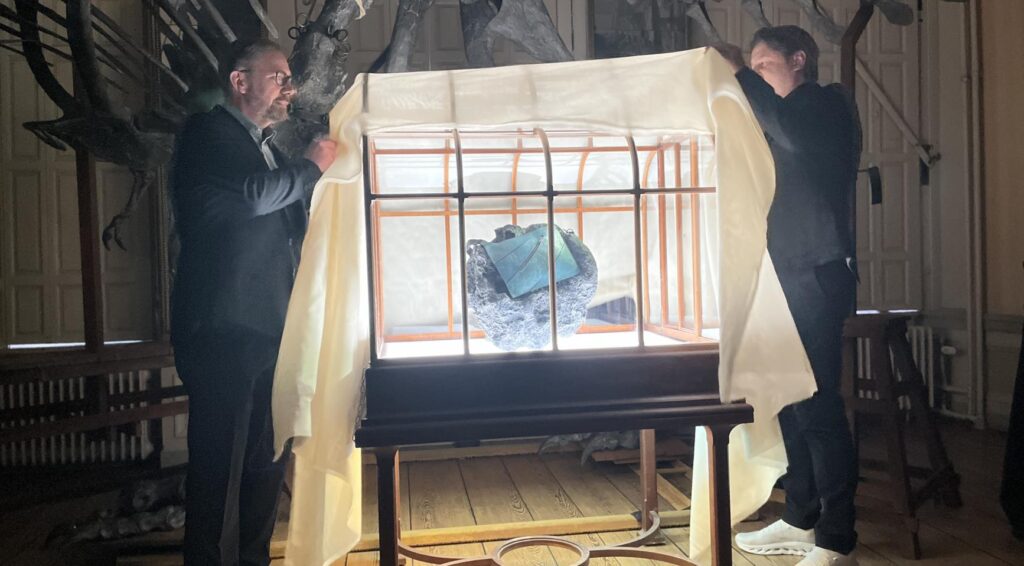
Displayed at the Art Zoo Museum alongside a towering dinosaur installation, the bag already carries the aura of myth. Estimates suggest it could sell for hundreds of thousands of euros at auction, though the exact value remains speculative. Some reports floated numbers as high as €575,000. Whether or not it reaches that figure almost feels irrelevant—the real story is what this object represents. Because this isn’t just a handbag. It’s biotech luxury.
The project was developed by creative agency VML in collaboration with The Organoid Company and Lab-Grown Leather Ltd., before being transformed into a finished accessory by Berlin-based design studio Enfin Levé. Scientists began with fossilized collagen fragments extracted from T-Rex remains found in the United States. Using AI modeling and computational biology, they reconstructed missing genetic sequences to create a full collagen blueprint. That synthesized DNA was then inserted into carrier cells, cultivated into tissue, and grown into leather using advanced tissue engineering.
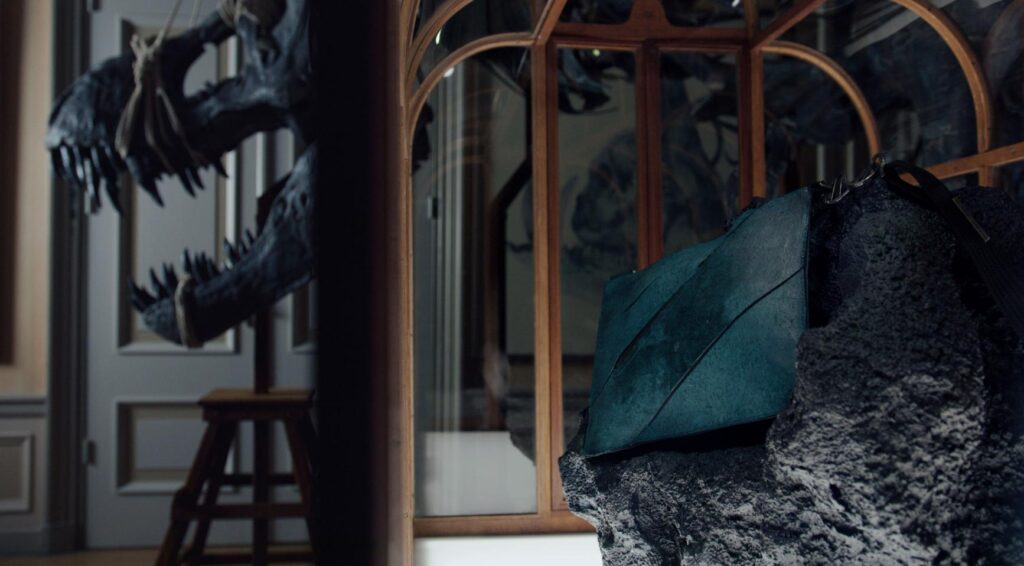
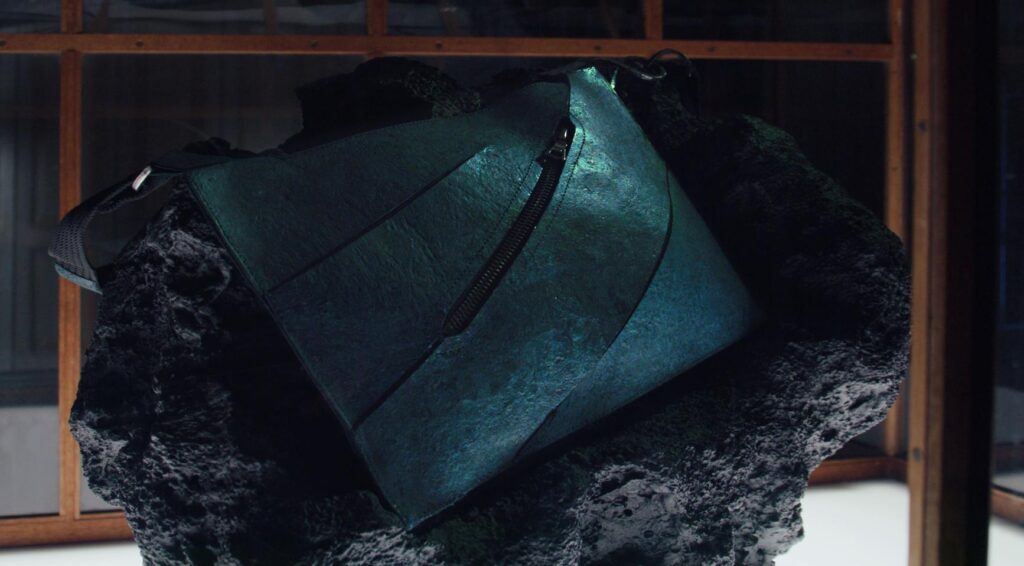
The result is eerie in the best way possible. Not “dinosaur skin” in the cinematic Jurassic Park sense, but a biologically engineered material structurally similar to traditional leather—except biodegradable, fully traceable, and produced without slaughtering animals. And visually, the bag leans into that prehistoric fantasy.
The silhouette is sharply architectural, almost brutalist in shape, with angular edges that make it feel more like an artifact than an accessory. The leather itself comes in a moody blue-green tone that shifts under the light like oxidized metal or reptilian scales underwater. Three claw-like slashes cut across the front, resembling fossilized scratch marks. Sterling silver hardware and black diamonds elevate the piece into true collector territory, while the interior is reinforced with military-grade cotton originally developed for British pilots during World War II.
For years, sustainable fashion alternatives have struggled with perception. Mushroom leather, apple leather, cactus leather—many have been criticized for relying heavily on plastic coatings or lacking the tactile richness of traditional hides. What makes this project different is that the creators aren’t trying to imitate luxury from the outside. They’re trying to biologically recreate its sensory experience: the smell, texture, durability, and aging process that make leather desirable in the first place.
That’s why the handbag feels symbolically important. It suggests a future where luxury no longer depends on rarity extracted from nature, but rarity engineered through science. Of course, controversy followed immediately. Some paleontologists questioned whether “T-Rex leather” is scientifically accurate, since only fragmented collagen traces survive in fossils. Others argued the branding oversimplifies the process because living host cells are still required to grow the material. And they’re not wrong. This isn’t literally reconstructed dinosaur skin.
The handbag taps into multiple obsessions shaping modern luxury simultaneously: biotechnology, sustainability, exclusivity, extinction, futurism, and spectacle. It turns science into fantasy the same way couture turns fabric into mythology. There’s also something darkly poetic about luxury resurrecting dinosaurs during a climate crisis. Dinosaurs evolved through catastrophic environmental shifts, and now their reconstructed biology is being positioned as a solution to the environmental damage caused by traditional leather production. The symbolism almost writes itself.
If Hermès made mushroom leather aspirational, T-Rex leather pushes the conversation into another dimension—where biotech becomes not merely sustainable, but desirable, emotional, and culturally powerful. And honestly, luxury consumers will probably love it. Because at the highest level, fashion has never really sold practicality. It sells the fantasy of owning something impossible. And nothing sounds more impossible than carrying a dinosaur on your arm.