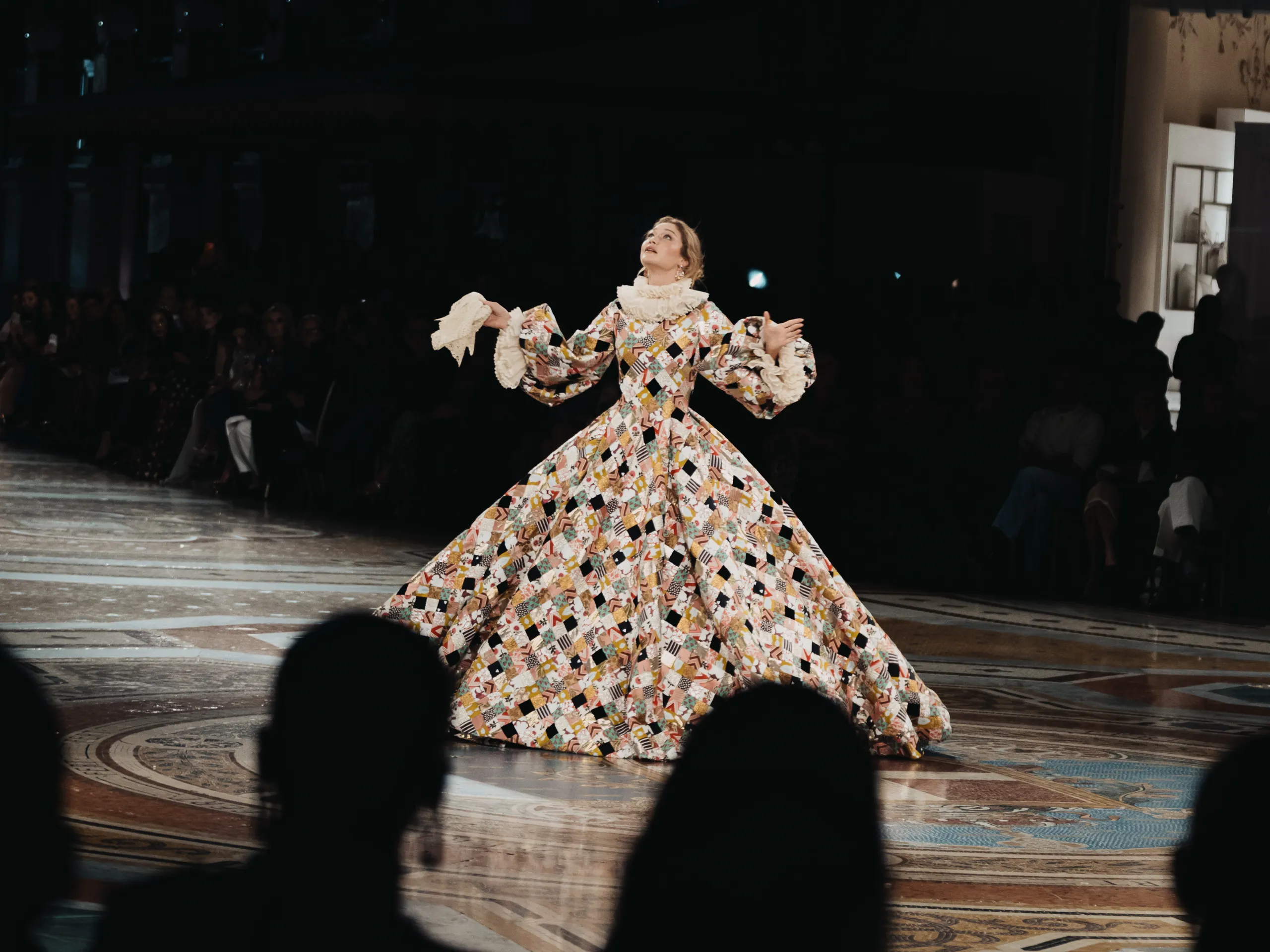
After travelling from New York to London, Paris and Los Angeles, Vogue World arrived in Milan on September 22, 2026, transforming the historic Galleria Vittorio Emanuele II into a celebration of Italian fashion, craftsmanship and innovation.
The choice of Milan felt almost inevitable. The city represents one of fashion’s most interesting contradictions: it is deeply rooted in artisanal tradition while simultaneously standing at the forefront of textile technology, manufacturing and contemporary luxury. Rather than simply celebrating Made in Italy, Vogue World: Milano used that tension to ask a more relevant question — what happens to human craftsmanship as fashion enters the age of artificial intelligence?
From the Renaissance to AI
Curated by fashion historian Judith Clark, the show began with three miniature objects: a model of Milan’s Duomo, a celestial globe and a traditional loom. Although seemingly unrelated, together they represented three stages in the development of Italian creativity — architecture, scientific discovery and textile production.
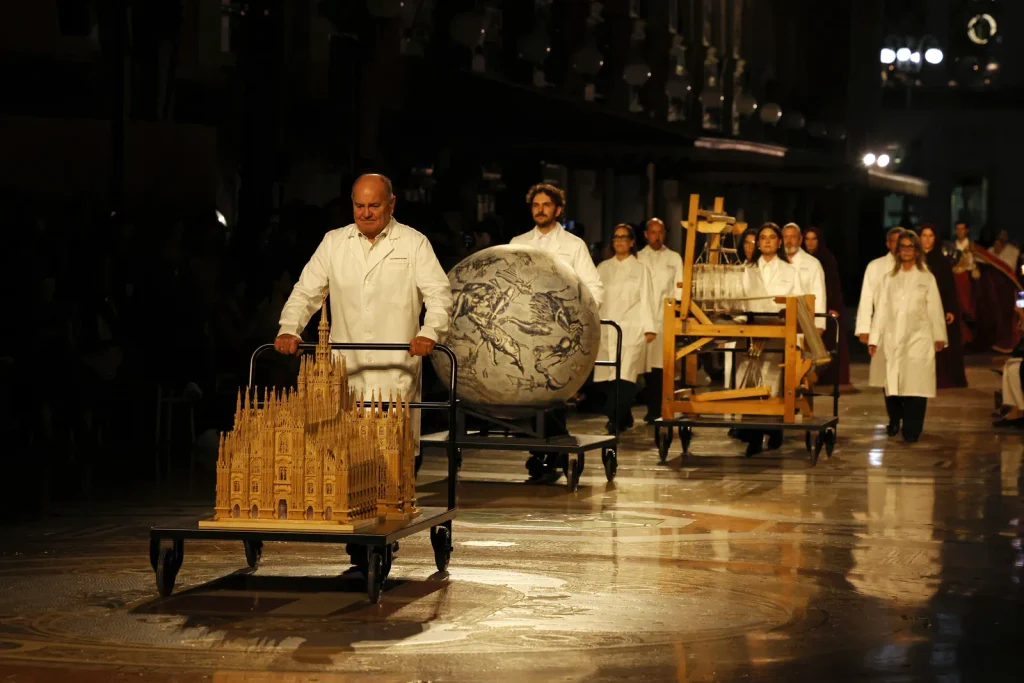
The objects were also a reminder that fashion has always existed between art and technology. The miniature Duomo reportedly required around 4,500 hours of craftsmanship, while the celestial globe combined engraved copper printing, hand-coloured pigments and individually gilded stars. The loom, meanwhile, represented the point where manual skill and mechanical innovation first began to intersect.
That idea became the foundation for the show’s four-part structure.
Act I: The Artisanal Revolution
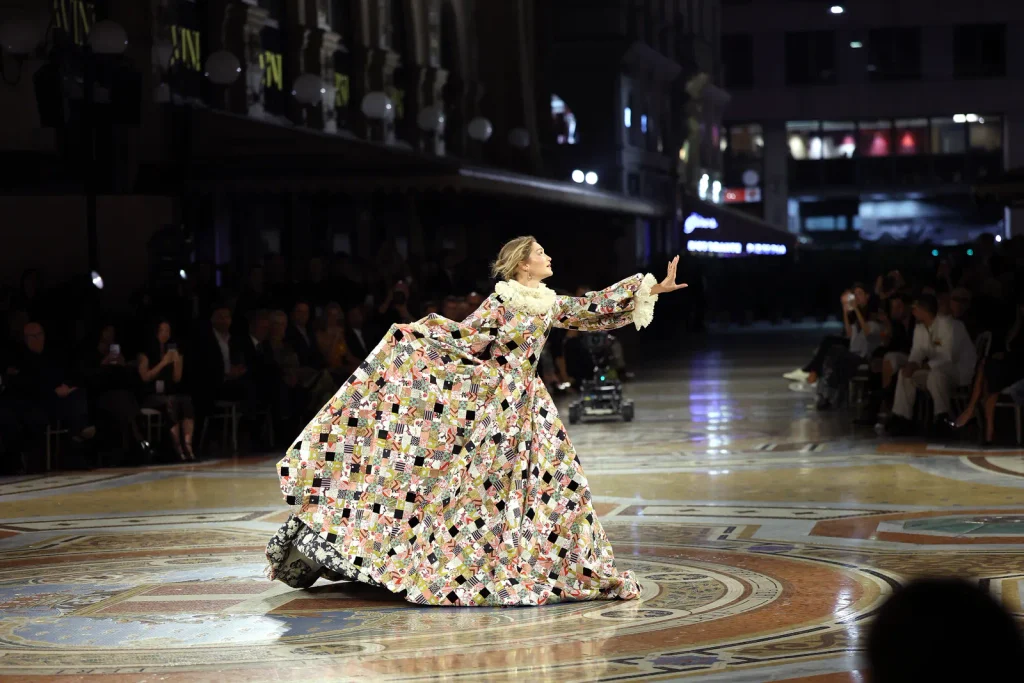
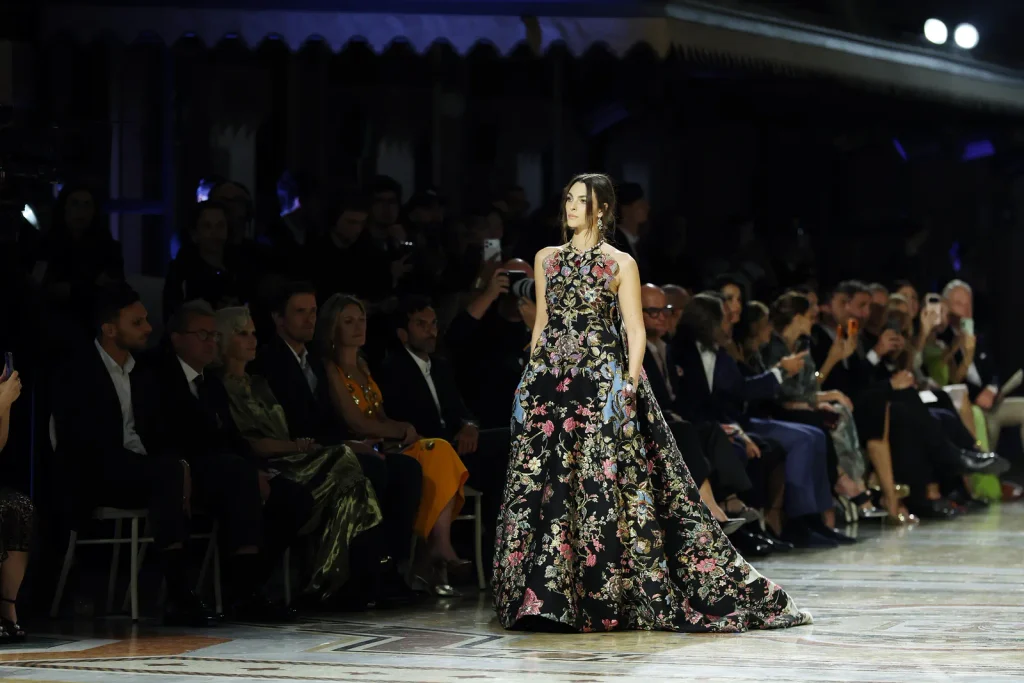
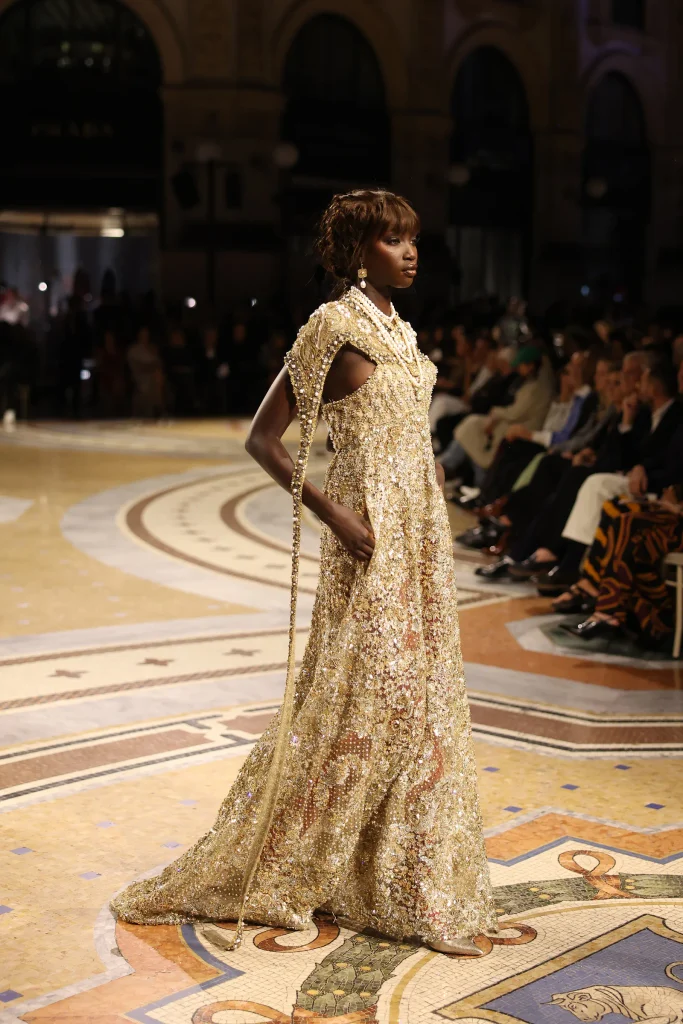
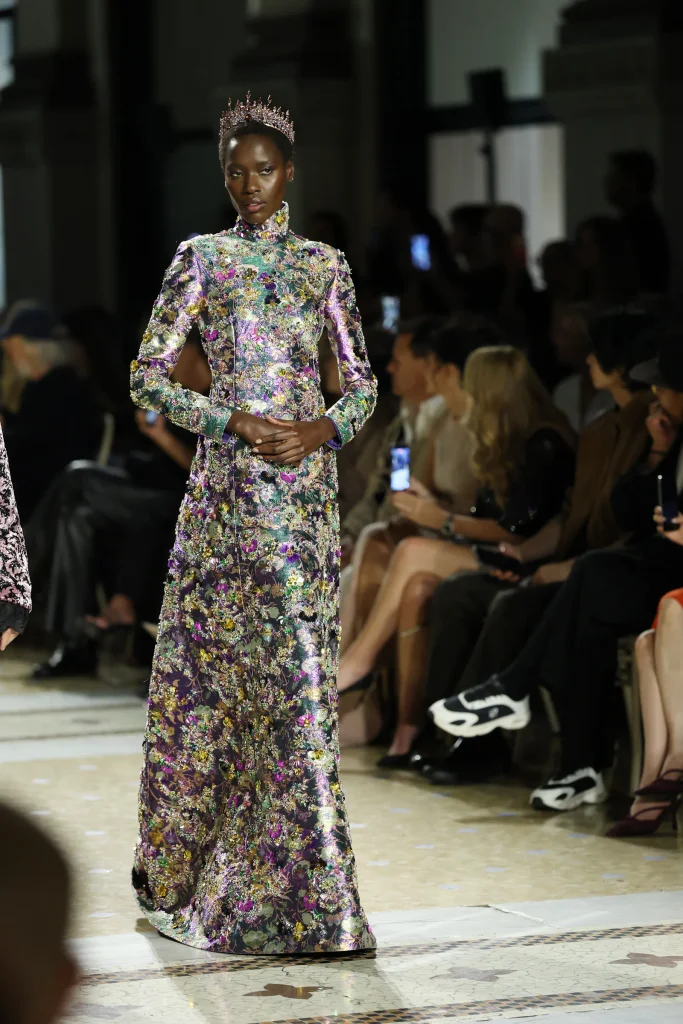
The opening section looked back to the Renaissance, when craftsmanship was inseparable from artistic and intellectual innovation. Rich textiles, embroidery, lace and elaborate ornamentation evoked a period when fashion was fundamentally dependent on the human hand.
What makes this section particularly relevant today is that these techniques are becoming increasingly precious precisely because they are so time-intensive. In an industry accelerating toward automation, handcraft becomes not merely a production method but a form of luxury in itself.
Act II: The Industrial Revolution
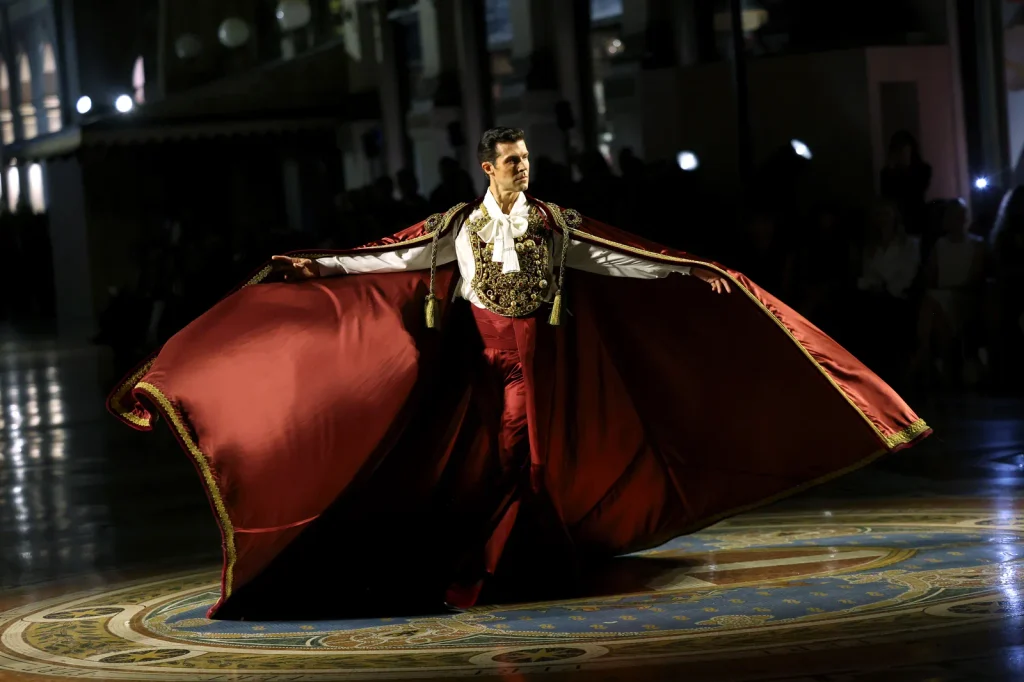
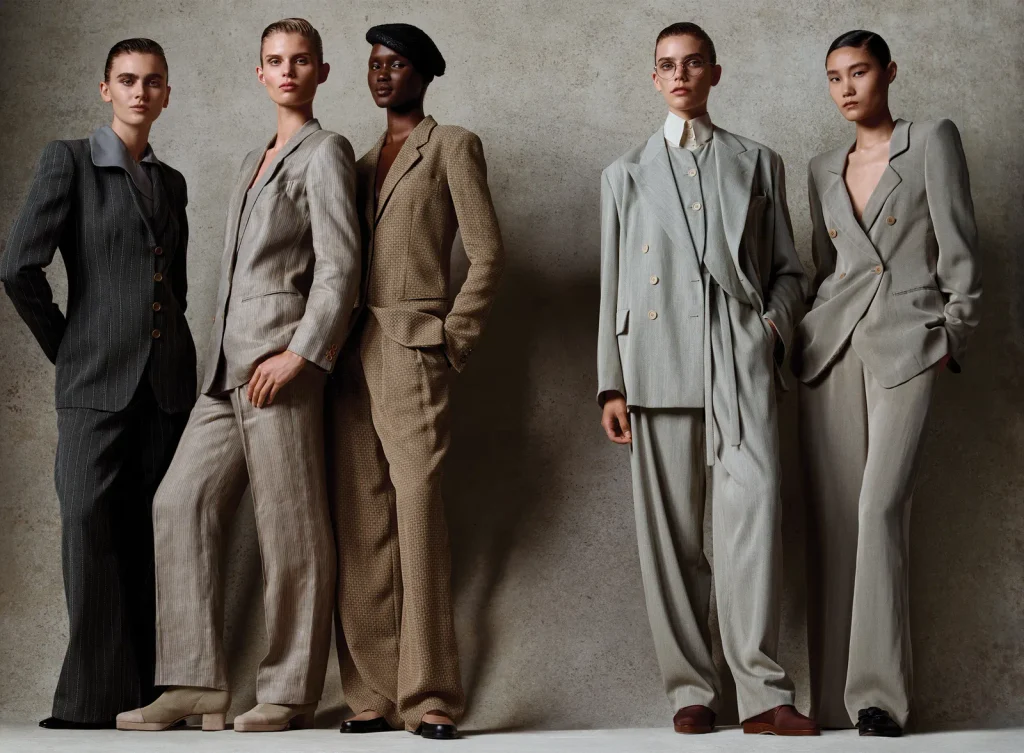
The mood changed dramatically as the show moved toward industrialisation. Inspired partly by Turin’s history of manufacturing and automotive production, tailoring and structured woollen fabrics replaced the intimacy of Renaissance decoration.
This transition highlighted an important truth about Italian fashion: its reputation has never been built exclusively on handmade craftsmanship. Industry and technology have always been part of the country’s fashion story. The real strength of Italian design lies in its ability to make traditional expertise evolve alongside new methods of production.
Act III: Made in Italy
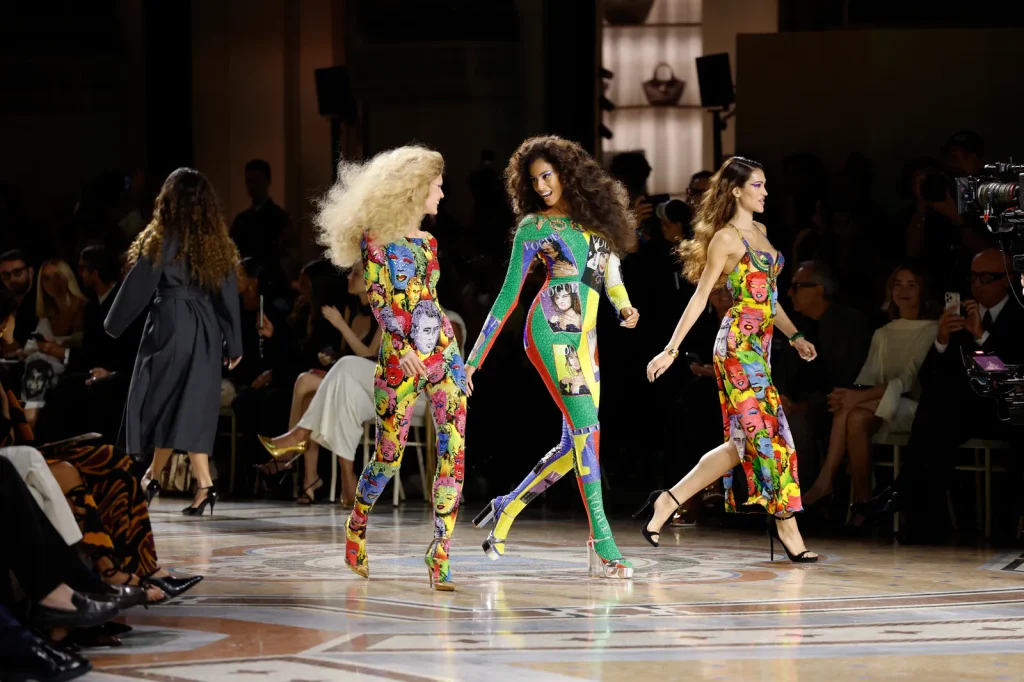
The third act brought colour, print and cinematic glamour to the Galleria. Drawing from La Dolce Vita and the mythology of Italian cinema, the section celebrated the emergence of the Italian fashion diva — glamorous, sensual and unapologetically theatrical.
This was perhaps the most immediately recognisable interpretation of Made in Italy. Yet beyond the glamour, it demonstrated how Italian fashion has historically extended beyond clothing into an entire cultural fantasy: cinema, celebrity, luxury, architecture and lifestyle all becoming part of the product.
Act IV: The Age of Intelligence
The final chapter looked toward the future. After moving through centuries of human invention, Vogue World arrived at artificial intelligence and emerging technologies.
Conceptually, this was the show’s most important transition — but also the one that raises the most questions. AI was positioned as the next major technological shift, yet fashion’s relationship with it remains far more complicated than simply replacing human processes with digital ones.
And that is precisely where Vogue World: Milano became most interesting.
The show did not ultimately argue that technology and craftsmanship are opposites. Instead, it suggested that fashion has always progressed through their interaction. The loom itself was once revolutionary technology. Industrial manufacturing once transformed artisanal production. Today’s AI may simply represent the next stage.
The question is therefore not whether fashion should resist technology, but which elements of human creativity should remain irreplaceable.
Why Milan Matters
The decision to stage Vogue World inside the Galleria gave the argument physical meaning. The building sits at the intersection of Milan’s cultural and commercial identity, connecting the Duomo and La Scala while housing some of the world’s most recognisable luxury names.
The event also brought together major figures from Italian fashion, including Miuccia Prada, Donatella Versace, Pierpaolo Piccioli and Alessandro Michele, reinforcing Milan’s position as a city where heritage and experimentation continually overlap.
But Vogue World: Milano was not only about preserving the past. Its charitable component supported the redevelopment of Milan’s Quarto Oggiaro Library, extending the show’s emphasis on knowledge, creativity and access beyond the luxury-fashion bubble.
That detail feels particularly significant. If the central question of the show is what happens to human creativity in a technological future, then investing in spaces where people can learn, create and exchange ideas becomes part of the answer.
Ultimately, Vogue World: Milano was less a nostalgic celebration of Italian craftsmanship than a reminder that craftsmanship itself has always evolved.
From Renaissance artisans to industrial machinery and now artificial intelligence, fashion has repeatedly changed the tools through which it creates. What remains constant is the human impulse behind them: to imagine something that did not exist before, and find a way to make it real.
Leave a Reply