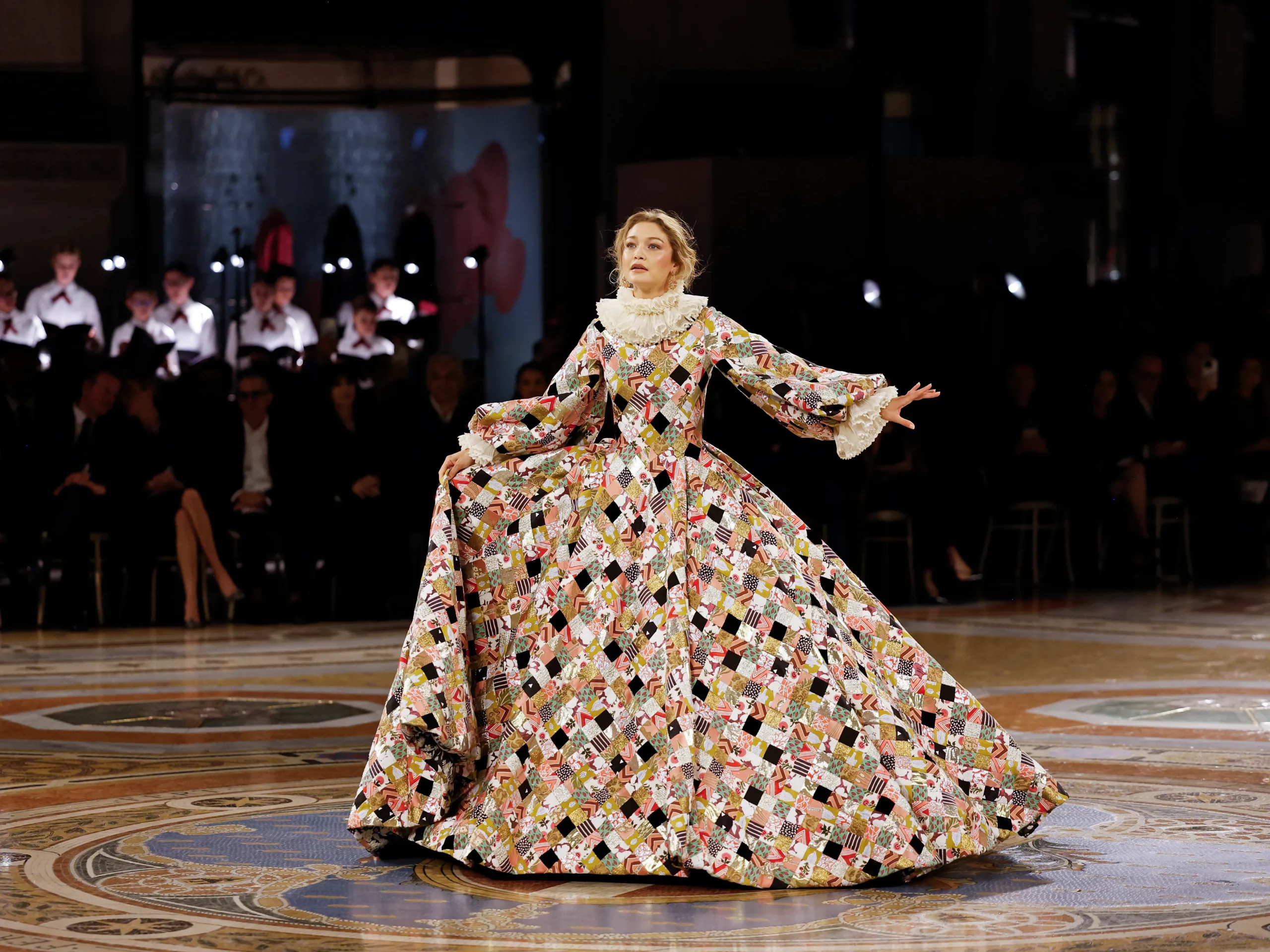
Ciao, Milano! On September 22, Vogue brought its fifth Vogue World to the Galleria Vittorio Emanuele II, turning Milan’s historic shopping arcade into a theatrical celebration of Italian fashion. Structured around four chapters — The Artisanal Revolution, The Industrial Revolution, Made in Italy and The Age of Intelligence — the show attempted to tell the story of fashion moving from handcraft to machinery and, ultimately, artificial intelligence.
The concept was ambitious. The execution was undeniably spectacular. But the most interesting question was whether the clothes themselves were strong enough to carry such a large narrative.
The Art of Spectacle
Gigi Hadid opened the show in a printed ballgown, followed by J Balvin in a metallic pink suit and EJAE in a dramatic black-and-blue ruffled look. These opening moments established the event’s greatest strength: Vogue understands how to create fashion theatre.
But spectacle can also become a distraction. With celebrity appearances, elaborate staging and constant movement, the clothes occasionally risked becoming supporting characters rather than the main subject. Vogue World is designed as entertainment as much as fashion, and at times that balance leaned heavily toward performance.
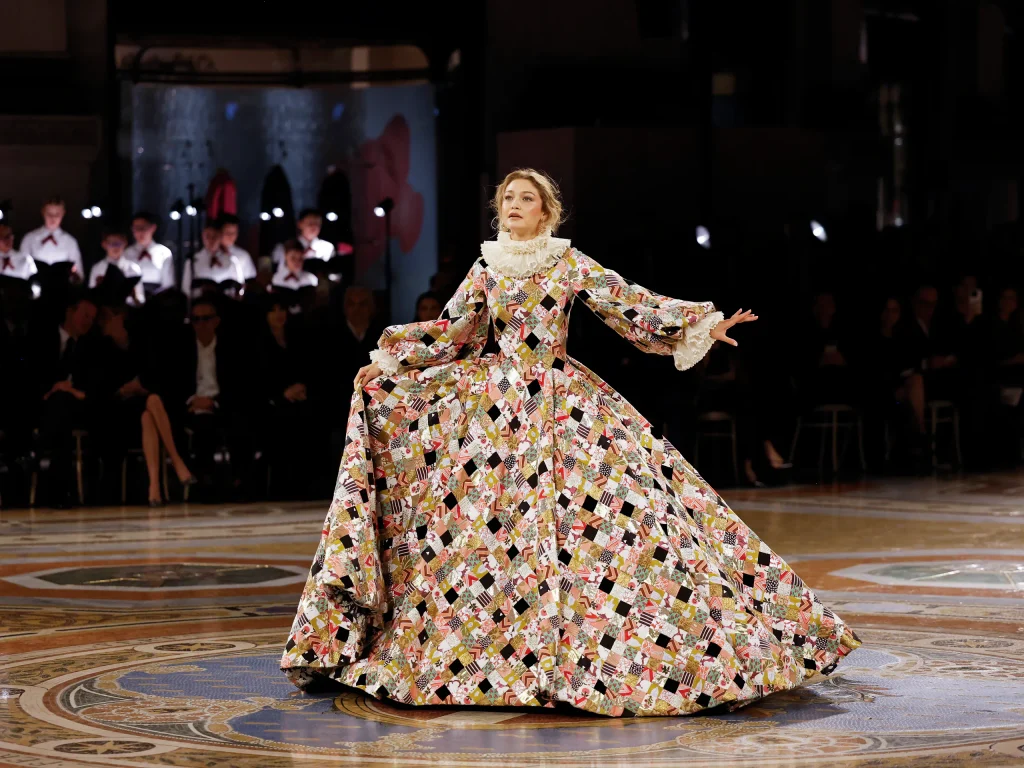
Gigi Hadid
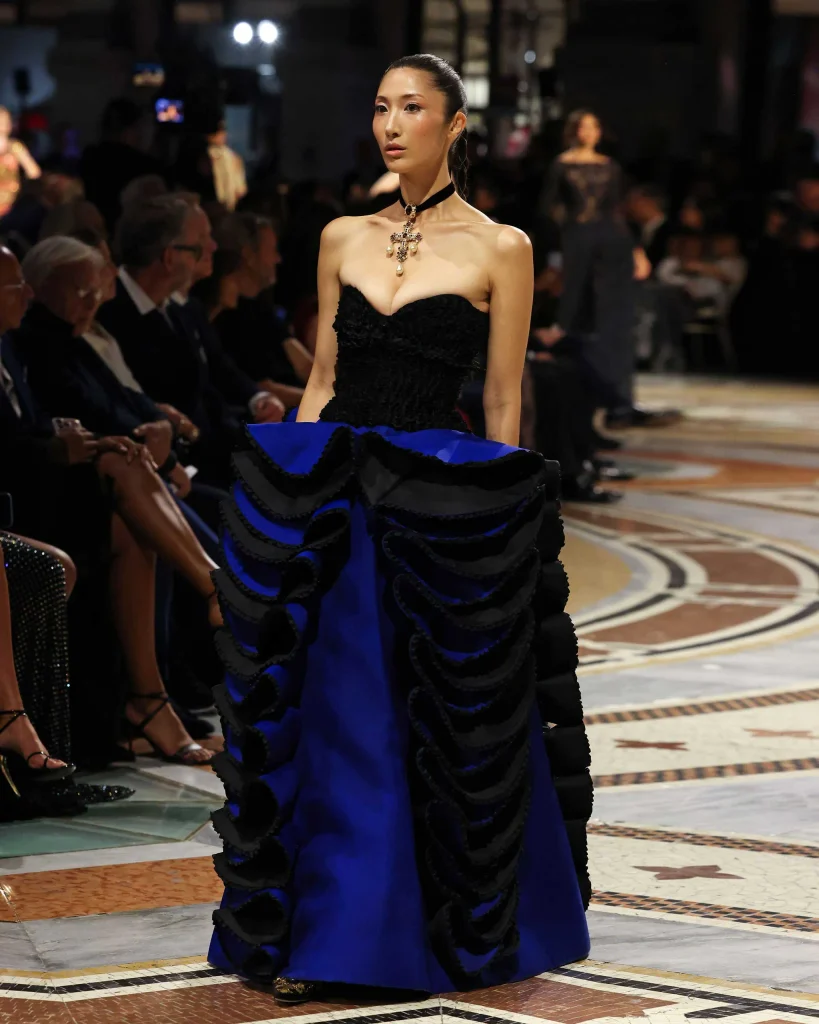
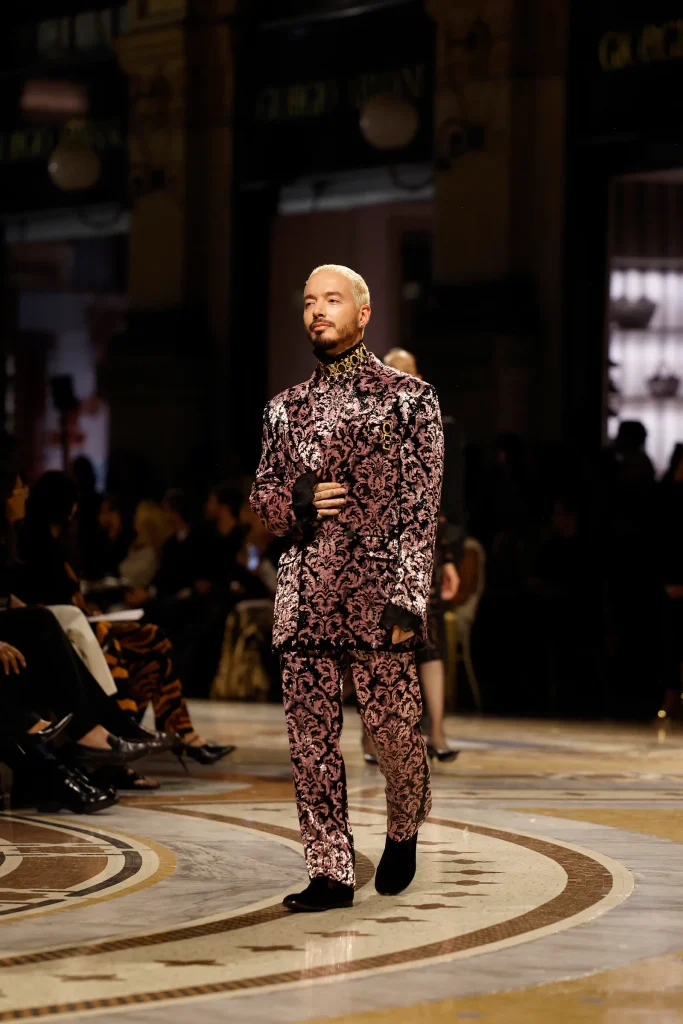
EJAE and J Balvin
Made in Italy
The Made in Italy section was where the fashion argument became more convincing. Cardi B appeared in a colourful Versace Spring 2018 look paired with Tiffany & Co. jewellery, while Aryna Sabalenka represented Gucci. Jennifer Lopez then performed in a heavily embellished Dolce & Gabbana Alta Moda gown.
Lopez’s look was spectacular, but it also highlighted the familiar relationship between Italian fashion and excess. The diamonds, embellishment and elaborate construction communicated luxury instantly, yet the reliance on maximalism raises a more interesting question: does contemporary Italian fashion need spectacle to communicate value?
The strongest moments of the show were arguably those where craftsmanship could be appreciated rather than simply consumed as visual impact.
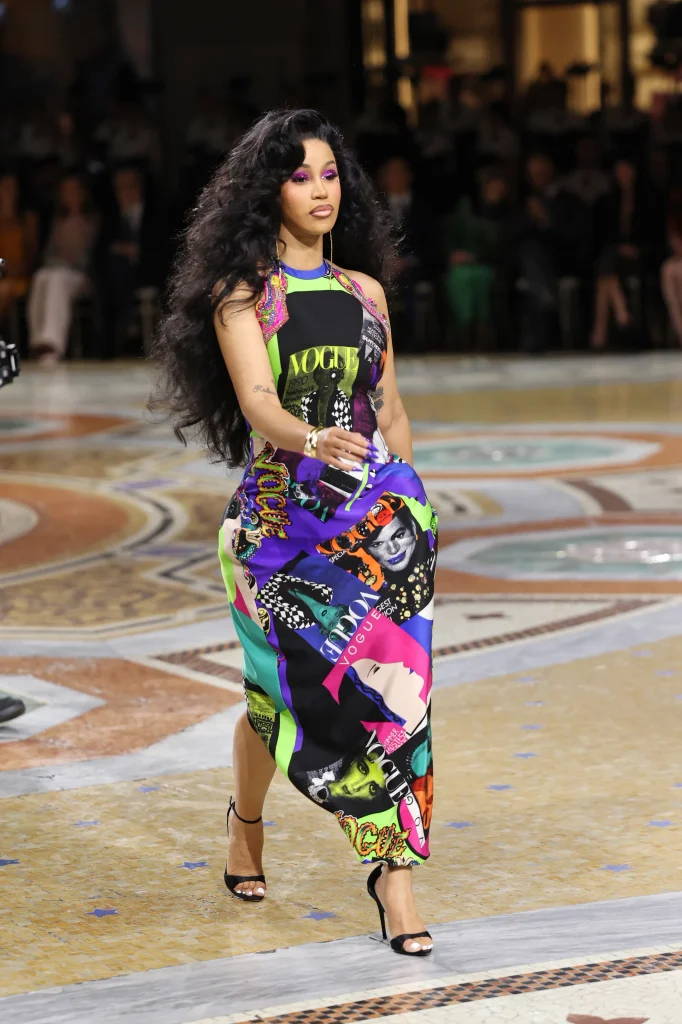
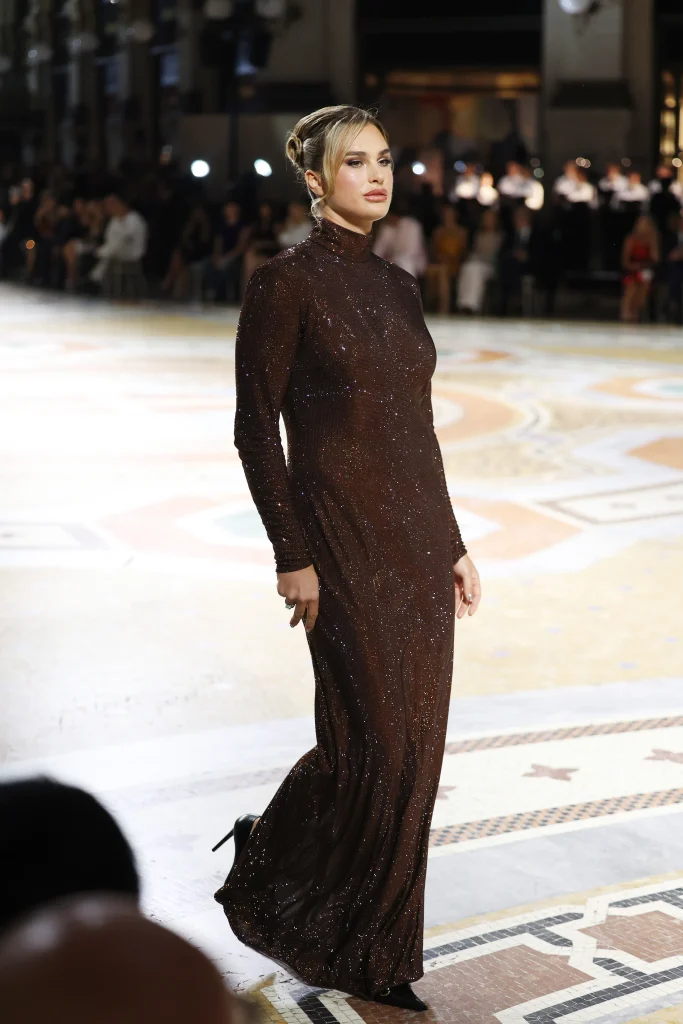
Cardi B & Aryna Sabalenka
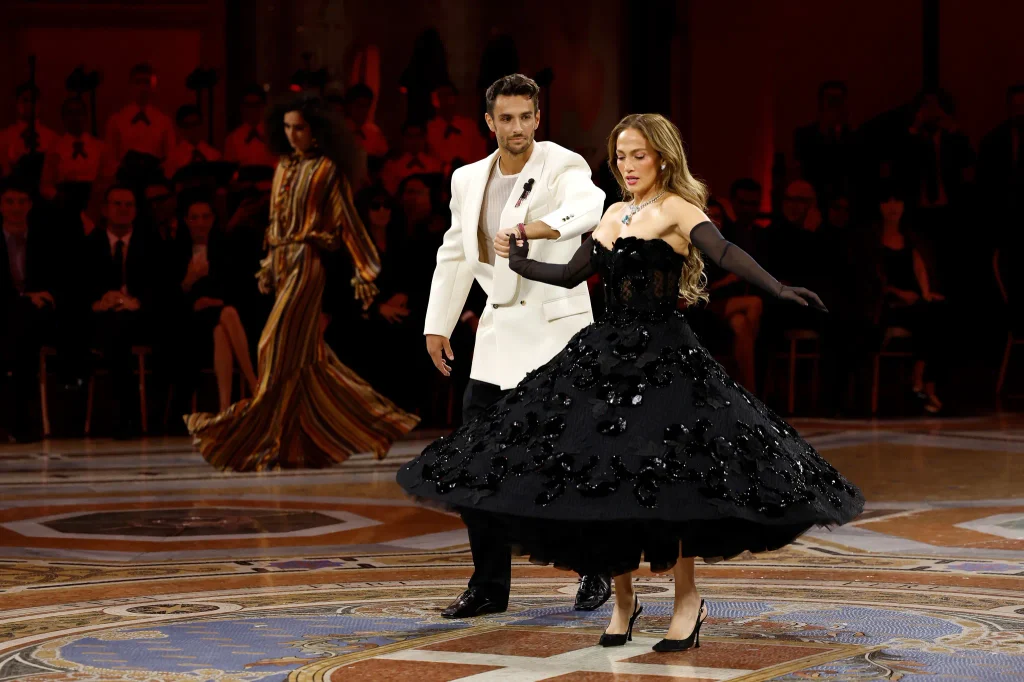
Jennifer Lopez
The Problem With “Innovation”
The final chapter, The Age of Intelligence, introduced dancing robots alongside Machine Gun Kelly, who appeared in an orange Byblos jumpsuit. Conceptually, the transition from industrialisation to AI was clear, but the fashion connection felt less developed.
Technology was presented largely as spectacle rather than something meaningfully interrogated through clothing. The show tells us that fashion is entering an age of intelligence, but gives less consideration to what that actually means for design, craftsmanship or the role of the designer.
That becomes particularly important when the event is simultaneously celebrating artisanal fashion. There is a tension between these two ideas that could have been explored more deeply: what happens to the value of human craft when technology can increasingly reproduce, accelerate or automate creative processes?
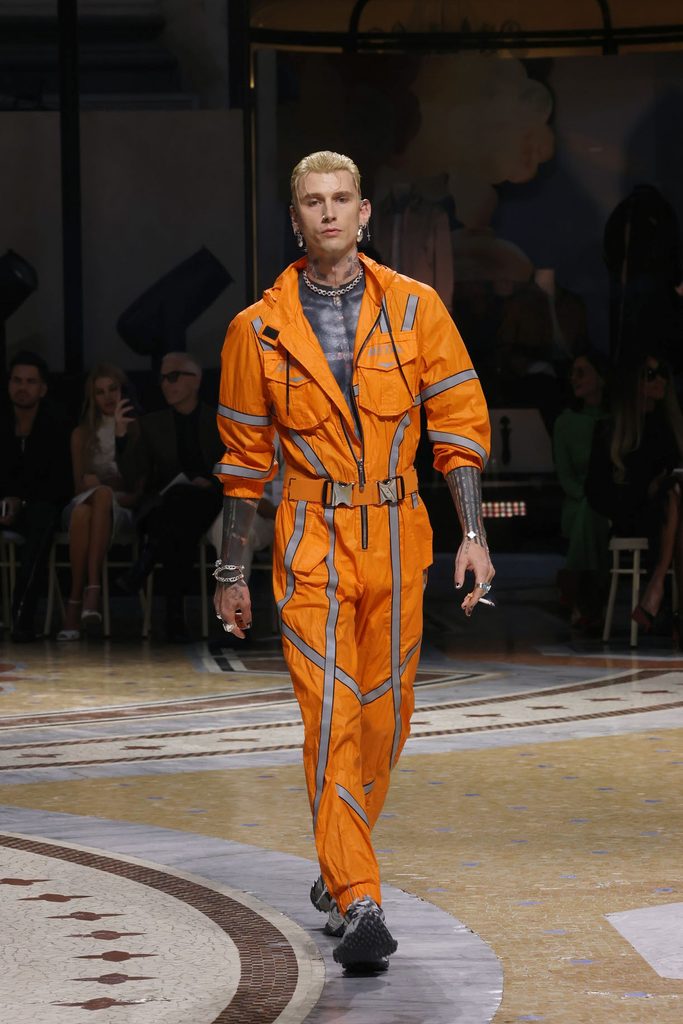
Machine Gun Kelly
A Human Finale
The answer arrived, somewhat unexpectedly, with Alicia Keys.
Closing the show in a custom look by Francesco Risso and Alex Sossah’s Bureau of Imagination, constructed from satin, chiffon, georgette and crêpe de Chine with intricate thread and beadwork, Keys brought the focus back to the physicality of fashion. As she performed I Feel Love, models appeared in white, creating a softer and more emotionally driven conclusion.
After an evening built around historical progress and technological advancement, the finale felt almost like a reminder: fashion ultimately depends on people — the designers imagining it, craftspeople constructing it, performers bringing it to life and audiences giving it meaning.
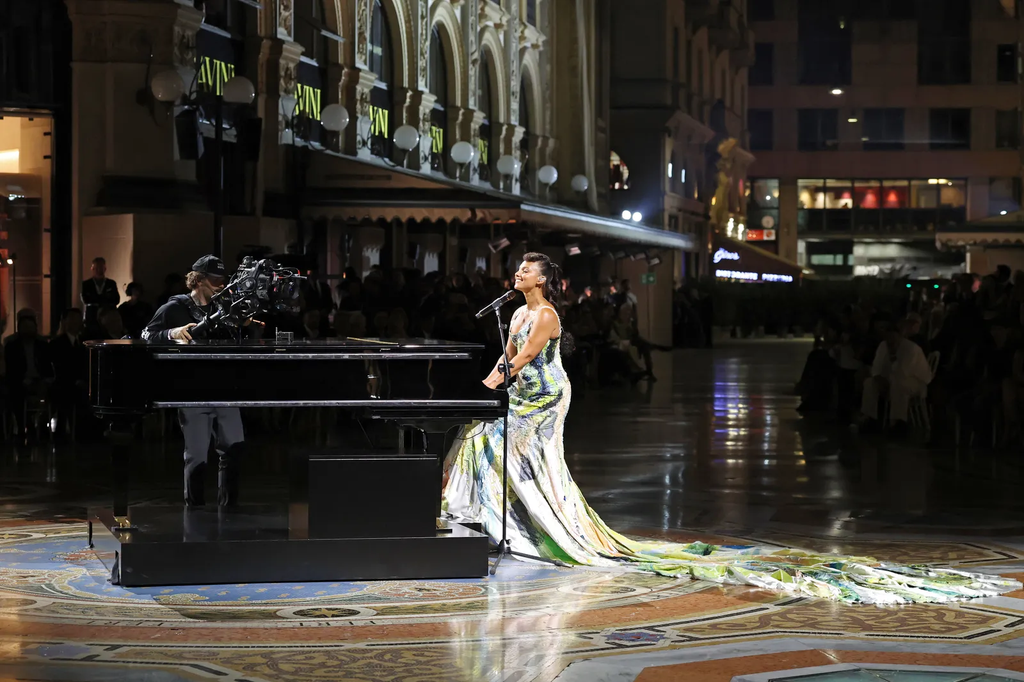
Alicia Keys
Beyond the Spectacle
Vogue World: Milano succeeded as an enormous fashion event, but its strongest idea was also its least fully explored. The show positioned Italian fashion between heritage and technological change, yet sometimes relied on spectacle to communicate that tension rather than allowing the clothes to interrogate it.
Still, the juxtaposition was compelling. The Galleria’s Renaissance grandeur, Italian luxury houses, celebrity performers and futuristic references created a visual conversation between past and future.
The question left hanging was not whether technology will change fashion — it almost certainly will — but what parts of fashion are worth protecting when it does.
Perhaps the answer lies in the very thing Vogue World celebrated from the beginning: the human hand. Because while technology can accelerate fashion, craftsmanship is what gives it memory, imperfection and meaning.
Leave a Reply