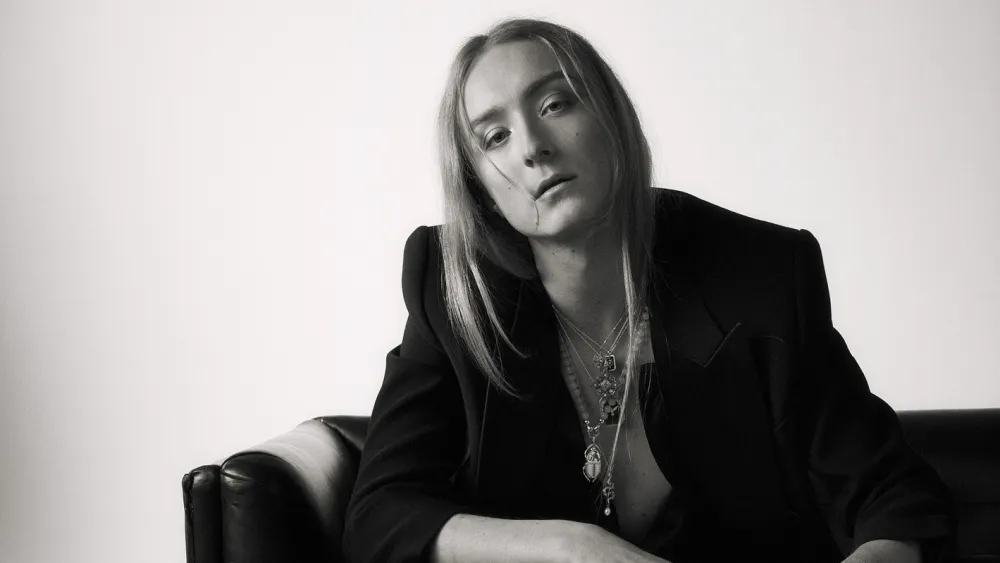
After three and a half years as creative director, Harris Reed is stepping down from Nina Ricci to concentrate fully on developing his eponymous label. The announcement marks another transitional moment for the Puig-owned house, which has been actively redefining its identity in an increasingly competitive luxury market.
Appointed in 2022 at just 26 years old, Reed represented a bold strategic shift for Nina Ricci. Known for his theatrical, gender-fluid demi-couture aesthetic shaped during his studies at Central Saint Martins, Reed introduced a more inclusive and expressive vision of femininity to the traditionally romantic French maison. His tenure focused on expanding the brand’s relevance among younger audiences, while maintaining its historic codes of elegance.
Throughout his collections, Reed infused Nina Ricci with a sense of fantasy and spectacle. His final Fall/Winter 2026 show in Paris showcased richly textured jacquard tailoring, ribbon-detailed crinolines, and animal-inspired motifs, embodying what he described as a “Marie Antoinette goes to Glastonbury” sensibility. The juxtaposition of aristocratic references with contemporary cultural energy reflected Reed’s broader design philosophy — one that embraces contradiction as a creative strength.
Reed also played a role in modernizing the brand beyond clothing. He introduced expanded sizing options and contributed to the launch of the Venus fragrance, demonstrating an awareness of how heritage houses must evolve holistically in order to remain culturally relevant. His approach aligned with the broader strategy of Puig, which also oversees labels including Jean Paul Gaultier, Carolina Herrera, Dries Van Noten, and Rabanne.
Despite these efforts, Nina Ricci has faced challenges in maintaining the same level of commercial momentum as some of its sister brands, particularly Rabanne, which has achieved strong global visibility through both fashion and fragrance. The house has also experienced a series of creative transitions in recent years, with designers including Peter Copping, Guillaume Henry, and the duo Rushemy Botter and Lisi Herrebrugh shaping its evolving identity.
From an analytical standpoint, Reed’s departure reflects the ongoing recalibration taking place across heritage luxury brands. As consumer expectations shift toward individuality and storytelling, fashion houses increasingly experiment with creative directors whose personal aesthetics can generate cultural visibility. Reed’s work succeeded in bringing editorial attention to Nina Ricci, even if translating conceptual creativity into long-term commercial consistency remains a broader industry challenge.
Reed’s decision to refocus on his own label suggests confidence in the continued growth of independent designer brands, particularly those built on strong personal identity. His namesake label has become known for dramatic silhouettes and red carpet moments that resonate strongly in today’s image-driven digital fashion ecosystem.
For Nina Ricci, the transition presents both uncertainty and opportunity. Without announcing a successor, the brand signals its intention to take time reassessing its long-term creative direction. The next appointment will likely determine whether the house continues exploring contemporary reinterpretations of femininity or returns to a more traditional aesthetic framework.
Ultimately, Reed leaves behind a legacy defined by experimentation and inclusivity. His tenure demonstrated that even the most historically rooted maisons can embrace new narratives without abandoning their heritage. As the industry awaits news of Nina Ricci’s next creative chapter, one question remains central: how can legacy brands balance innovation with recognizability in an era where identity is fashion’s most valuable currency. ✨